南宋 趙孟堅 水仙圖 卷|Narcissus by Zhao Mengjian
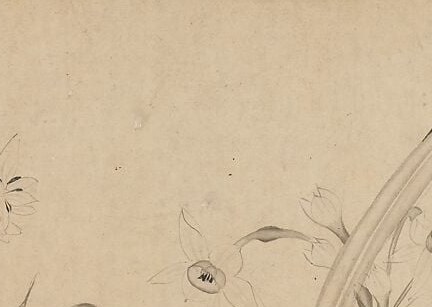
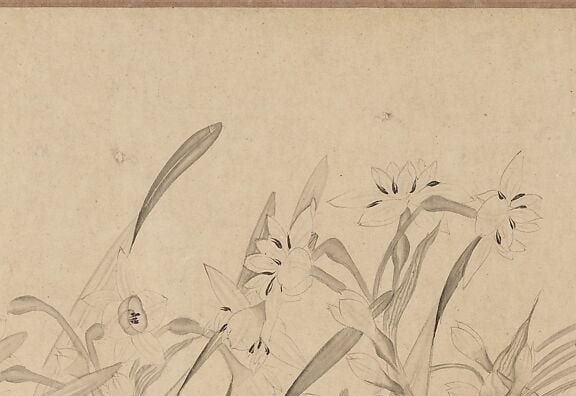
This is *Narcissus*, an ink-on-paper handscroll painted by Zhao Mengjian around 1250 in the waning years of the Southern Song dynasty. What makes it quietly radical is not the flower, but the emptiness. Nearly half the scroll is untouched paper, a compositional decision that felt audacious to its first viewers.
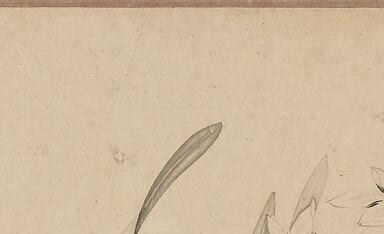
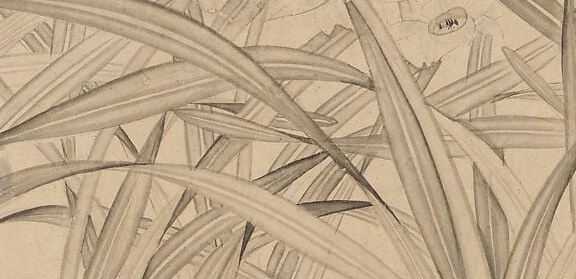
Look first at the void on the upper left. The warm ivory is not a painted wash, it is eight centuries of oxidation on the paper. In Chinese ink painting, the unpainted space is not a background, it is the atmosphere itself. Then move to the single arching leaf. It was laid down in one or two loaded brushstrokes, a gesture that cannot be corrected once begun. The slight twist in the leaf implies three-dimensional form with no shading, only line.
Zhao Mengjian was a descendant of the imperial Zhao clan. By the time he painted this scroll, the Mongols had conquered northern China and would soon take the south. He continued to paint, not battle scenes or political lament, but the narcissus, a plant associated with purity and resilience in Chinese poetry. The handscroll format was designed for private, meditative viewing, unrolled slowly like a moving poem.
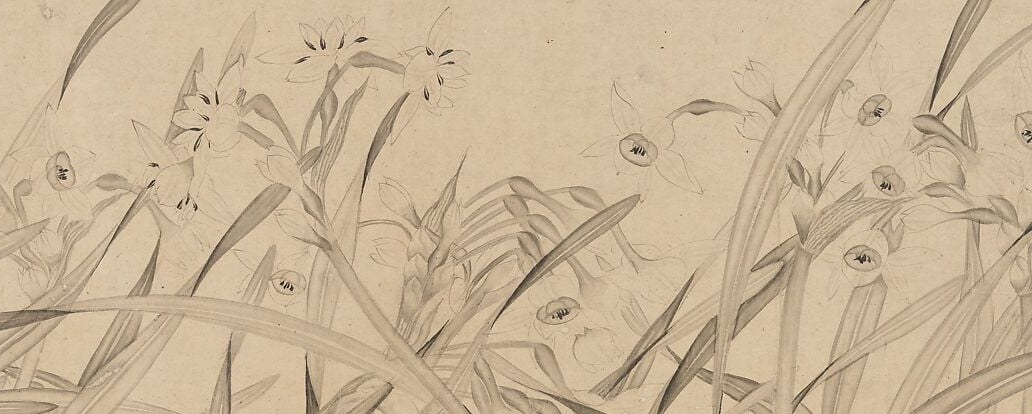
Step close enough and every stroke is a choice made in a world falling apart. The six-petaled blossoms are built from two or three ink strokes total, botanical precision at the edge of abstraction. An unopened bud beside the open flowers compresses the full lifecycle into a single silent frame. What looks fragile was made by an artist who understood that surviving an empire's collapse is a kind of endurance.
Details
Transcript
A Southern Song handscroll, painted around 1250. Empty paper fills half the composition. To a Song dynasty collector, this was audacious. The unpainted void gives the narcissus its weight. A single leaf rises on one loaded brushstroke. Zhao Mengjian was a prince stripped of power by the Mongols. Alone in his studio, he painted resilience.