A Small Village - Payaguas Indians by Catlin, George
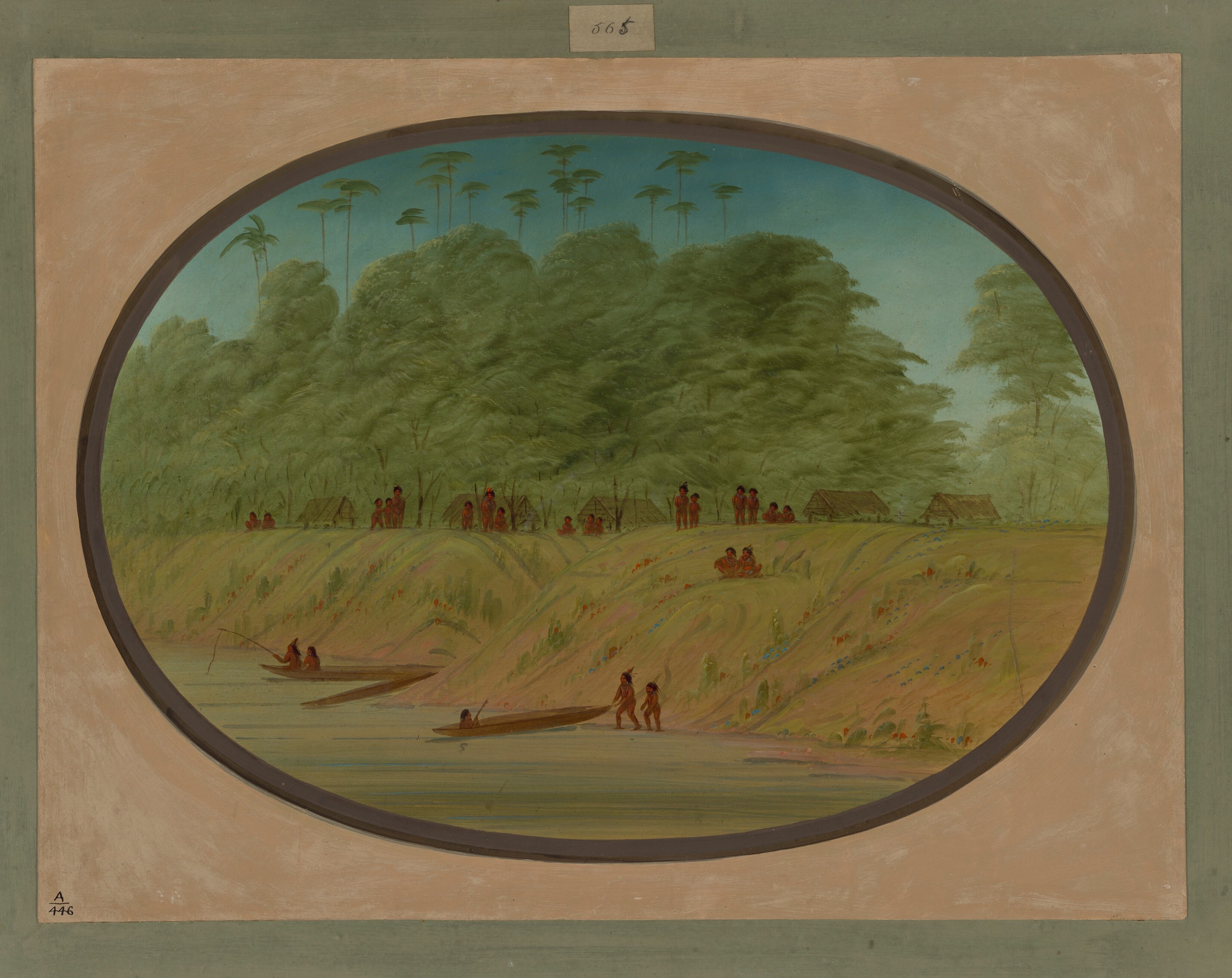
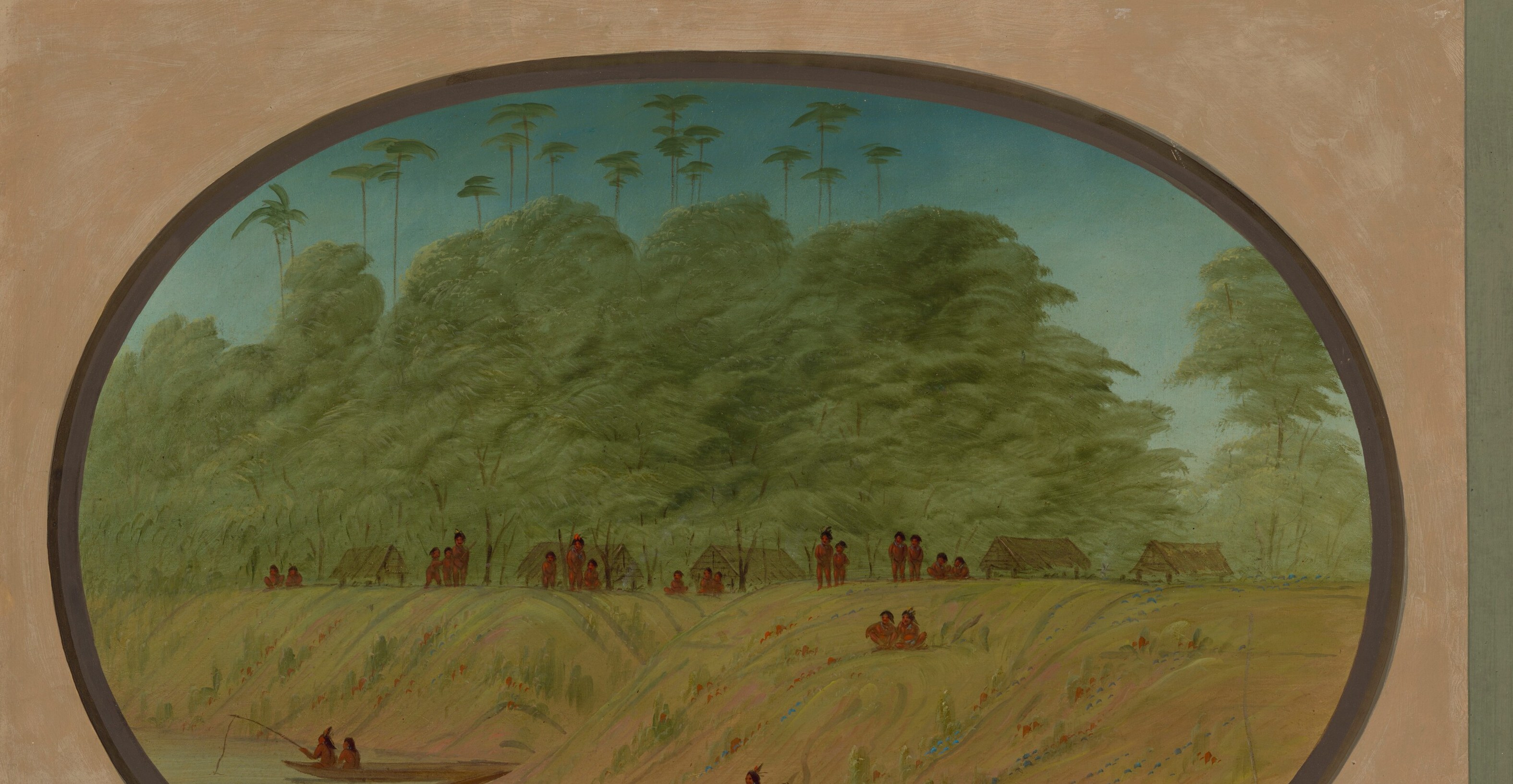
George Catlin painted A Small Village - Payaguas Indians in 1862, decades after his famous expeditions across the American Plains. This oil on card shows not a Sioux or Cheyenne encampment, but a Payaguas village in South America, where Catlin traveled in the 1850s to continue what he saw as his life's work: documenting indigenous peoples he was certain would not survive the century.
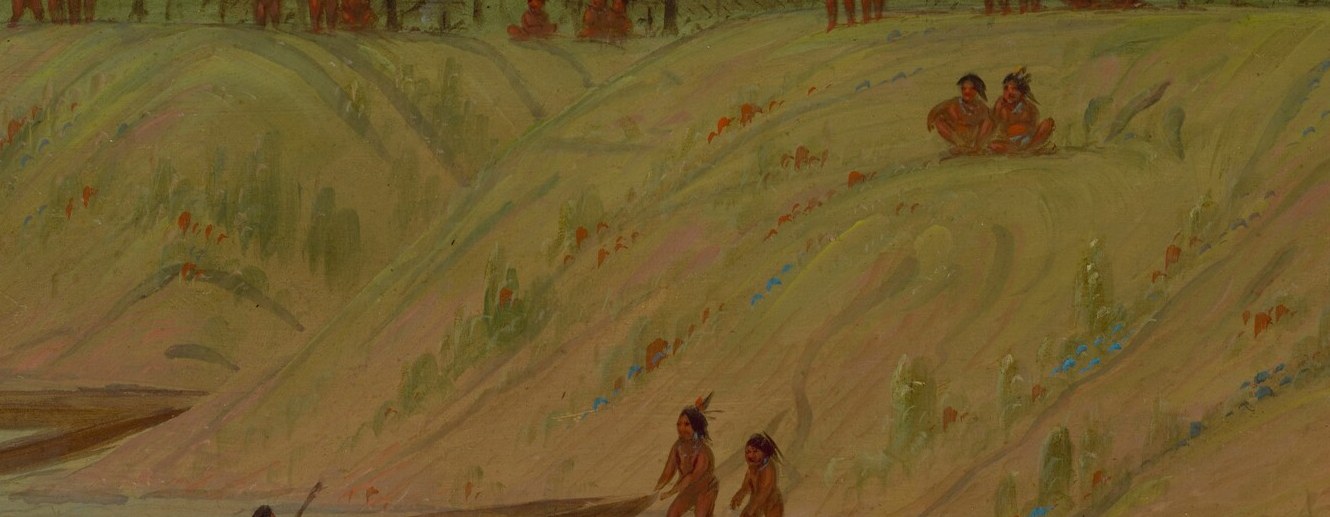
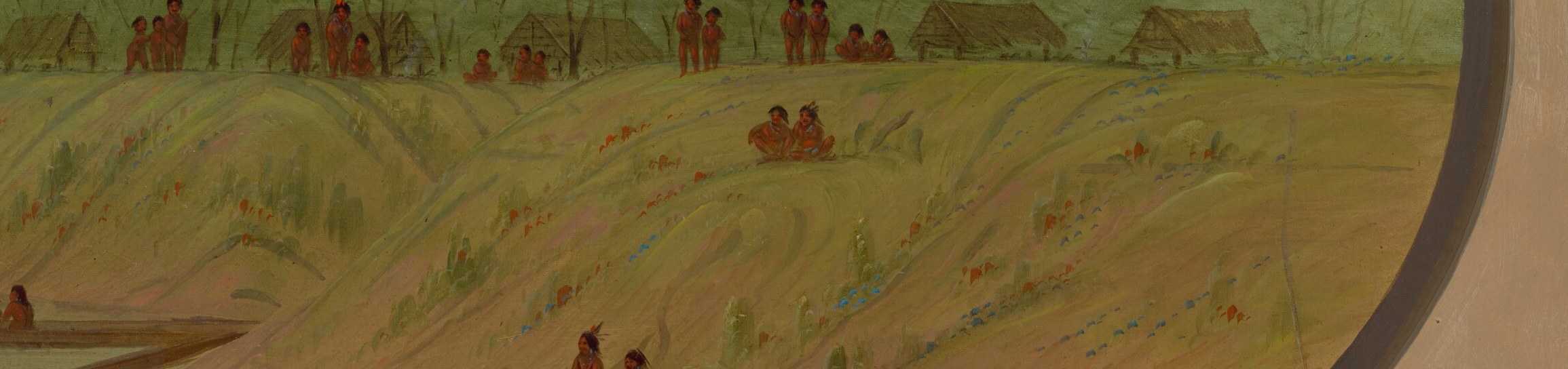
Look at the scale. The jungle canopy swallows the scene. The Payaguas figures on the shoreline are barely visible, and the calm river they live beside fills the foreground like a road. Two canoes suggest constant movement between water and forest. Catlin makes the wilderness an active, overwhelming character here.
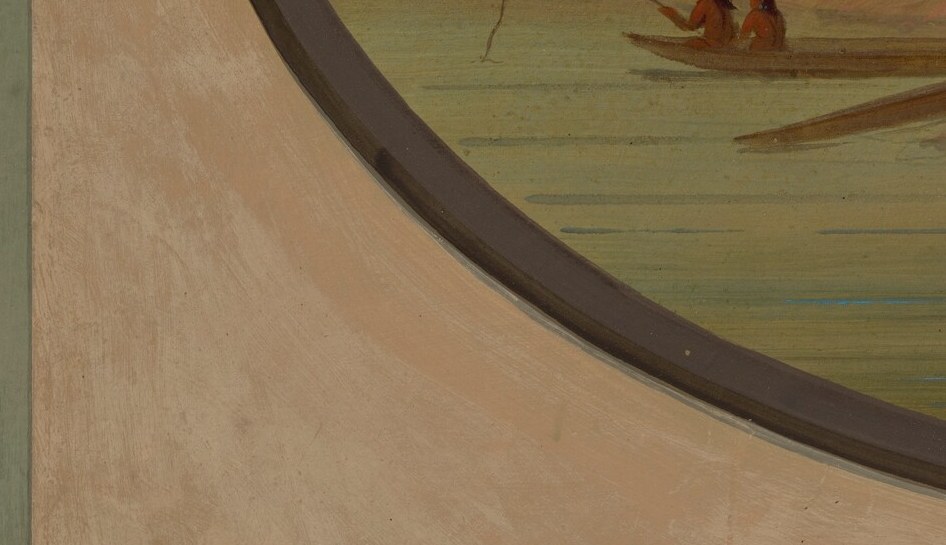
The oval vignette is the key to understanding the whole project. It frames the village like a collector's specimen, a cameo of a vanishing world preserved for a curious public back east. Catlin was a lawyer, a self-made painter, and an obsessive who believed his paintings would be the last honest record of lives soon to be erased. The heavy tropical humidity in the sky is his proof that this is not the dry West he had already painted. This is somewhere else. This is what else he feared losing.
The painting now lives in obscurity compared to his Plains Indian portraits, but it carries the same urgent, documentary impulse. What do you make of the way he framed them?
Details
Transcript
This is not the American West. A humid, tropical sky sits above a vast green unknown. The tiny figures on the shore are the Payaguas people. Catlin traveled to South America in the 1850s to paint them. He believed he was recording a world on the brink of disappearing. And he framed them inside an oval, like a specimen.