The Adoration of the Shepherds by Mengs, Anton Raphael
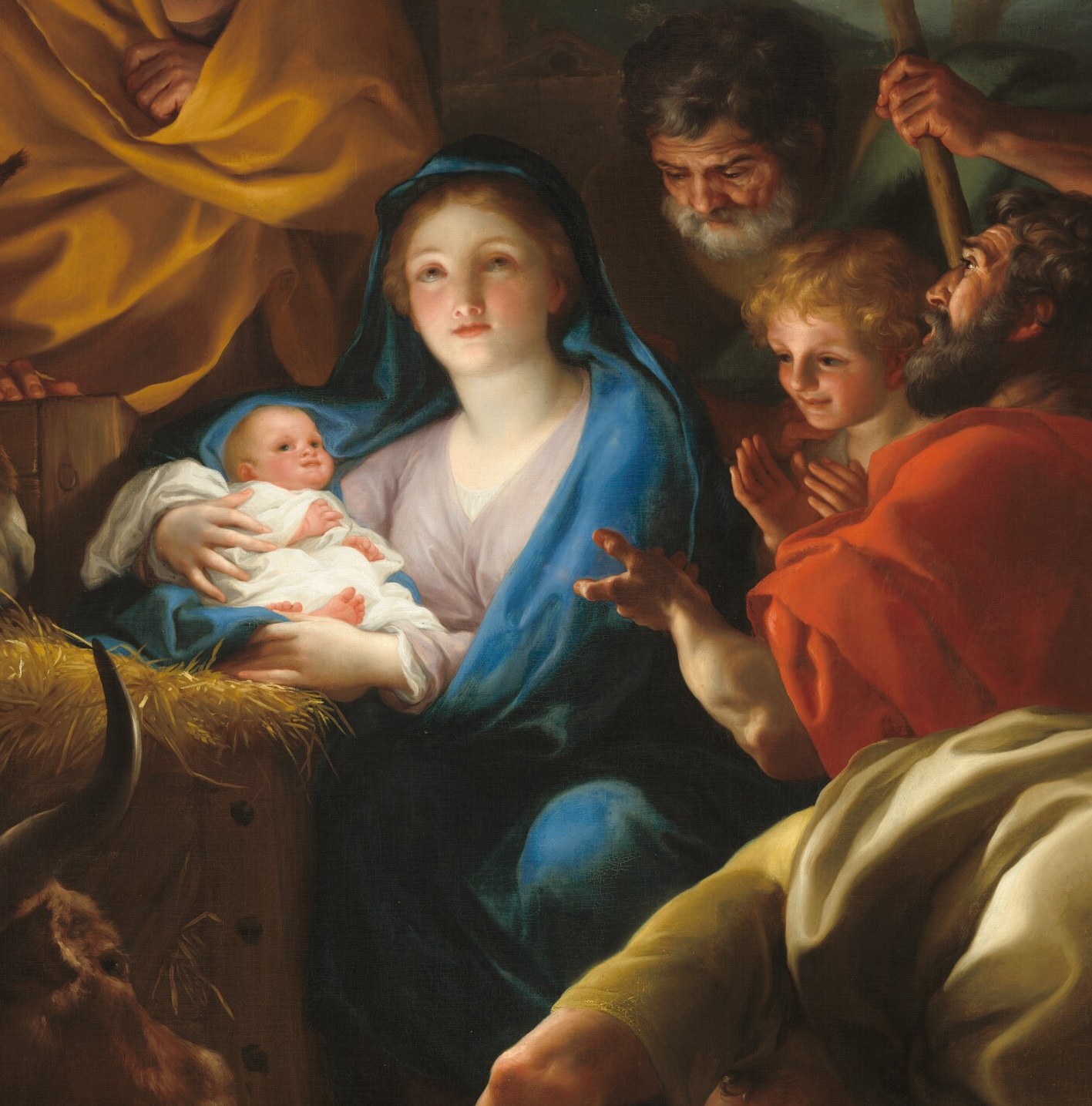
Anton Raphael Mengs painted The Adoration of the Shepherds around 1764, and it lives today in a museum collection. The first thing you notice is the warm glow. The second thing, if you give it time, is that the glow makes no practical sense.
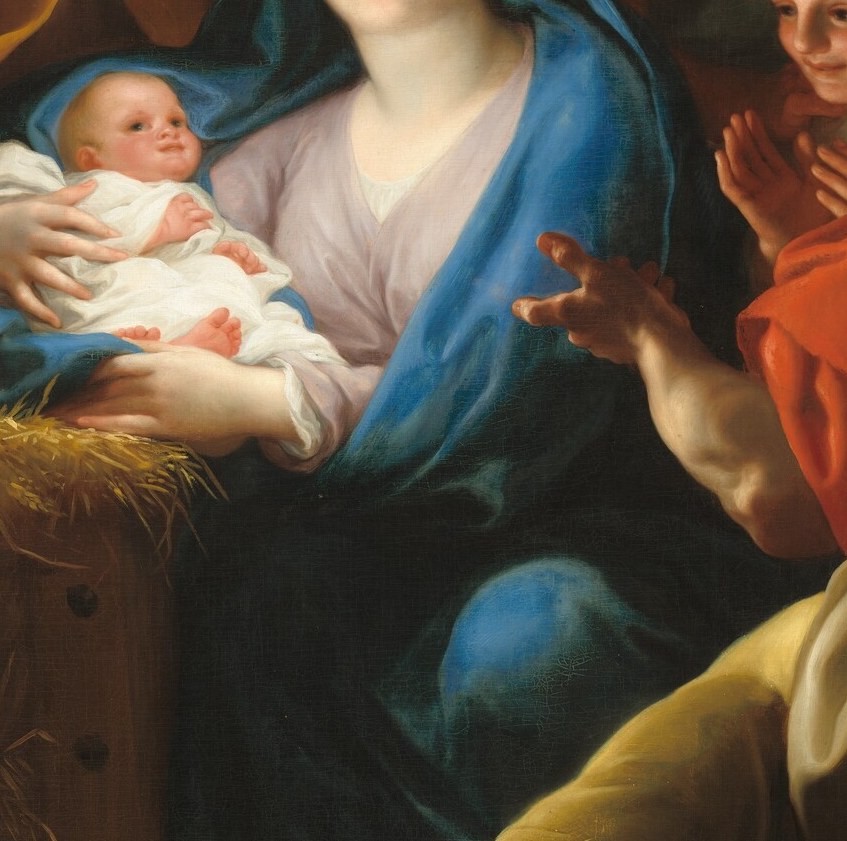
Look at the light itself. It comes from the infant, radiates upward, and falls on Mary's face from below. There is no candle, no lantern, no opening in the roof. Mengs was a student of classical form in Rome, but here he suspends physics for theology: the divine presence is the literal light source, and the entire stable is lit by a newborn.
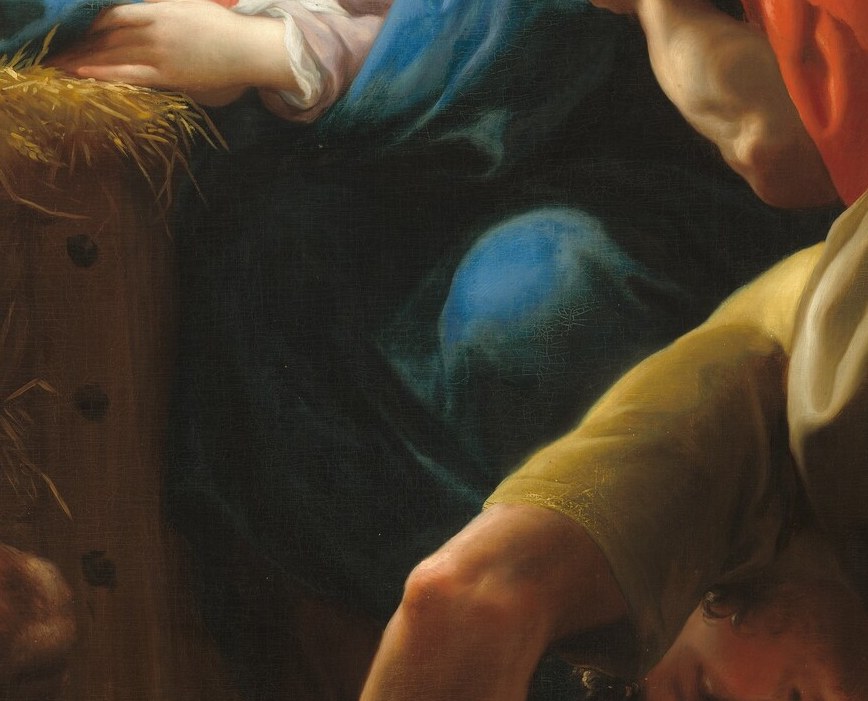
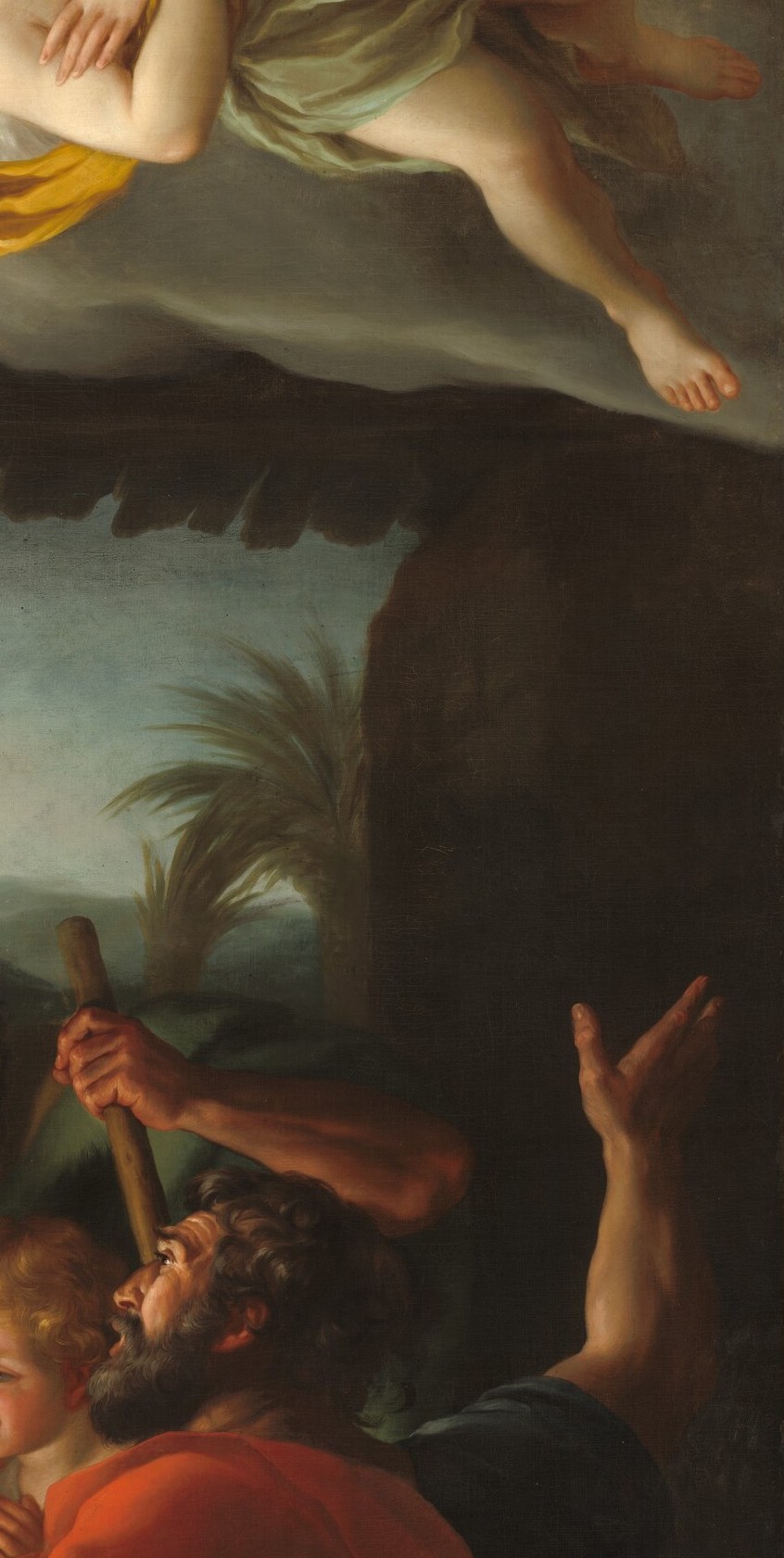
Then look at the right edge, where the darkness is almost total. Half-lit faces surface from the void. Squint and you will find more than you first counted. Mengs lets the shadow conceal exactly how many shepherds have arrived, so the crowd feels endless rather than countable.
It is a painting about what is seen and what is hidden: a visible miracle at the center, and witnesses still emerging from the dark.
Details

Transcript
A stable. A child. It looks like a familiar scene. But one thing is physically impossible here. There is no candle. No lantern. And no moon. Mengs painted the infant as the only source of light in the stable. Now look into the deep shadow at the right margin. Shepherds surface from a darkness that hides how many there are.