The Annunciation by Masolino da Panicale
Masolino da Panicale's The Annunciation hangs in the National Gallery of Art in Washington, D.C., painted around 1424. It looks like a familiar sacred scene at first glance: the angel Gabriel arriving in a serene interior to tell Mary she will bear a child. But there is a secret woven into the fabric of the painting itself, and most people walk right past it.
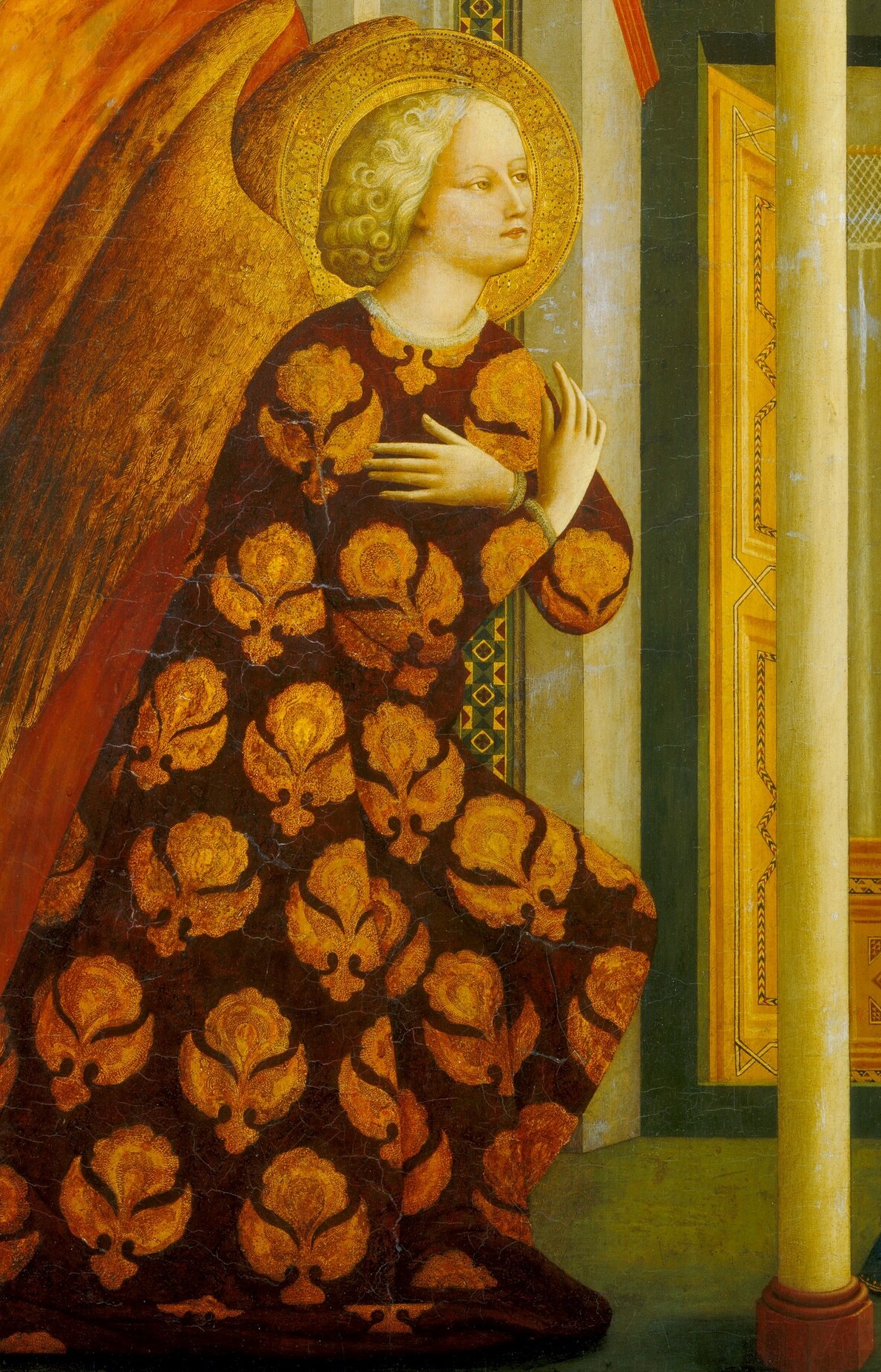
Focus on Gabriel's dark robe. What reads as patterned textile from a distance resolves, up close, into dozens of small oval motifs. Each one is a stylized face. The angelic messenger is quite literally clothed in a choir of celestial witnesses, a detail so delicate it nearly disappears in reproduction.
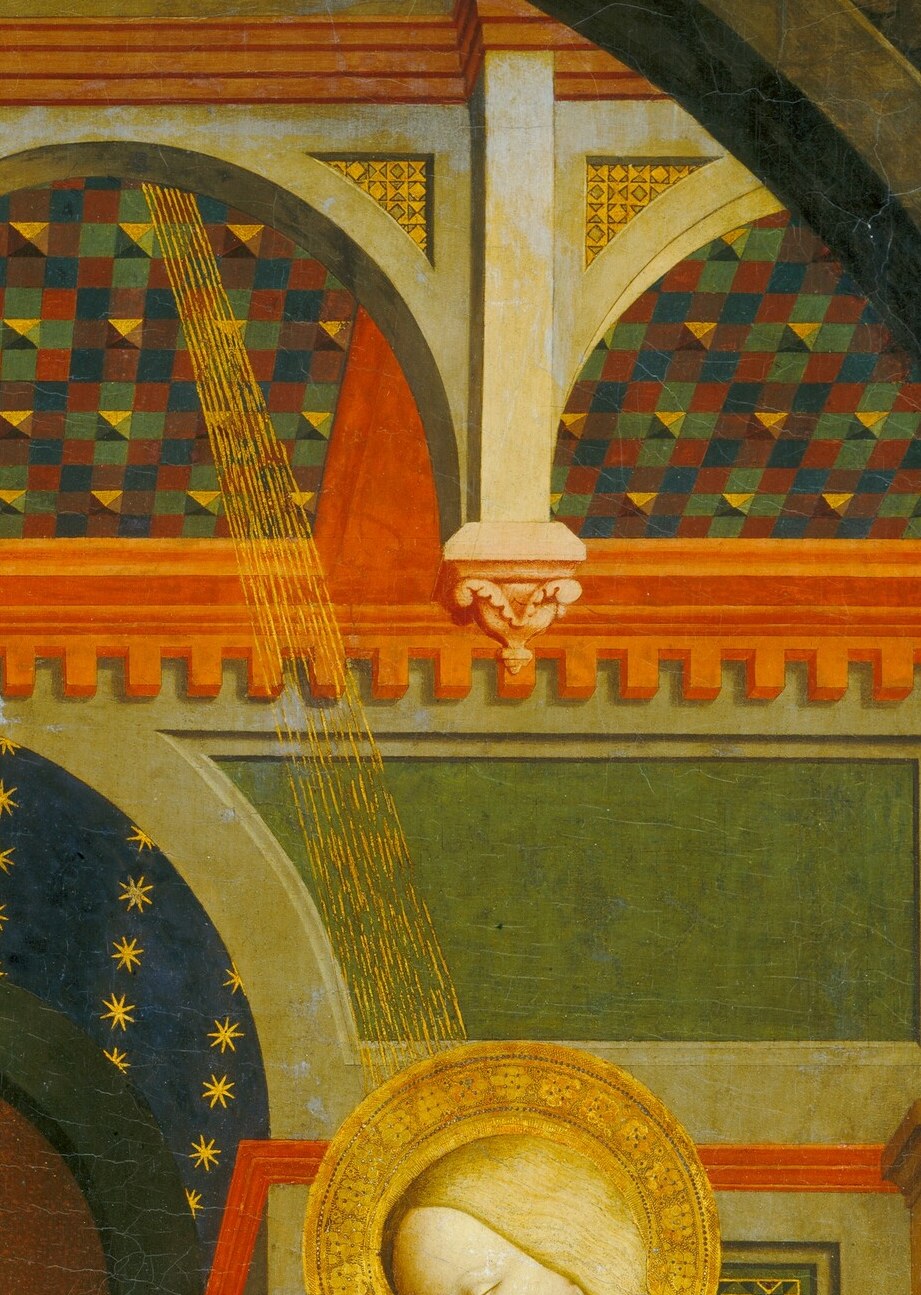
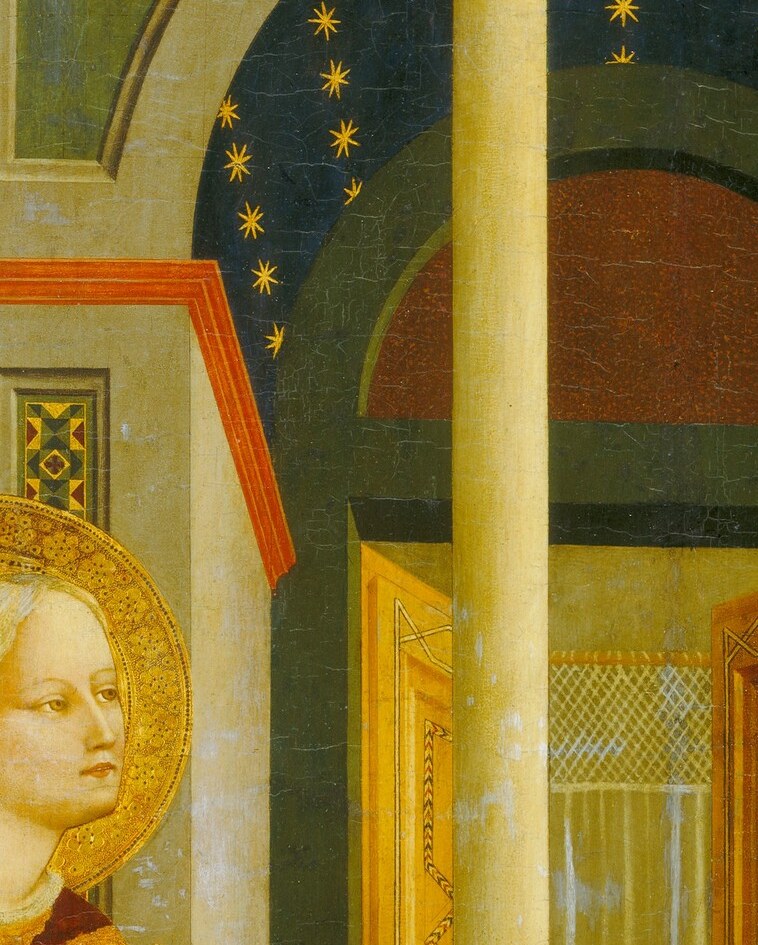
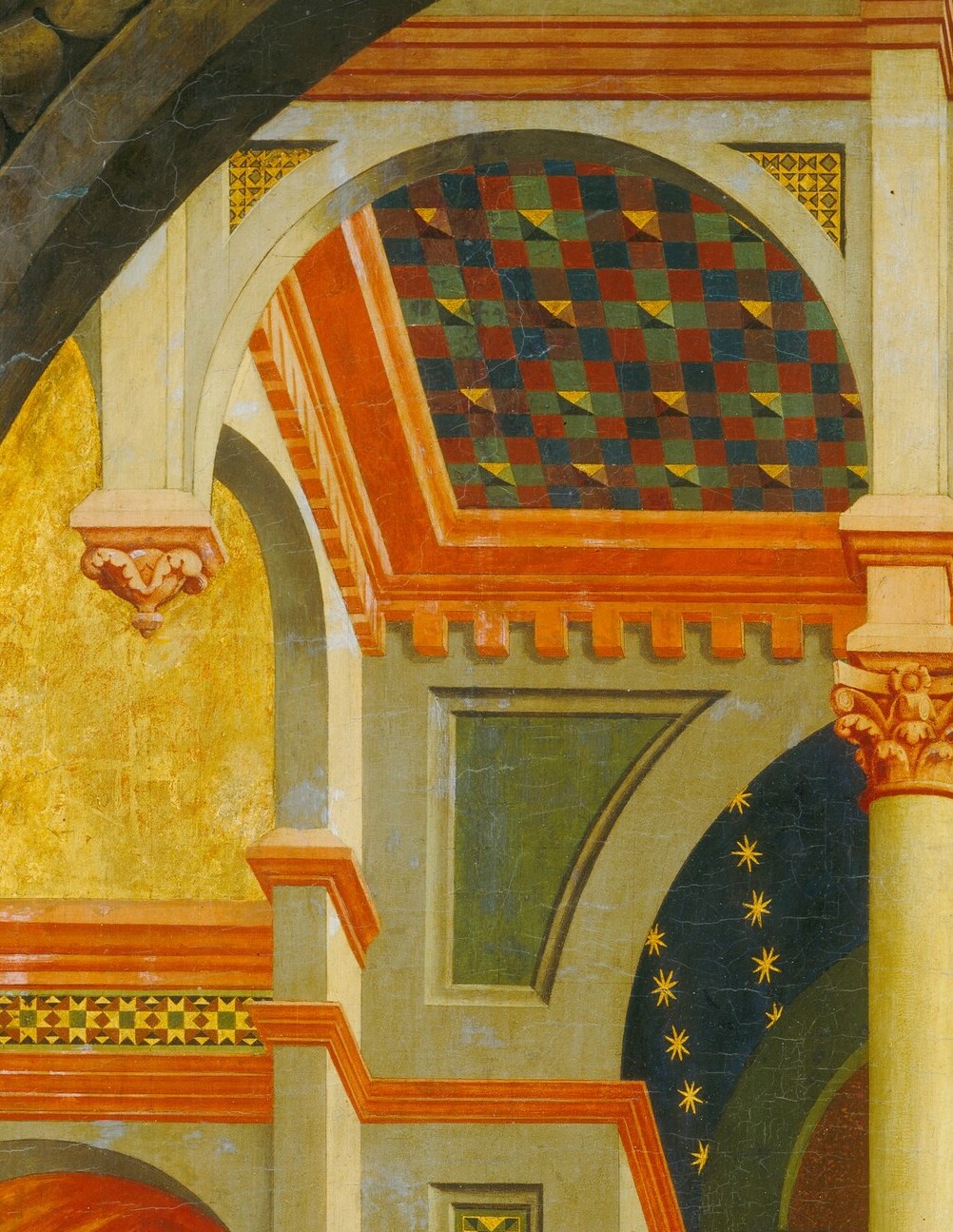
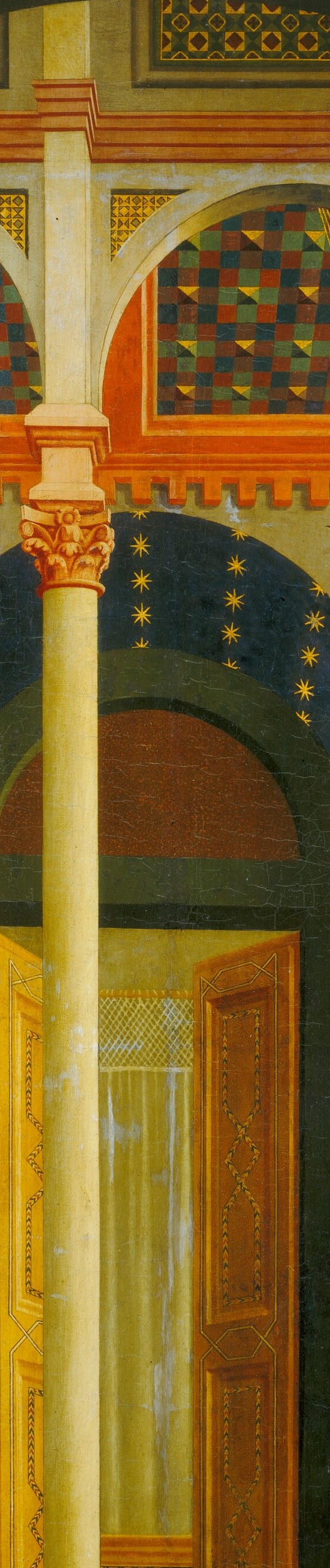
Masolino worked in Florence at a moment when painting was transforming. He collaborated with Masaccio, the young genius of perspective and mass, but kept his own softer, more decorative hand. The tiled floor recedes in correct perspective, the architecture frames the scene like a classical stage set, and yet the older Gothic love of intricate surface pattern still lives in Gabriel's robe. The robe is the bridge between two worlds: the rational new space of the Renaissance and the heavenly, patterned eternity of the medieval imagination.
The hidden faces were not meant to be missed. They were meant to reward sustained looking, the kind of looking a fifteenth-century Florentine might give a panel in a dim chapel, where every inch of painted surface carried meaning. Next time you see an Annunciation, check the angel's clothes. You never know who's looking back.
Details
Transcript
Some details in a painting hide in plain sight. Mary and Gabriel. The Annunciation. You know the story. Gabriel brings the message. His hand directs it across the marble. But look at what he's wearing. Dozens of small, repeated faces are woven into the dark fabric. A celestial audience, stitched into the angel's own garment. Masolino hid heaven inside the clothes.