A Connibo Indian Family by Catlin, George
George Catlin, a chronicler of the American frontier, painted *A Connibo Indian Family* around 1862. This oil painting, now at the Smithsonian American Art Museum, provides a unique glimpse into the lives of Native American peoples through the eyes of an American lawyer turned artist.
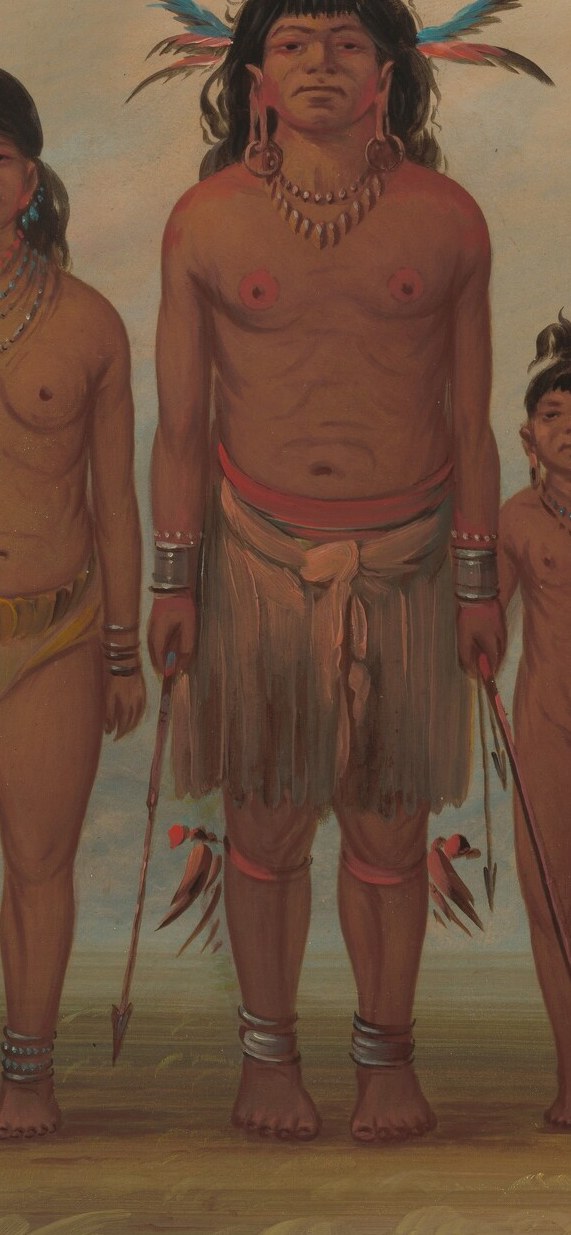
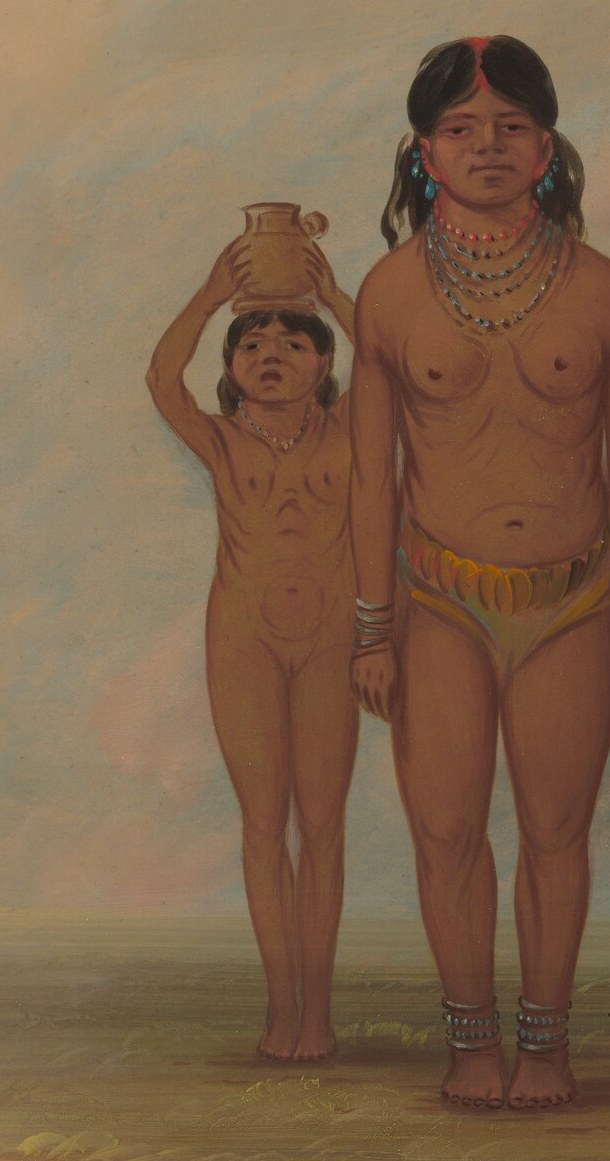
Observe the details Catlin chose to highlight: the feathered headdress of the central male, a clear symbol of status or spiritual connection within his community. The intricate, layered necklaces worn by the female figures similarly suggest their status and cultural identity. Even the simple clay pot held by the child speaks to daily life, sustenance, and the passing of traditions through generations.
Catlin undertook extensive travels among Native peoples, creating many works on portable supports like card, which facilitated his fieldwork. His aim was to document indigenous groups, preserving a visual record of their attire, material culture, and way of life at a time of significant change.
His straightforward, folk-art style makes this painting a direct and powerful testament to the people he encountered. What stories do you imagine these objects tell?
Details
Transcript
This painter documented Native American life across the American frontier. This family portrait, painted around 1862, captures a specific culture. Look at the central male's feathered headdress, a sign of status. The layered necklaces on the women also signify their standing. The child's clay pot suggests daily life and the continuation of traditions. The artist created this visual record during his travels among these peoples.