Place Saint-Germain-des-Prés, Paris by Jean-François Raffaëlli
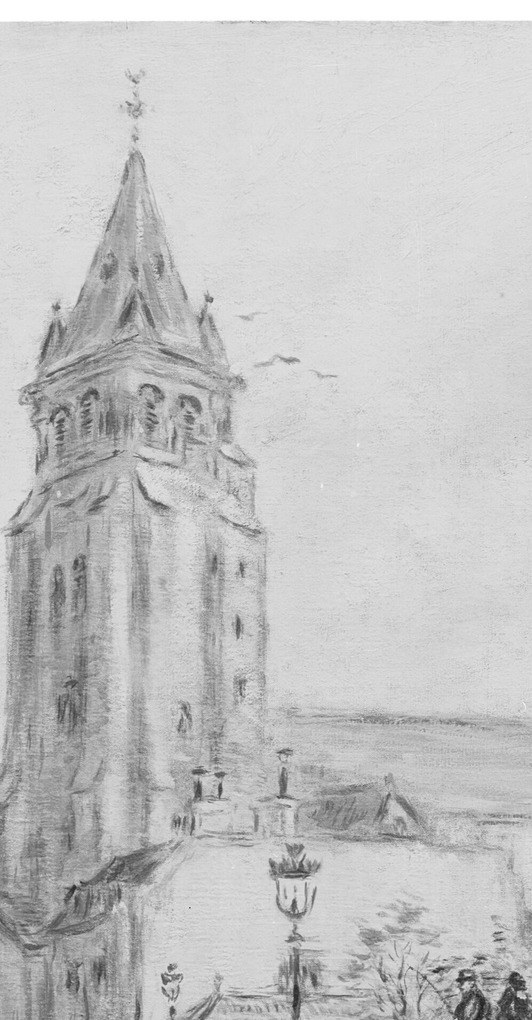
Jean-François Raffaëlli's 'Place Saint-Germain-des-Prés, Paris' (1899) is a love letter to a city he was never fully allowed to call his own. Now held by The Metropolitan Museum of Art, the painting captures the daily rhythms of the Left Bank around the ancient abbey. Raffaëlli was a realist who exhibited with the Impressionists, but his deep empathy for ordinary working people often put him at odds with the art establishment, who dismissed him as an illustrator or an outsider.
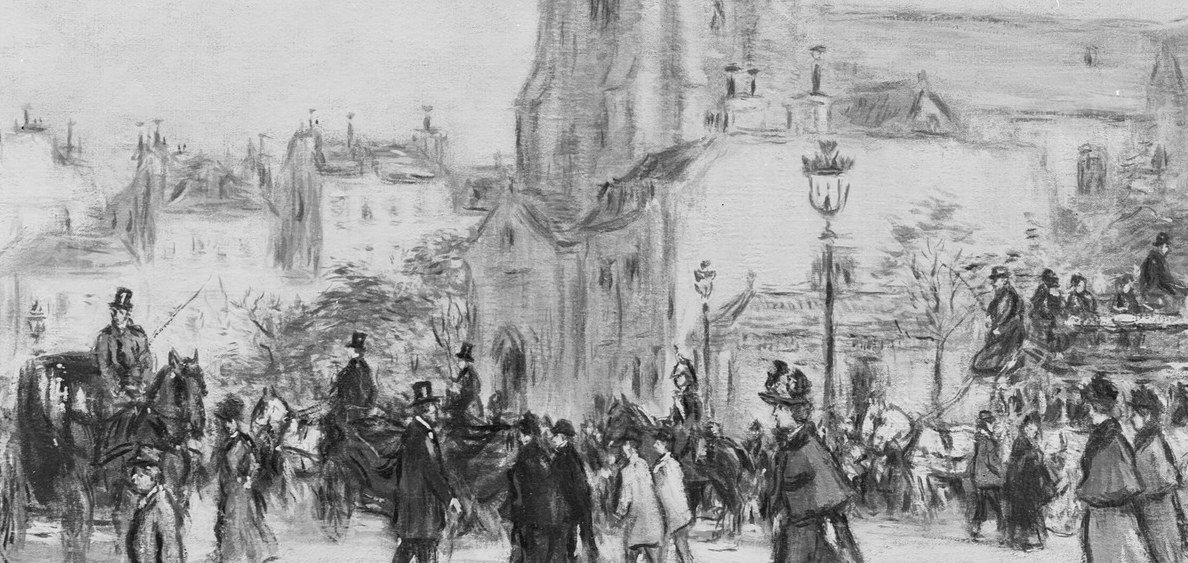
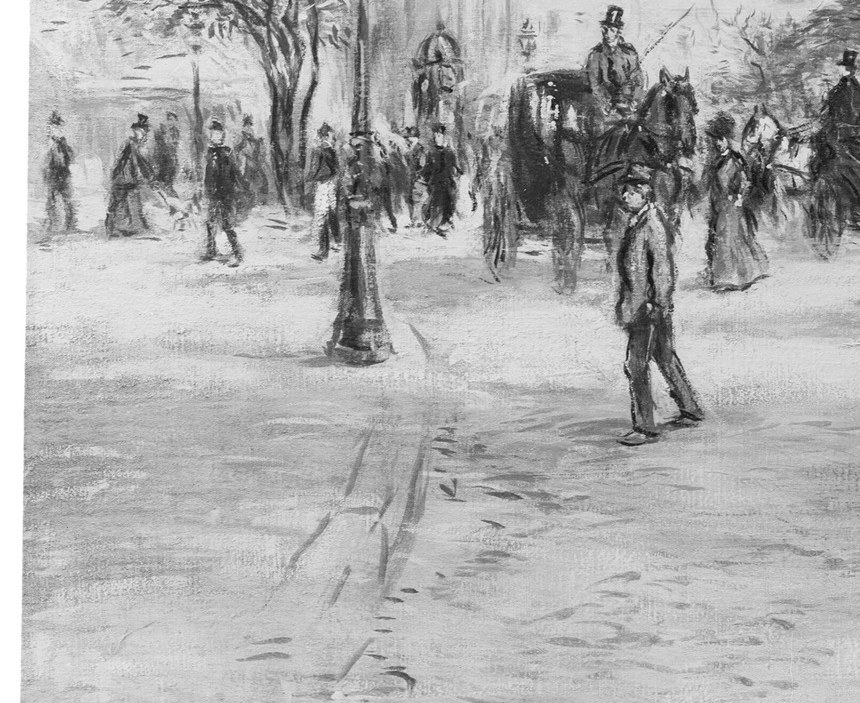
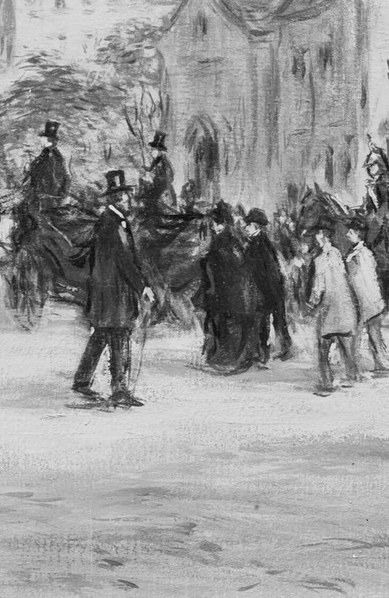
Look first at the pale-dressed woman standing in the center foreground. In a crowd rendered with quick, impressionistic strokes, she alone seems to hold a quiet gravity. Raffaëlli doesn't treat these figures as anonymous blurs; he grants them individuality and dignity. Above her, the medieval tower of Saint-Germain-des-Prés anchors the scene, a survivor of centuries standing watch over the modern street. The detail that truly dates the moment is the iron gas lamp, Paris was just years away from switching entirely to electric arc lights.
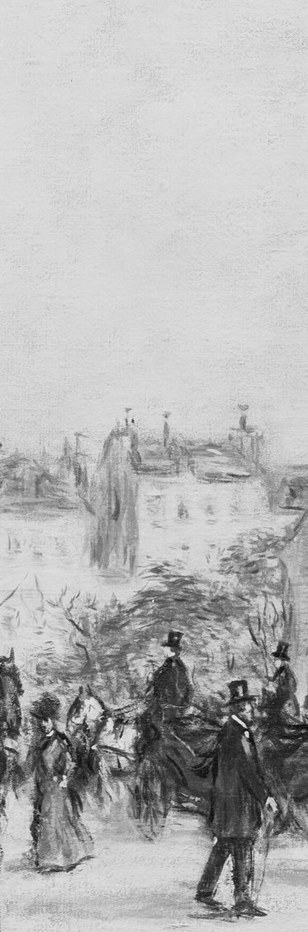
Raffaëlli was a polymath: a painter, sculptor, printmaker, actor, and writer. He championed a style he called 'caractérisme,' a realism focused on the character of people and places. But the same critics who praised his skill often rejected him for it, judging his subjects too mundane. He had a turbulent relationship with the Impressionist group, eventually breaking away. The uniform Haussmann-era facades creeping in behind the abbey subtly record how modern Paris was literally boxing in its medieval past.
He died in 1924, his fame already fading. But when you stand before this painting, you feel the artist's quiet triumph. He caught a corner of the world and said: this is worth remembering.
Details
Transcript
The art establishment called him an outsider. Jean-François Raffaëlli painted the real Paris, not the pretty one. Look at the crowd. No heroes here. He painted ordinary life with the tenderness usually reserved for saints. The gas lamp was almost obsolete when he painted it. He preserved what was vanishing. He died largely forgotten. But in this square, life goes on.