Harvest on the Roman Campagna by John Gadsby Chapman
John Gadsby Chapman's "Harvest on the Roman Campagna," painted in 1868, is a detailed and sweeping landscape that captures both the grandeur of nature and the human effort within it. You can see this painting at The Cleveland Museum of Art.
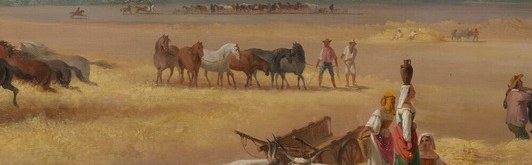
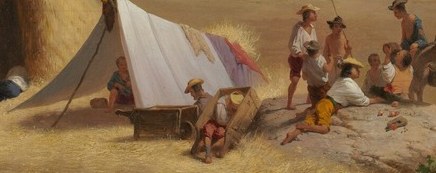
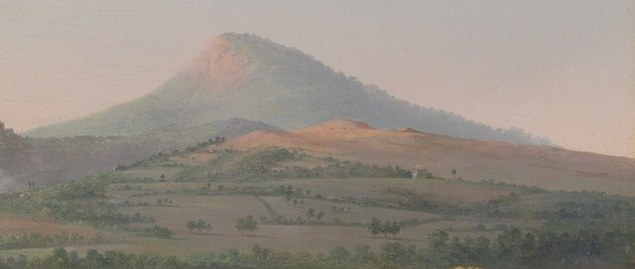
While the vast landscape with its prominent mountain might first capture your eye, the true story lies in the smaller details. Observe the groups of figures diligently working the fields, bundling hay, and resting near temporary shelters. The presence of horses and oxen pulling carts further emphasizes the agricultural labor central to the scene.
Chapman, an American artist, was renowned for his historical and landscape paintings, and this work reflects the Hudson River School's focus on meticulously observed natural settings. It provides a fascinating glimpse into 19th-century rural life and the timeless rhythm of harvest.
What other hidden details do you notice in this expansive scene?
Details
Transcript
This grand painting shows harvest on the Roman Campagna. The American painter John Gadsby Chapman finished it in 1868. Look closely at the figures working the field. They are bundling hay, a demanding part of harvest. Even the horses and oxen are part of the daily labor. A white tent provides temporary shelter for the workers. Chapman was known for his detailed historical and landscape works. The scene captures both grandeur and everyday human effort.