Landscapes in Various Styles after Old Masters by Mei Qing
Mei Qing finished "Landscapes in Various Styles after Old Masters" in 1696, near the end of a life spent as a painter, poet, and calligrapher in the Qing Dynasty. He was a friend and early influence on the better-known Shitao, and his own work was shaped by extensive travels to the Yellow Mountain. This painting is not a portrait of one actual place but a conversation with the past.
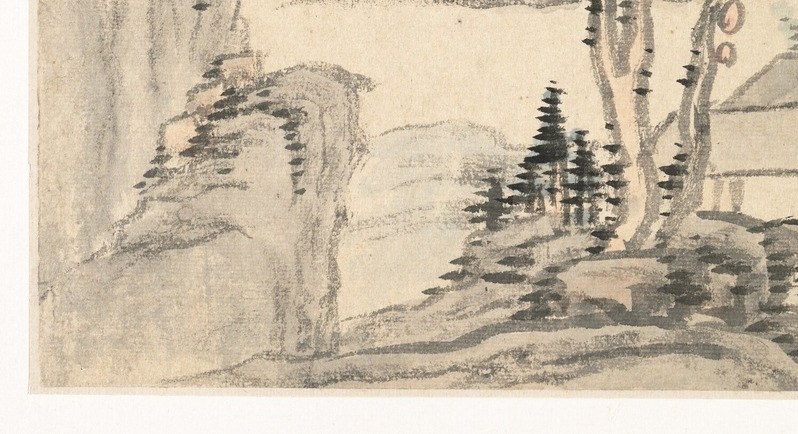
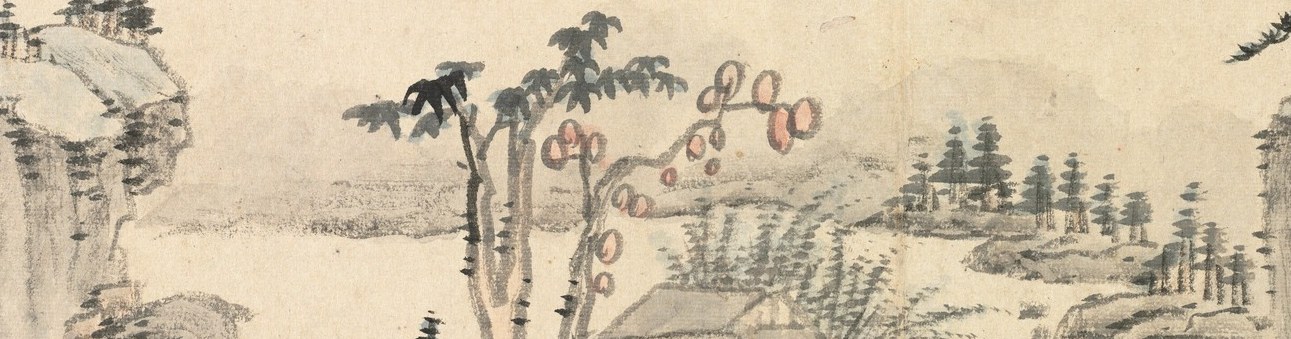
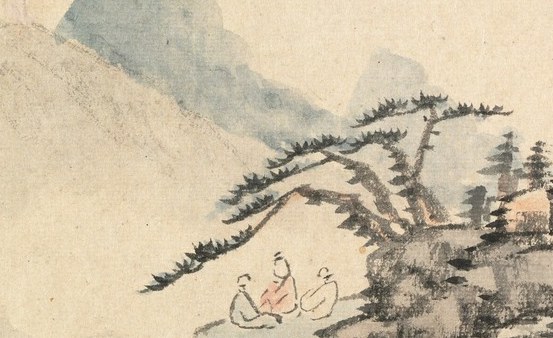
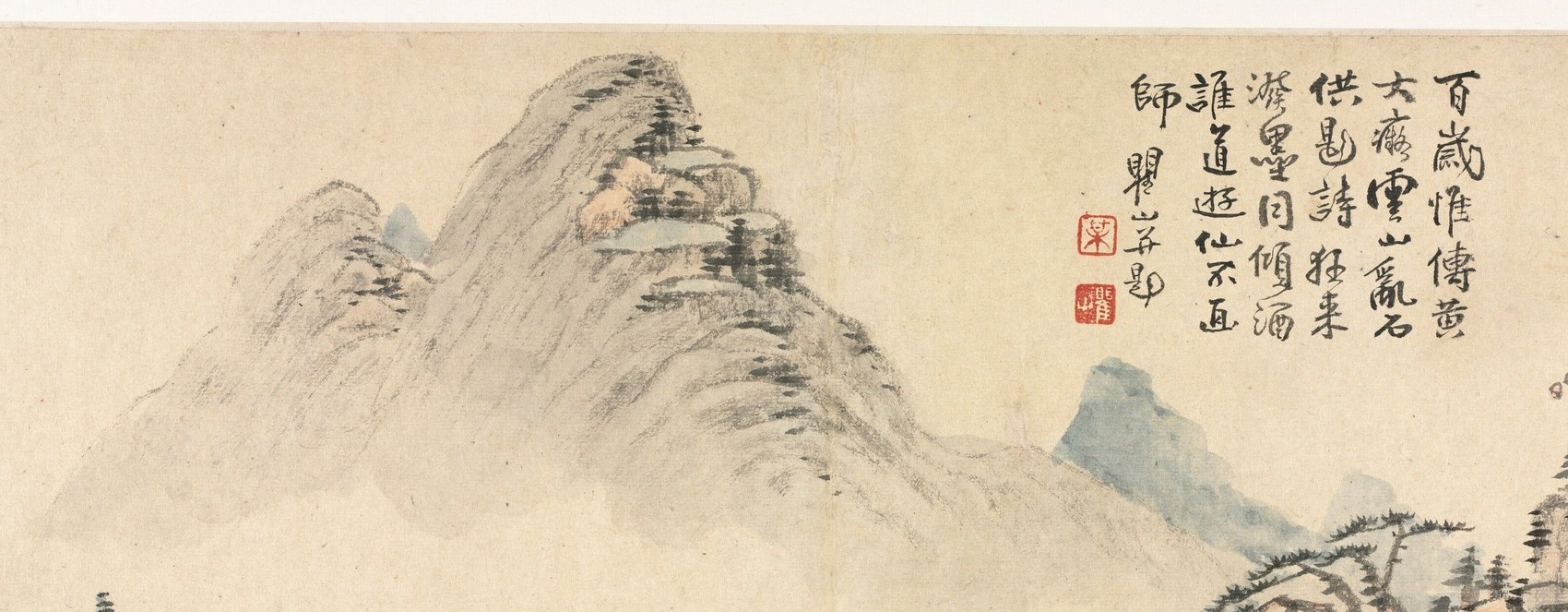
Look first at the empty space across the middle. The mist and water are not painted at all, they are the raw paper showing through, given shape by the ink around them. Above it, pale peaks stack into a luminous sky. Below, dark pines and a rocky ledge anchor the foreground. Tucked into the valley is a tiny hamlet, and on the right cliff edge, a single tree holds the margin.
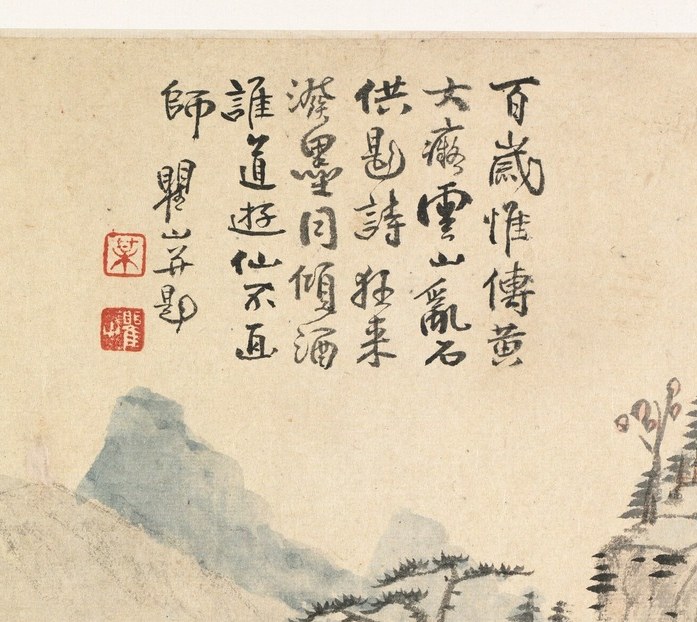
The calligraphy at the upper right names the older master whose style Mei Qing is working through here. Painting and poem share the silk as one object. The two red seals beneath the text are his signature in compact form. This was never meant to be a quick image; it was meant to be read, slowly, by someone who knew the references.
A reclusive scholar's retreat sits among the cliffs at center-left. The whole composition asks you to stand on that foreground ledge and look across, into a world built as much from restraint as from brushwork.
Details
Transcript
A quiet mountain world, blue and still. Mei Qing was a poet, a calligrapher, and a traveler to the Yellow Mountain. The mist between the peaks is just unpainted paper. Look to the upper right. The painting and poem are one. The text names an older master this scene honors. And below it, two vermillion seals: the painter's name.