Corot's Studio: Woman Seated Before an Easel, a Mandolin in her Hand by Corot, Jean-Baptiste-Camille
Jean-Baptiste-Camille Corot's 'Corot's Studio: Woman Seated Before an Easel, a Mandolin in her Hand,' painted circa 1868, is more than just a studio scene; it's a testament to the harmony of the arts. This oil on wood painting, created during the Realist movement, invites us into the artist's private world.
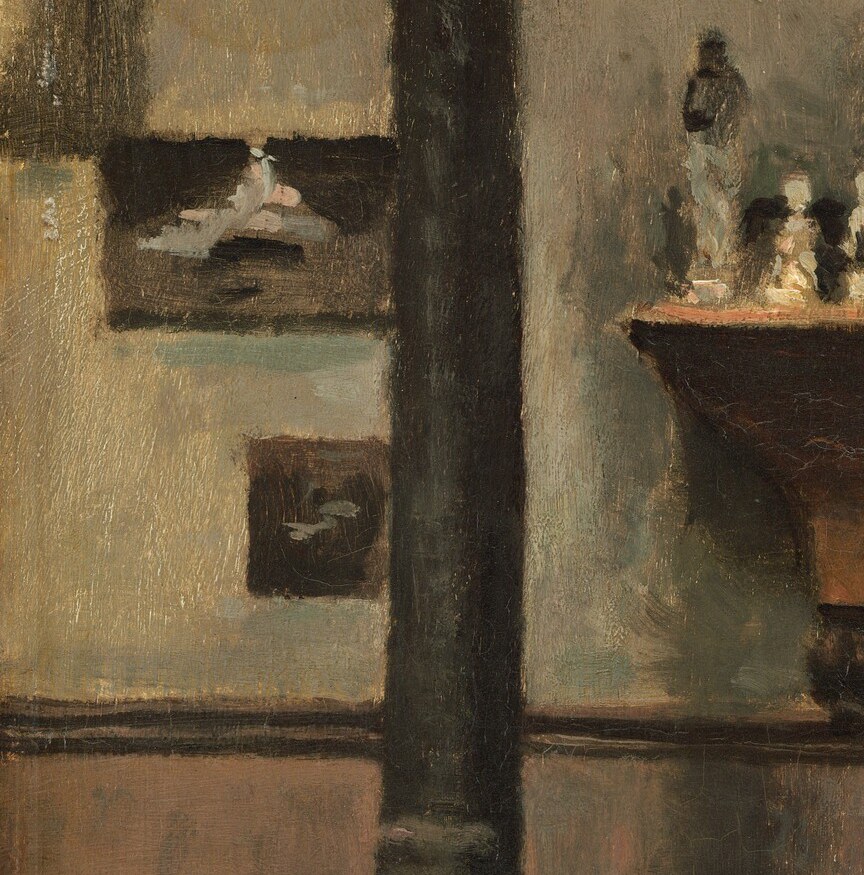
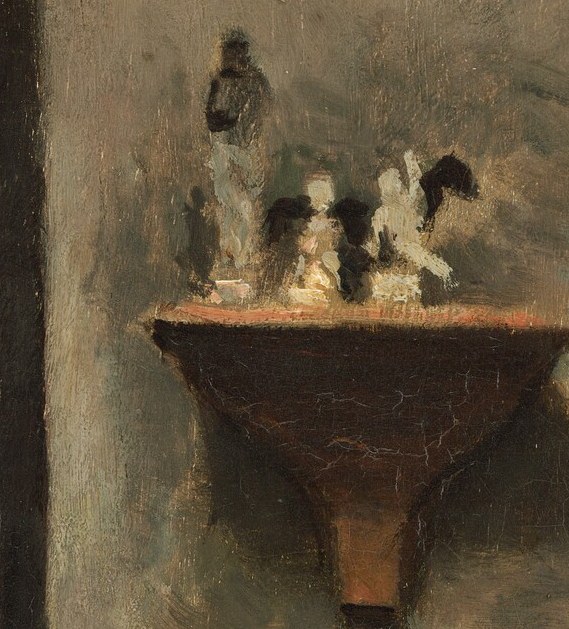
Notice the detailed rendering of the woman's hands on the mandolin, symbolizing music. Surrounding her, the small sculptures and framed artworks on the wall highlight Corot's broad artistic influences, from classical forms to other paintings. Even the partially painted canvas on the easel hints at the act of creation itself.
Corot was a pivotal figure, bridging Neo-Classical traditions with the innovations of Impressionism. This work, from his later career, shows his turn towards everyday subjects and natural light, anticipating the concerns of later Impressionists. It captures the unglamorous, yet profound, essence of artistic practice.
What other hidden details do you notice that speak to the artist's world?
Details


Transcript
This painter, Corot, created many landscapes. But his studio was full of other art too. Look at the small sculptures on the shelf. This shows his interest in classical forms. The woman holds a mandolin, a symbol of music. She represents the harmony between visual and auditory arts. Corot’s love for art in all its forms.