The Sciences and Arts by Adriaen van Stalbemt
Step into a bustling 17th-century world of intellect and art with "The Sciences and Arts," an oil painting from circa 1650, housed in the Museo de Prado, Madrid. This intricate work captures a room brimming with scholars, artists, and instruments of learning, offering a detailed glimpse into the pursuits of the era.
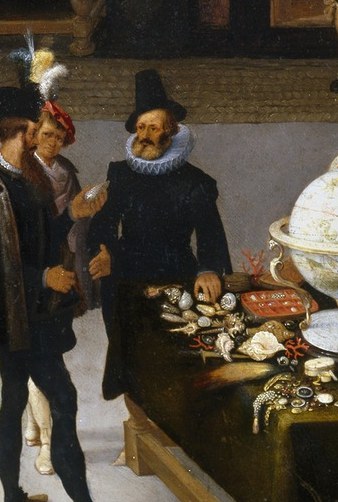
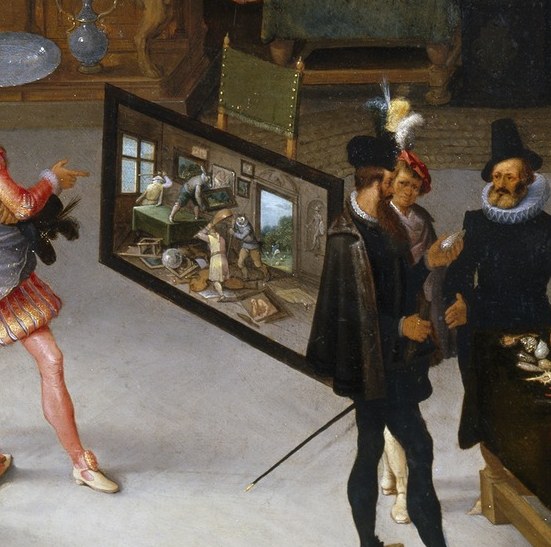
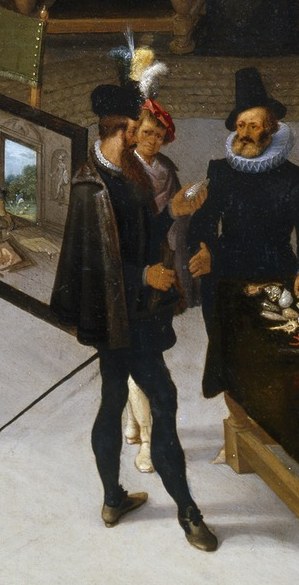
Observe the figures engrossed in their studies: one man with spectacles poring over a book, another gesturing towards a globe in discussion, and an artist holding a canvas, representing the act of creation. Objects like the astrolabe further emphasize the blend of scientific and artistic endeavor.
While traditionally attributed to Adriaen van Stalbemt, recent art historical research suggests the painting may actually be the work of Hieronymus Francken the Younger. This ongoing discussion adds another layer to the rich history of this fascinating piece.
It's a testament to the enduring human quest for knowledge and beauty. What details capture your eye the most?
Details
Transcript
This painting invites you into a world of 17th-century learning. Look closely at the man with the spectacles, deep in his book. Nearby, a scholar points to a globe, discussing exploration and geography. An astrolabe on the table represents the scientific inquiry of the age. On the other side, an artist holds a canvas, depicting creation itself. For years, the artist was believed to be Adriaen van Stalbemt. But recent scholars now attribute this detailed work to a different painter.