Father Hennepin and Companions at the Falls of St. Anthony. May 1, 1680 by Catlin, George
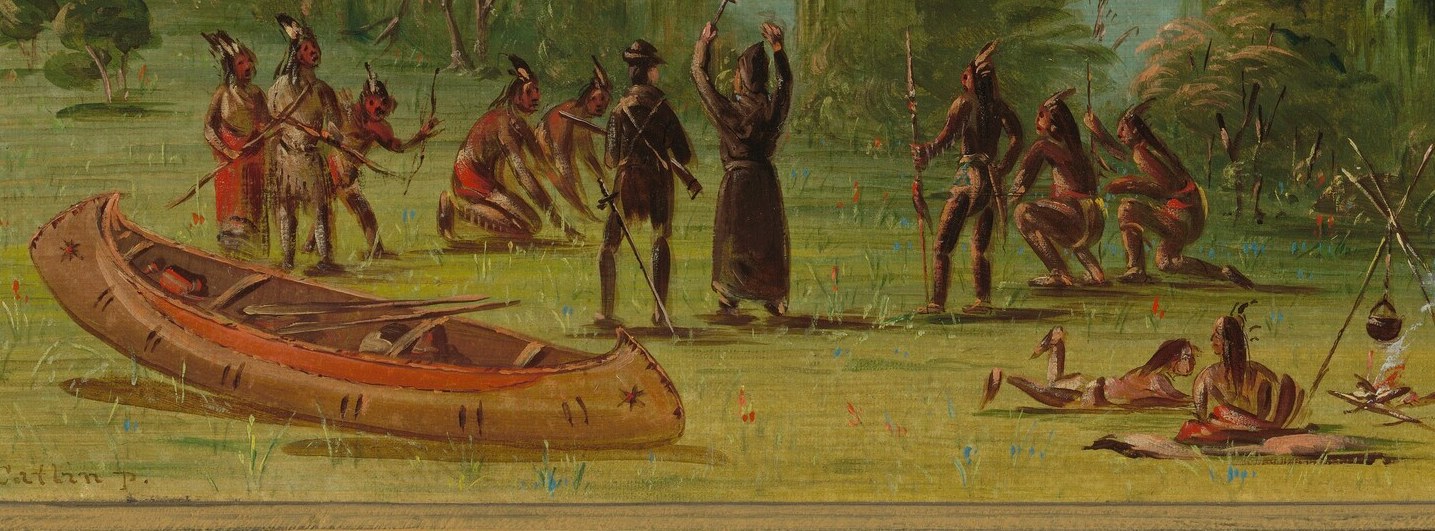
George Catlin's 1848 oil painting, "Father Hennepin and Companions at the Falls of St. Anthony. May 1, 1680," depicts a scene the artist never witnessed firsthand, relying instead on accounts and his imagination.
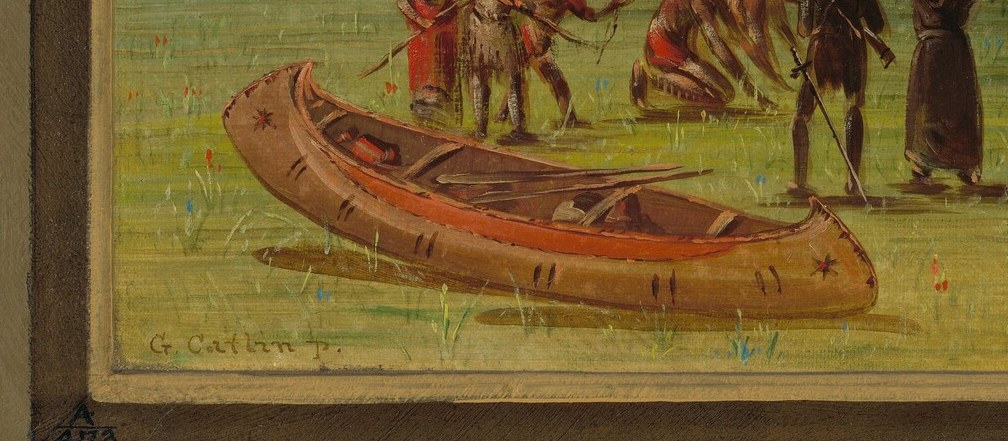
The painting captures a dramatic view of the Falls of St. Anthony, a significant landmark in Minnesota. Look closely at the figures gathered by the riverbank and the powerful, generalized depiction of the falls. The small white label with the number '15' in the lower-left corner is a subtle detail that reveals part of the painting's history.
Catlin, originally a lawyer, dedicated his career to documenting American frontier life and Native American cultures. His extensive travels in the 1830s shaped his artistic focus. This number '15' indicates its place in a catalog or exhibition, offering a glimpse into how this work was presented to the public in its time.
It reminds us that even small, seemingly insignificant marks can tell a story about a painting's journey through history.
Details

Transcript
This dramatic landscape shows early explorers at a powerful waterfall. The painter, George Catlin, never actually visited these Falls. He relied on stories and imagination to depict the American frontier. Look closely at the lower left corner, near the painter's signature. There's a small white label, printed with a single number: '15'. This was the painting's catalog number when it was first exhibited.