The Miraculous Communion of Saint Catherine of Siena by Giovanni di Paolo
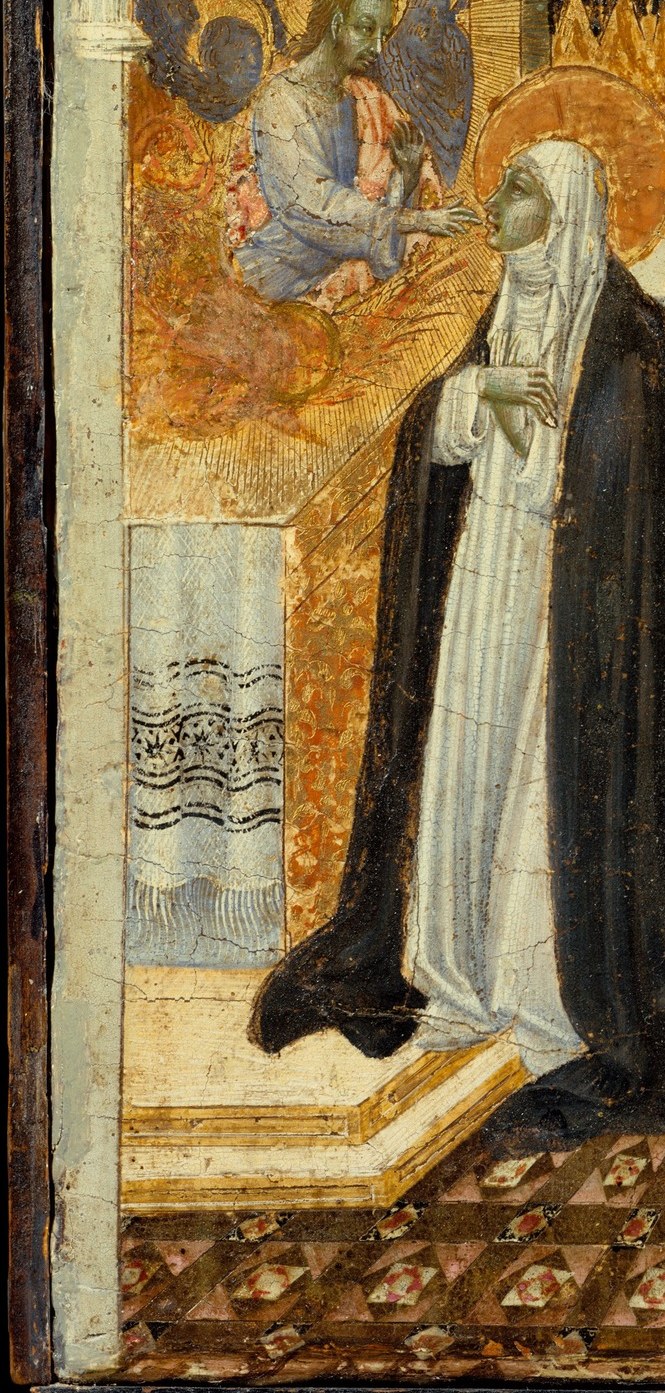
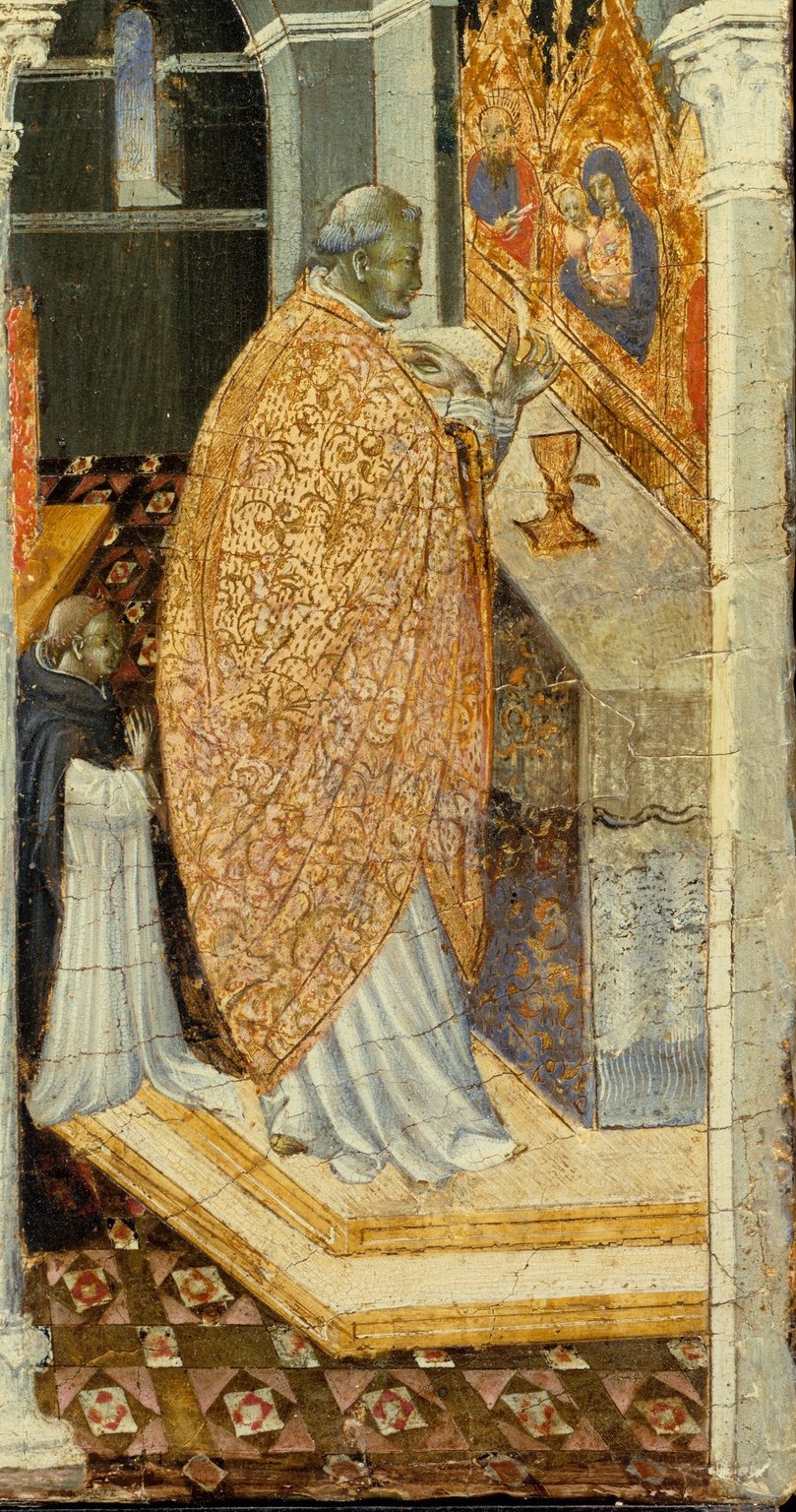
A saint kneels, bathed in gold. This is Giovanni di Paolo's 'The Miraculous Communion of Saint Catherine of Siena,' painted around 1450 and now in The Metropolitan Museum of Art. It shows the moment Catherine of Siena, a 14th-century mystic and Dominican tertiary, believed she received the Eucharist directly from Christ.
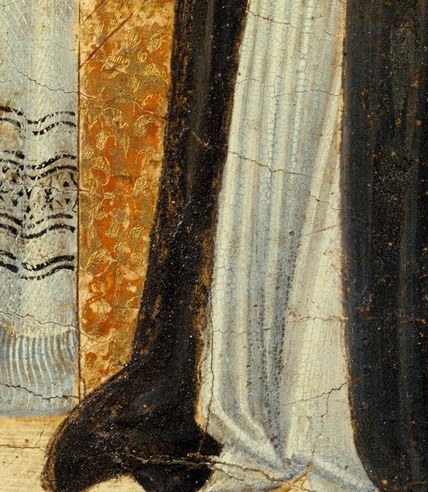
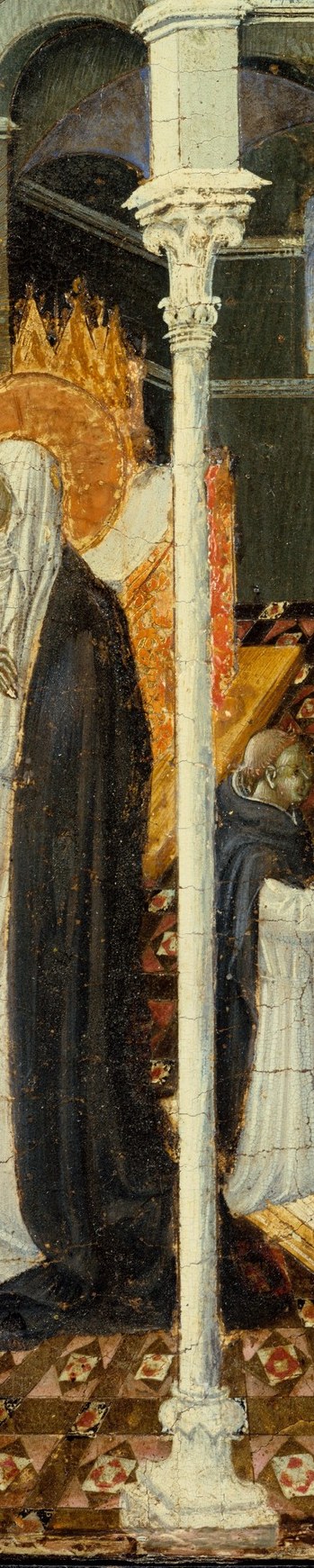
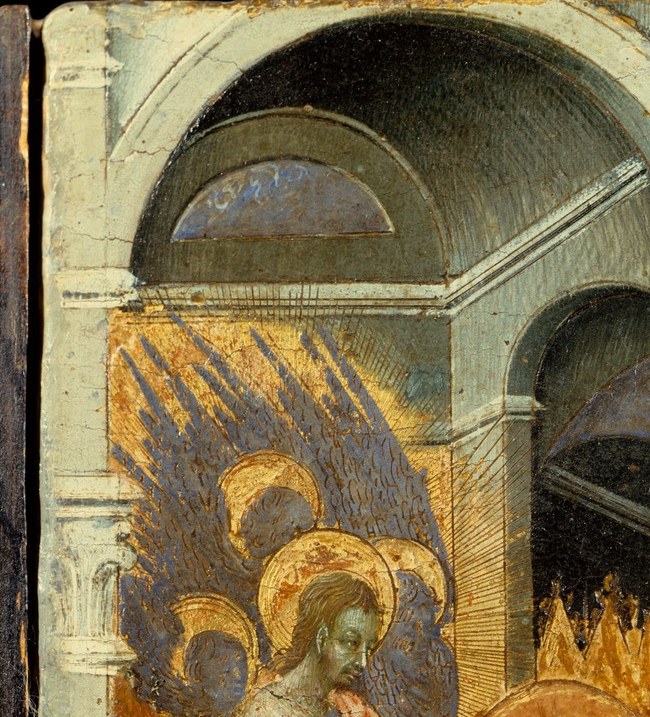
The composition is split by a white marble column. On one side, Catherine's black-and-white habit contrasts with the dazzling gold of the divine figure offering the Host. On the other, a checkered floor tiles into the background, showing an early awareness of perspective. But the real secret is in the upper left. Tucked into the arcade, above the gold ground, tiny angel figures watch the scene unfold. Most viewers scroll right past them.
Catherine of Siena was one of the most powerful spiritual voices of the Middle Ages, and she was canonized just over a decade after this panel was completed. Giovanni di Paolo was the leading Sienese painter of his generation, and his work here straddles two worlds: the medieval hieratic gold background and the emerging spatial ambition of the Renaissance. Those background angels are not just decoration. They confirm that this private mystical vision was, in the artist's telling, witnessed by the entire celestial court.
The painting rewards the slow look. The gilded halo is actual tooled gold leaf, built to catch candlelight. And high in the corner, the angelic witnesses have been waiting quietly for nearly six centuries.
Details
Transcript
A saint kneels in rapture. She receives the Host directly from a divine figure. The column divides the earthly from the sacred. But look up. This miracle is not private. Heavenly witnesses watch from the upper arch. Catherine's private ecstasy had a celestial audience.