Portrait of a Man by Cranach the Elder, Lucas
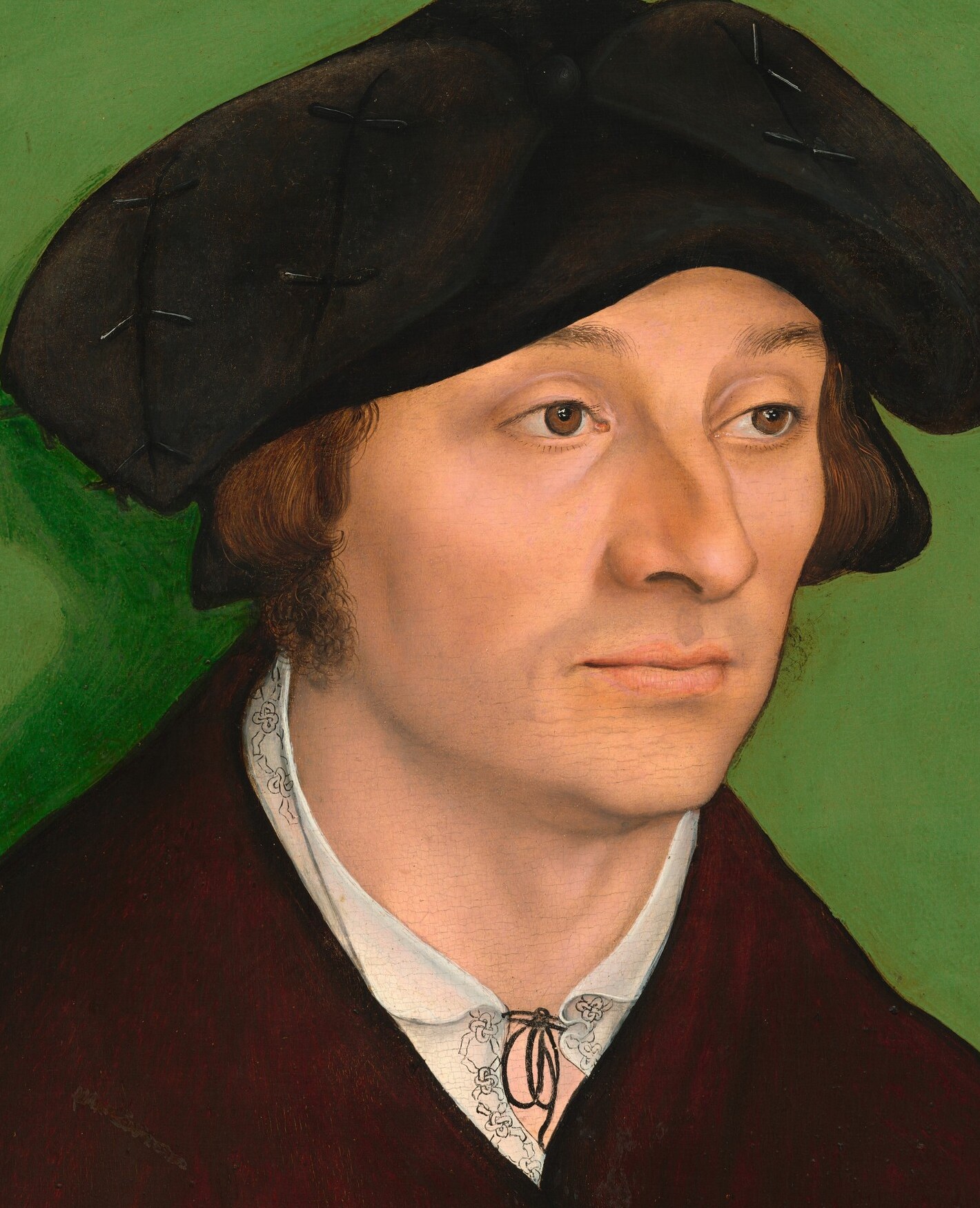
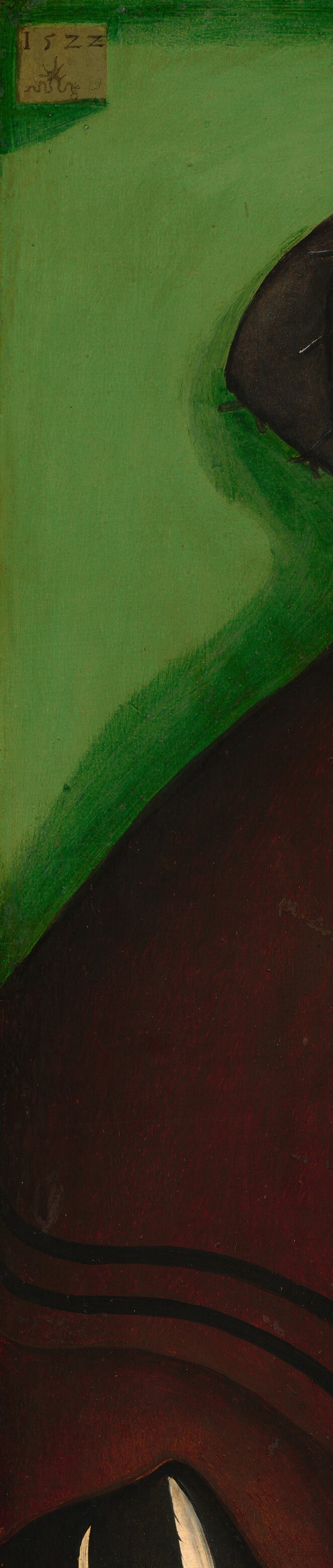
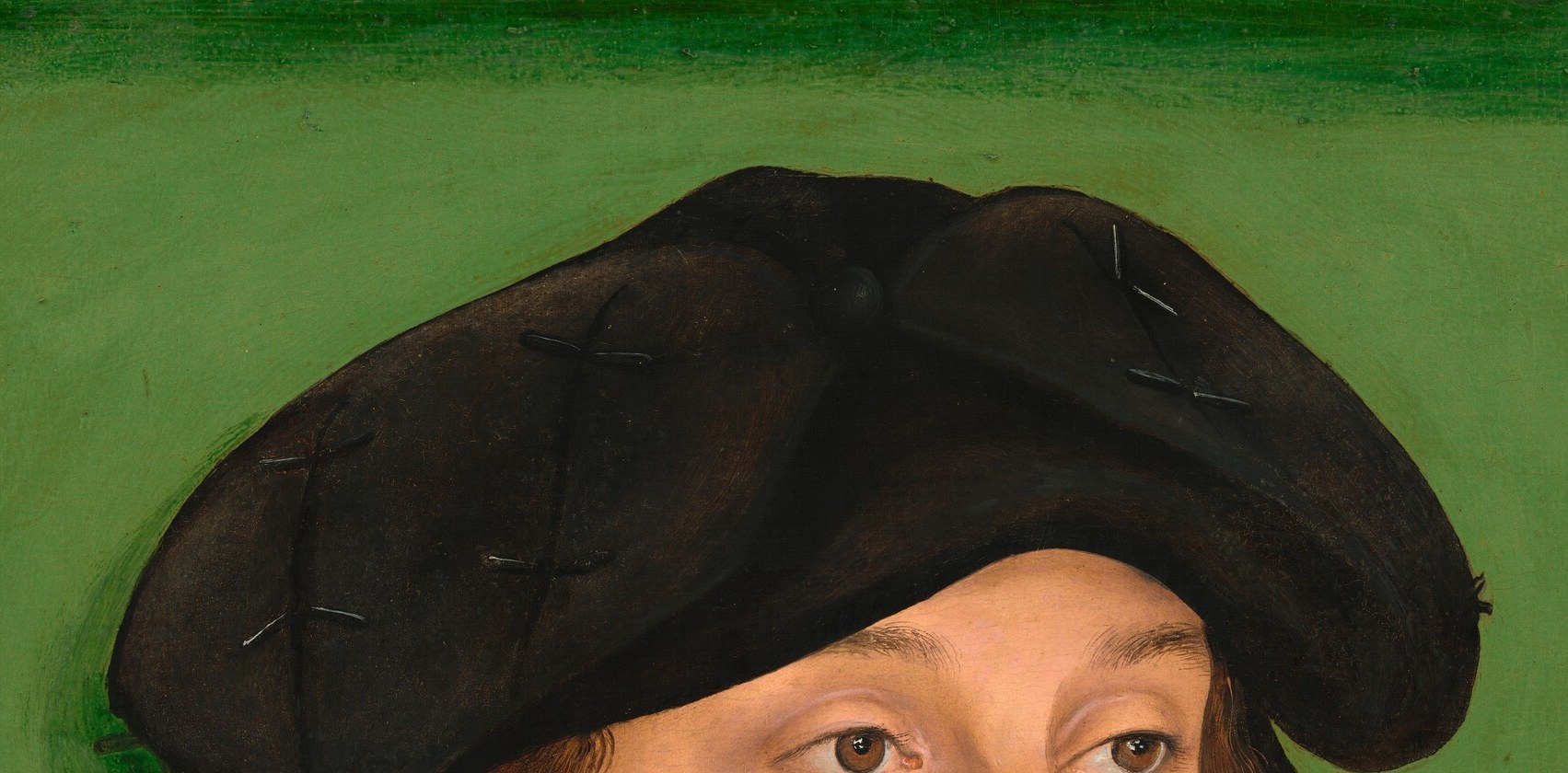
Portrait of a Man was painted by Lucas Cranach the Elder in 1522, and the sitter's name has been lost to time. The panel now lives in its quiet mystery, a single individual preserved against a flat green void, asking nothing but giving everything.
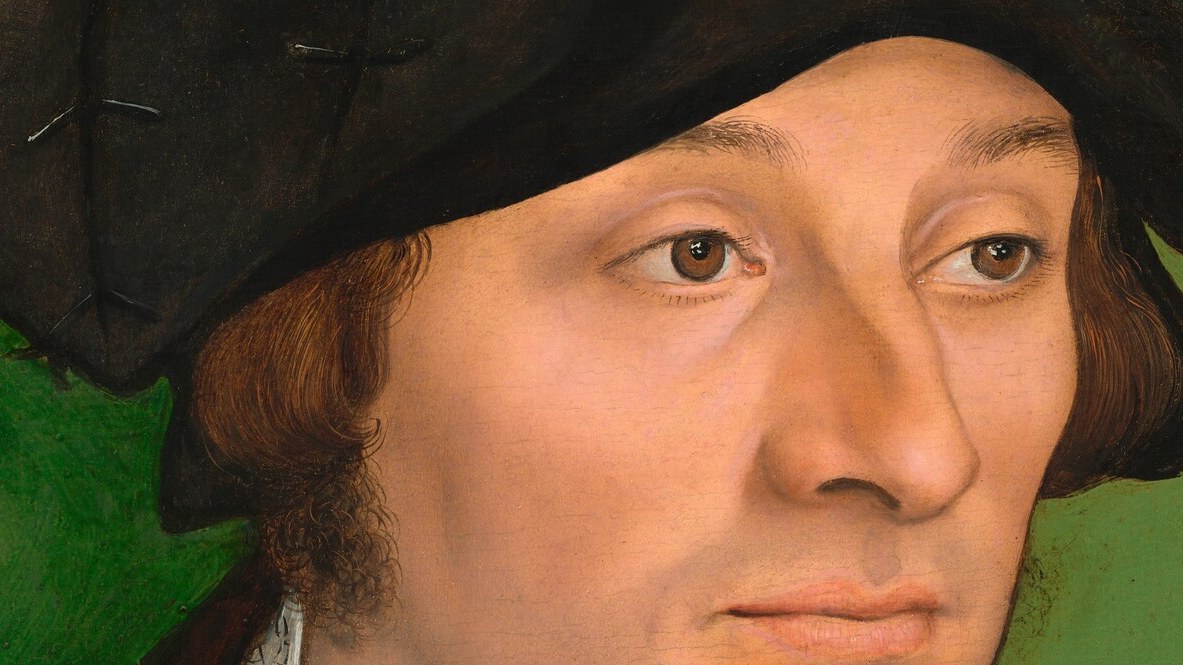
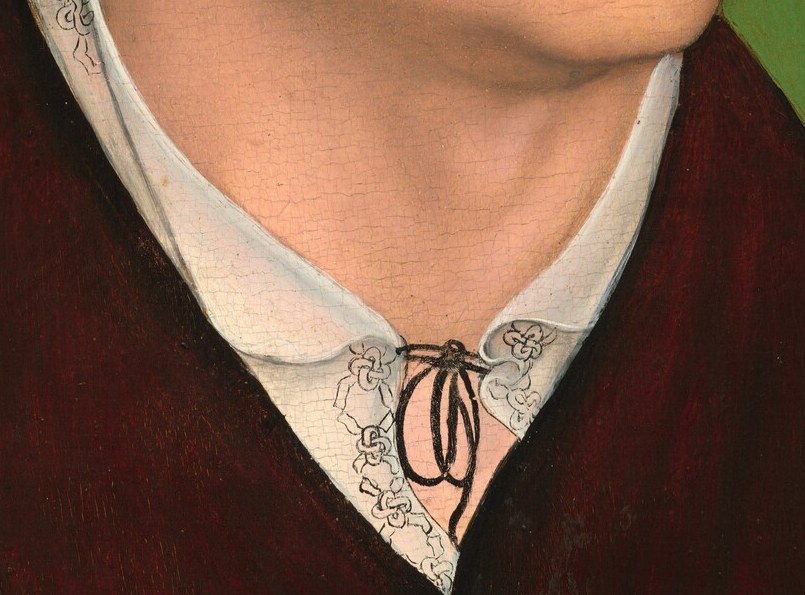
Look at his uneven eyes, one sitting slightly higher than the other. Look at the firmly closed mouth. Cranach wasn't flattering a patron here. He was recording a specific, real face with the kind of graphic clarity that distinguishes his best portraits from the idealized smoothness of his Italian contemporaries. The plain black beret and dark burgundy doublet tell you he was prosperous but not aristocratic: a merchant, a scholar, a Reformation-era burgher with the means to commission the most successful German artist of his day.
Cranach was court painter to the Electors of Saxony and a close personal friend of Martin Luther. He painted Luther eleven times and became the visual voice of the Protestant Reformation. Whoever this man was, he moved in those circles. He lived through a moment when the Western world cracked open, and he chose Cranach to paint his face in the middle of it.
The real power of this painting is the gaze. It hasn't faded, hasn't softened, hasn't become a museum artifact. It still looks back at you squarely, waiting. What do you think he would say if he could speak?
Details
Transcript
He has no name anymore. Five hundred years have erased it. But they couldn't erase this. A level, unblinking look that holds you still. Cranach was Luther's close friend and portraitist. So this man likely stood in the room with a reformer. A witness to history, looking back at you.