Edward VI as a Child by Holbein the Younger, Hans
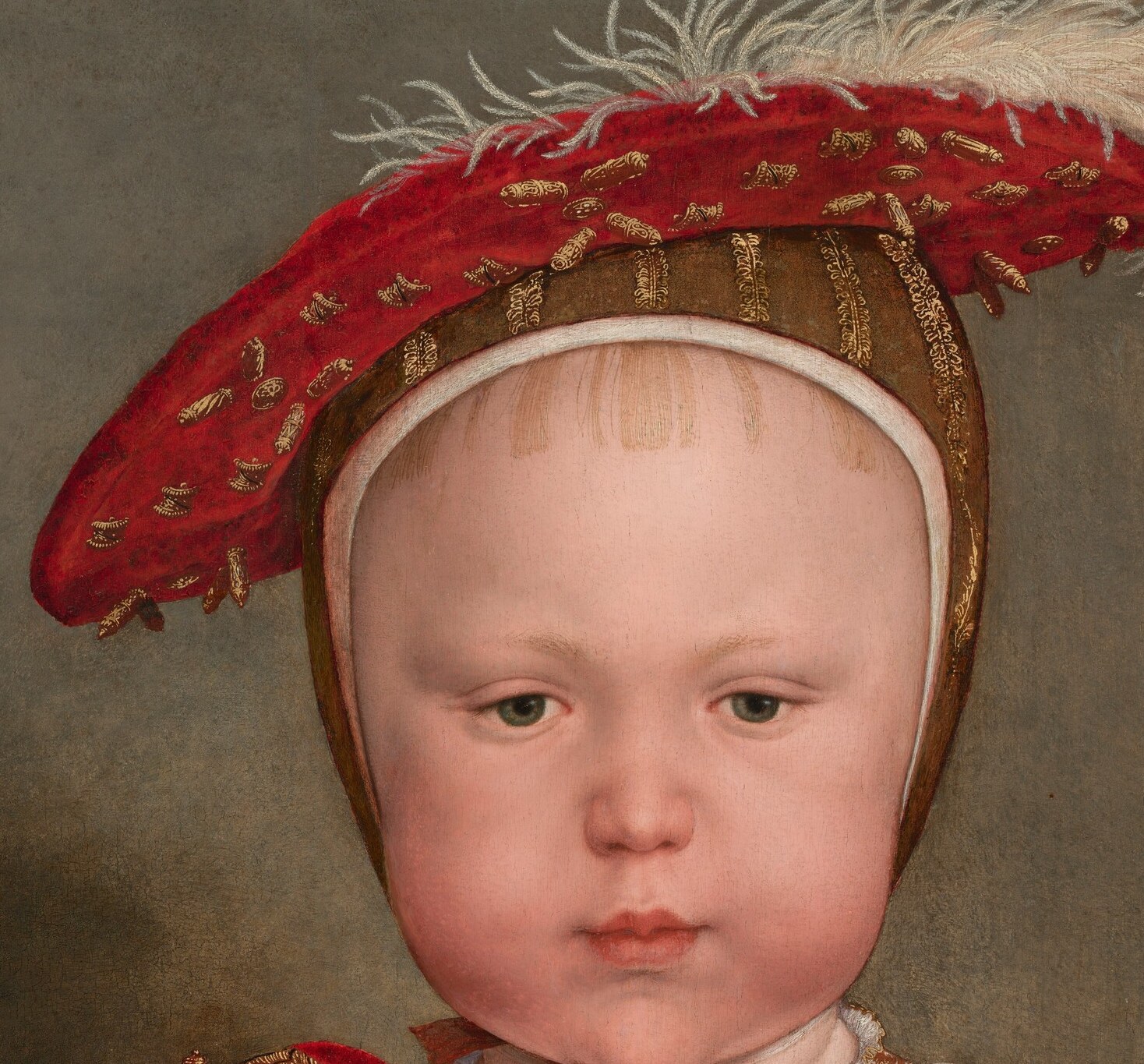
Hans Holbein the Younger painted "Edward VI as a Child" around 1538, and it hangs today in the National Gallery of Art in Washington. It is a dynastic sales pitch in oil. Henry VIII had one legitimate son, born a year before this panel was made, and the Tudor line felt terrifyingly fragile. Holbein was brought in to make the baby look like a king.
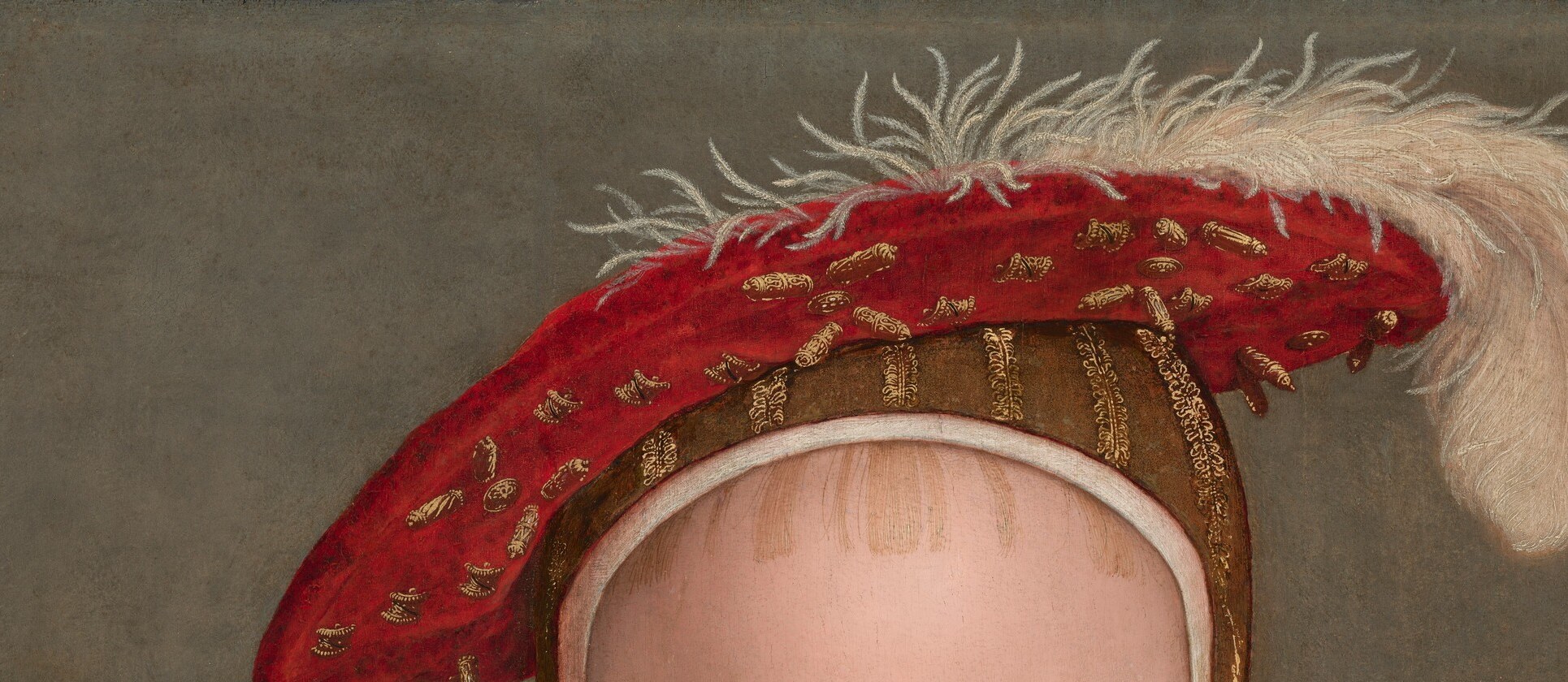
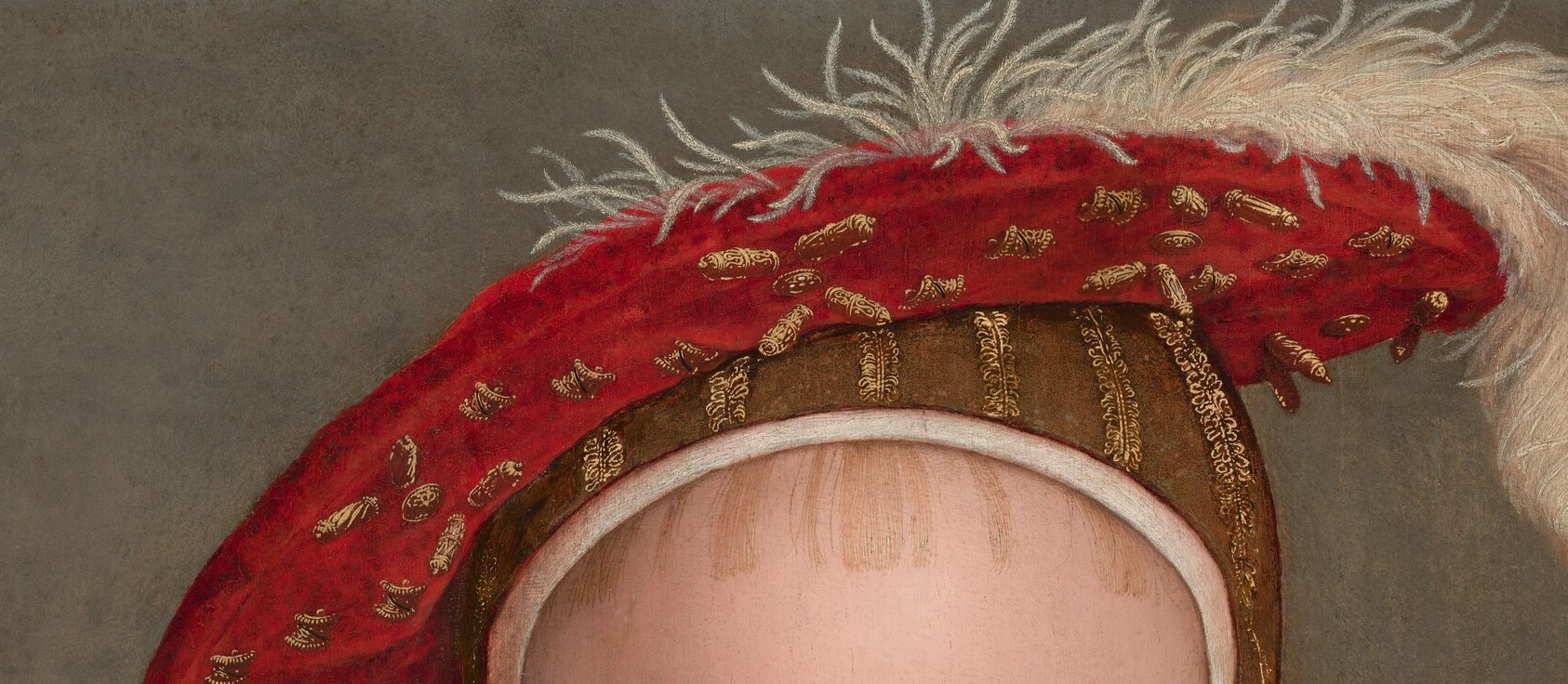
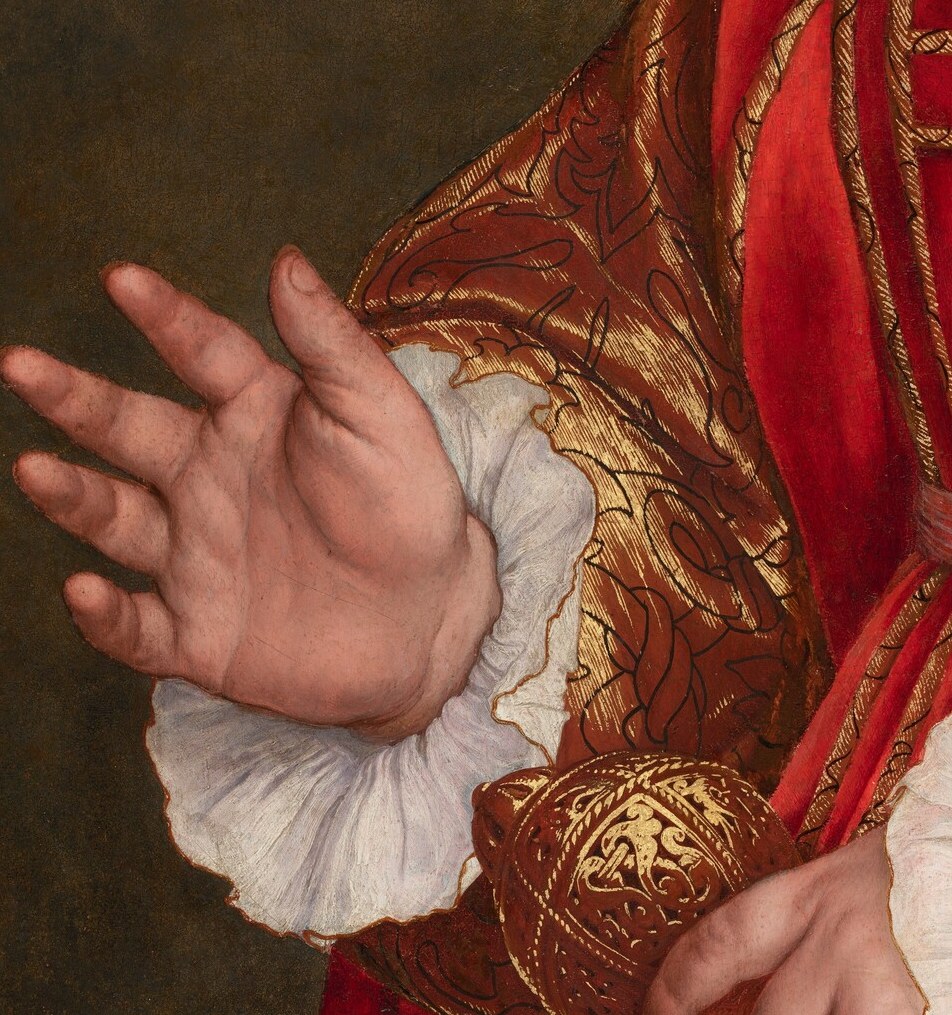
The tension is right there on the surface. The face is soft, the cheeks infant-round, a white linen coif frames the jaw like a newborn's bonnet. But the cap is scarlet, the doublet is gold brocade, and the right hand is raised in a gesture lifted straight from papal benediction iconography. A one-year-old blessing the viewer: it is both tender and fierce.
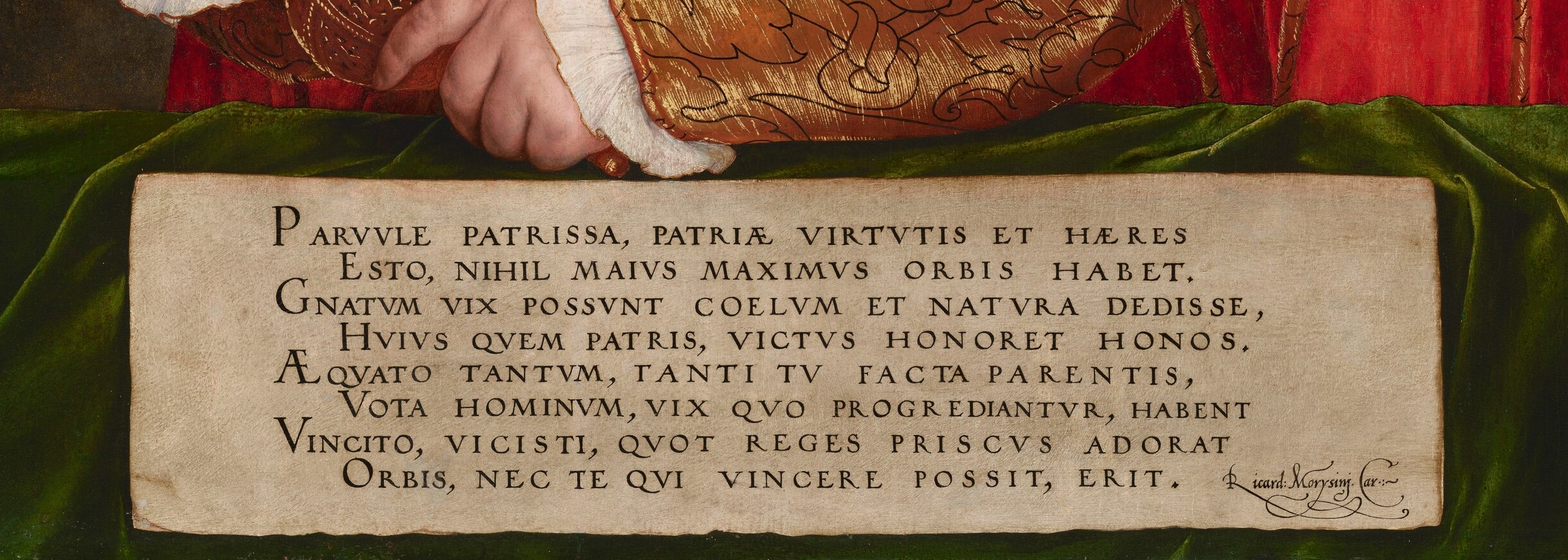
The real payload is the Latin inscription at the bottom, easy to scroll past. Written as a dedication poem, it urges little Edward to surpass his father in virtue, not merely in station. Given Henry VIII's recent marital history and the execution of Anne Boleyn, that line lands less as flattery and more as a whispered hope, or a warning, hiding in plain sight on a gift the king would have looked at every day.
Holbein gave the child monumental gravity inside a flat olive-green void, no distractions. Edward VI would be crowned at nine and dead at fifteen. This painting outlasted every argument it was made to win.
Details
Transcript
He wears the face of a one-year-old and the clothes of a king. Holbein painted this heir for Henry VIII, who desperately needed a son. The scarlet cap and white plume are the heraldry of the Prince of Wales. His raised hand borrows the gesture of a papal blessing. Now read the Latin inscription below. It urges this child: surpass your father in virtue, not merely in power. A coded plea, hidden in a gift for a king who executed wives.