The Temptation by Pietro Longhi
Pietro Longhi's 1746 painting, The Temptation, is so psychologically frank about the business of prostitution that it spent most of its life hidden away. Now held at The Metropolitan Museum of Art, the canvas stages a transaction in a dim Venetian interior. Longhi specialized in trapping his city's private vices inside polite domestic frames, and this work is his most direct.
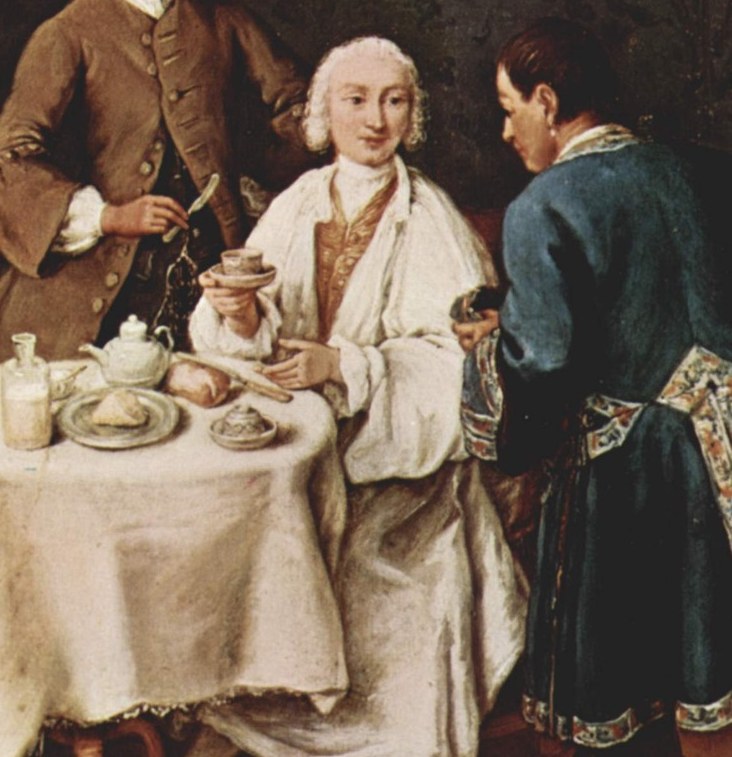
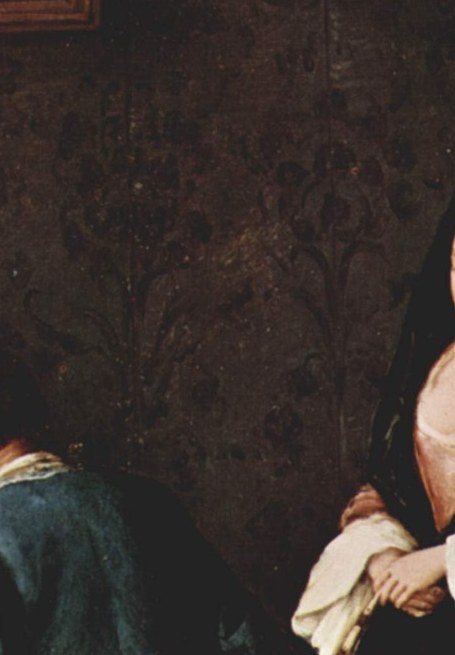
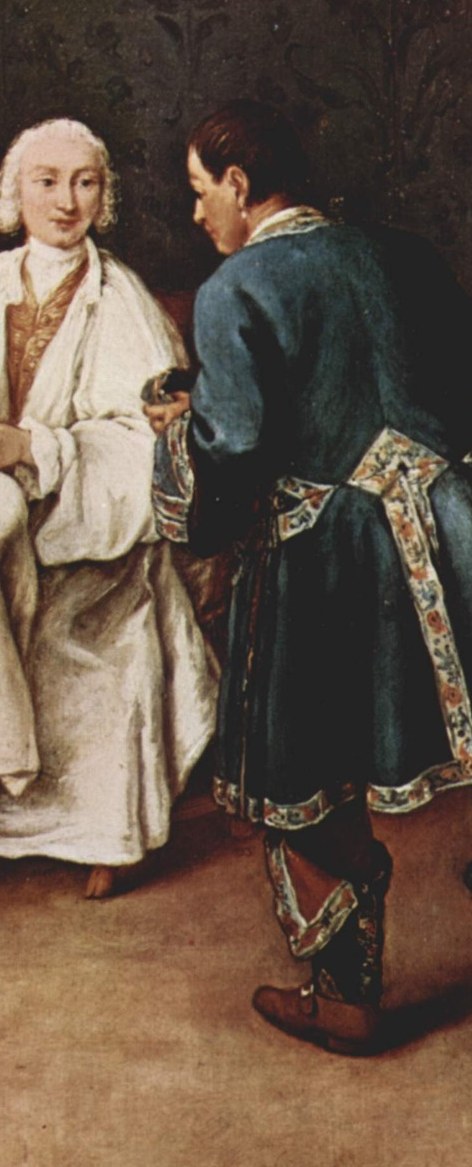
At first glance, you see a man in his dressing gown hosting a social call. Teacups sit on a white cloth. The pleasantries almost convince you. Then your eye finds the young woman's deliberately open neckline, the older bawd standing guard with a coldly calculating stare, and the crouching broker whose bent body literally bridges the distance between desire and decorum. The man's face is the hinge: caught between interest and hesitation, his expression gives the scene its real moral weight.
Longhi painted this in a Venice where the Ridotto gambling house was running at full tilt and masked nobles conducted their private business in public squares. Genre scenes like this replaced the grand history paintings the city's patrons no longer wanted. But even by those lax standards, this painting's content was too legible. It bypassed public exhibition entirely and descended through private hands for nearly two centuries before the Met acquired it.
Every person in this room knows exactly what is happening. The only question left is whether the man in the white robe will say yes.
Details
Transcript
In 1746, Pietro Longhi painted a social call. Tea is served. The domestic setting seems respectable. But look at the woman's dress. And the older woman, standing watch. This is not a family visit. It is a negotiation. The crouching man in the middle is the broker. Longhi's painting was considered so indecent, it stayed hidden in private collections for centuries. He hesitates.