Fushan Monastery by Song Xu
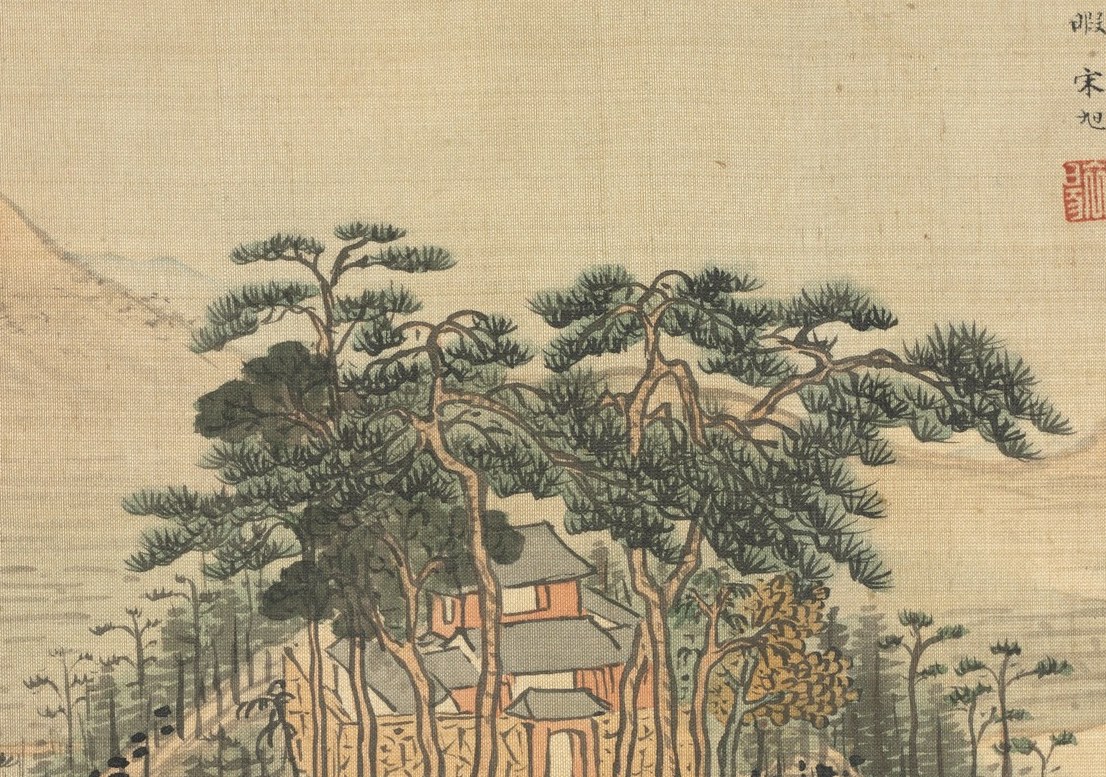
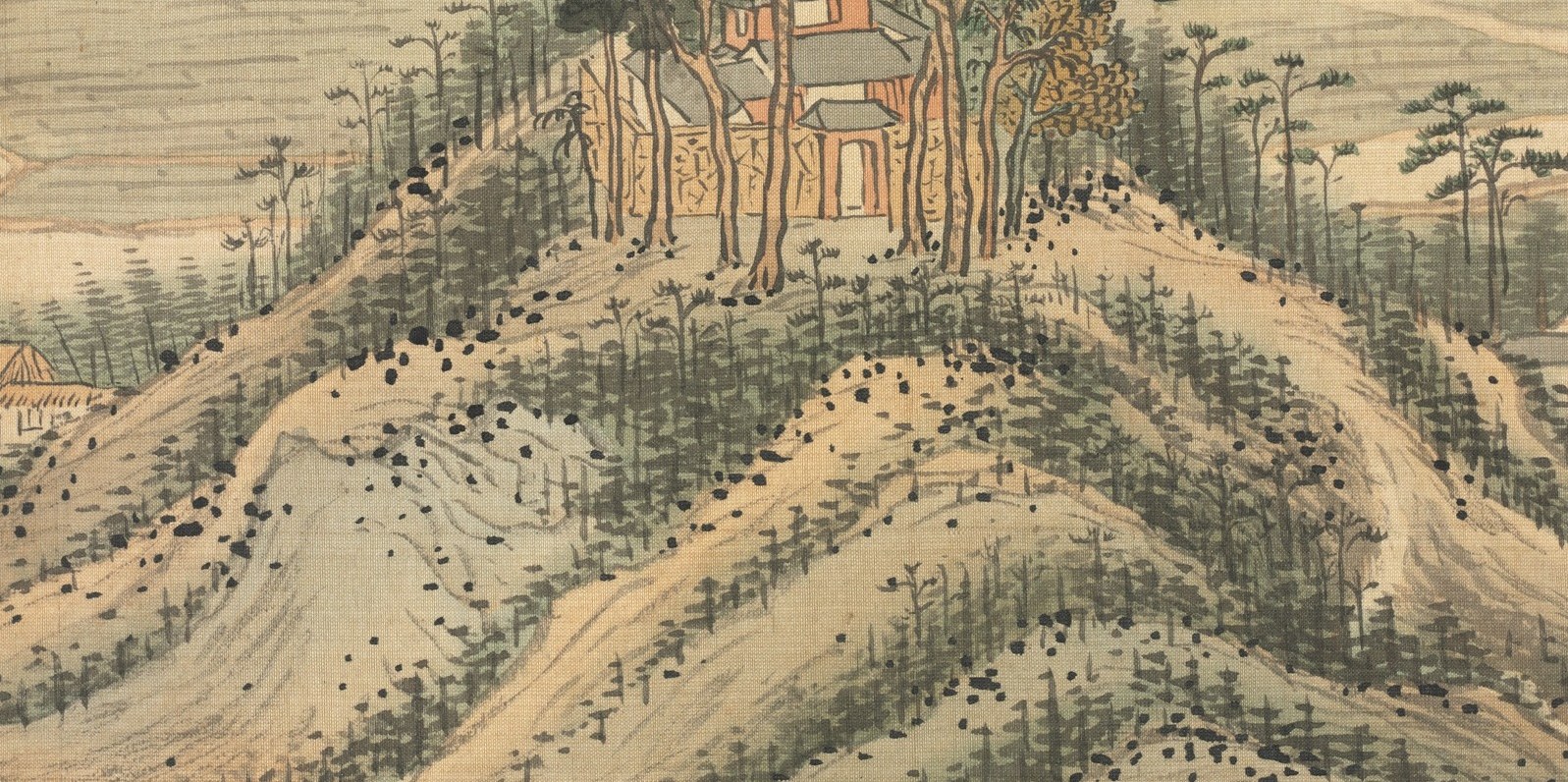
This is 'Fushan Monastery' by the Ming dynasty painter Song Xu, dated to 1594. It hangs at The Cleveland Museum of Art, a serene landscape of misty hills and a hidden temple. For a long time, its authenticity was the real subject of debate.
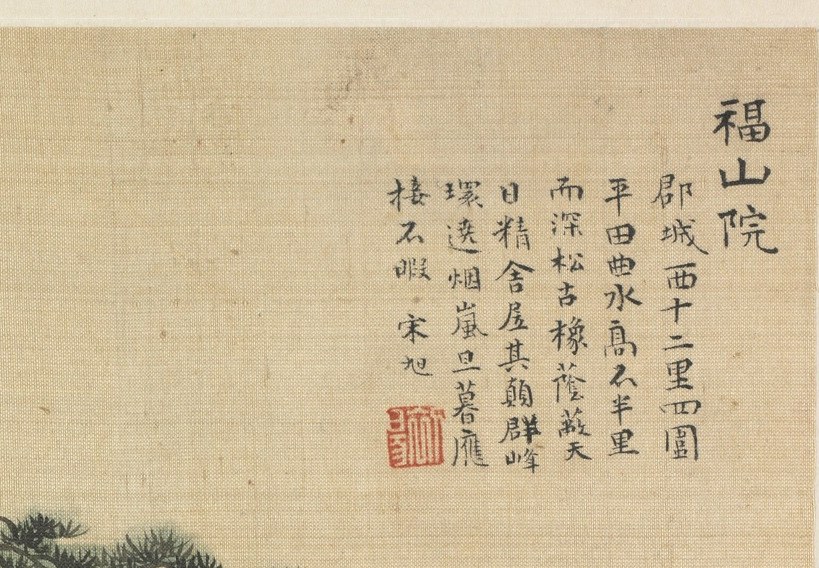
A small red seal stamp sits in the upper right corner of the painting, tucked within a block of calligraphy. That seal belongs to Zhang Taijie, a well-known collector from the late Ming period. He was also a forger. Taijie operated a workshop that produced imitations of historic masterworks, and his ownership seal appears on many works now considered fakes, clouding the provenance of every piece it marked.
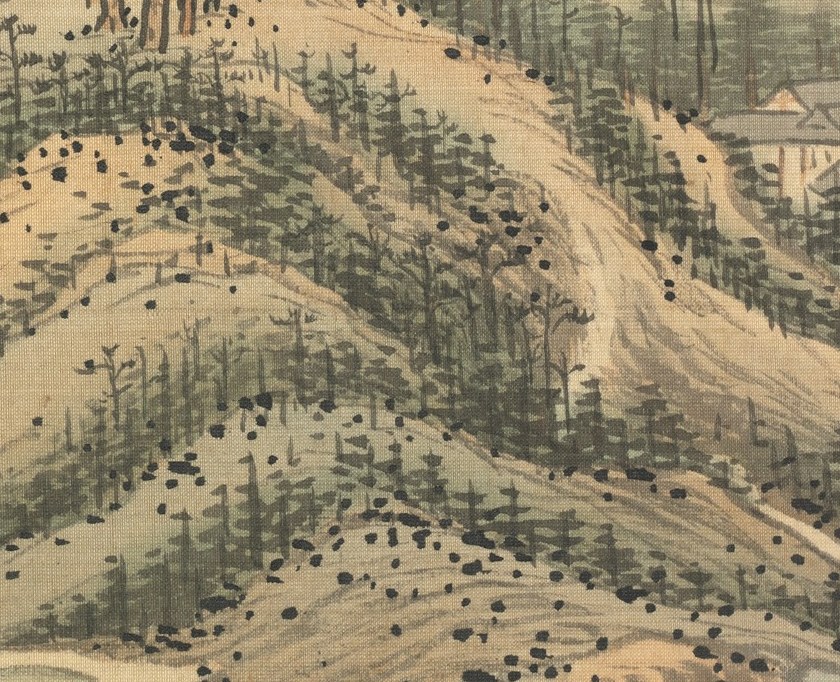
Because of this single stamp, Fushan Monastery spent years in art historical limbo. Scholars had to look past the tainted provenance and study the brushwork itself, particularly the distinct dotting technique Song Xu used to create atmospheric depth in the hills. Eventually, the painting's direct technique and stylistic connection to Song Xu's other documented works convinced experts of its authenticity.
Provenance can obscure the truth, but the physical brush never lies. What would you trust more, a collector's stamp or the artist's hand?
Details
Transcript
A quiet mountain monastery from 1594. The artist, Song Xu, built this landscape with calligraphic brushwork. But the painting came with a problem. Look at the red seal in the upper right. It belonged to Zhang Taijie, a notorious Ming collector. He ran a workshop that forged great masters for profit. His seal appears on many fakes, casting doubt on everything it touched. For decades, scholars questioned whether this landscape was genuine.