An Allegory, Probably of the Peace of Utrecht of 1713 by Antoine Rivalz
Antoine Rivalz painted 'An Allegory, Probably of the Peace of Utrecht of 1713' in 1691, and it lives at The Metropolitan Museum of Art. The treaty ended the War of the Spanish Succession, a conflict that had drained Europe for over a decade, so the painting is a victory lap: France and her allies securing a hard-won peace under the eyes of heaven.
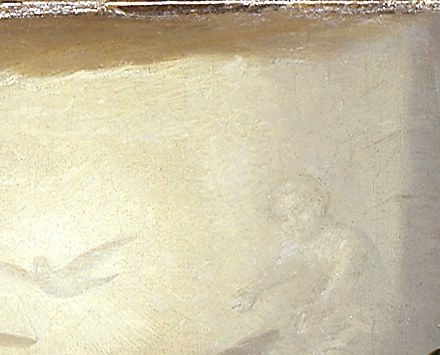
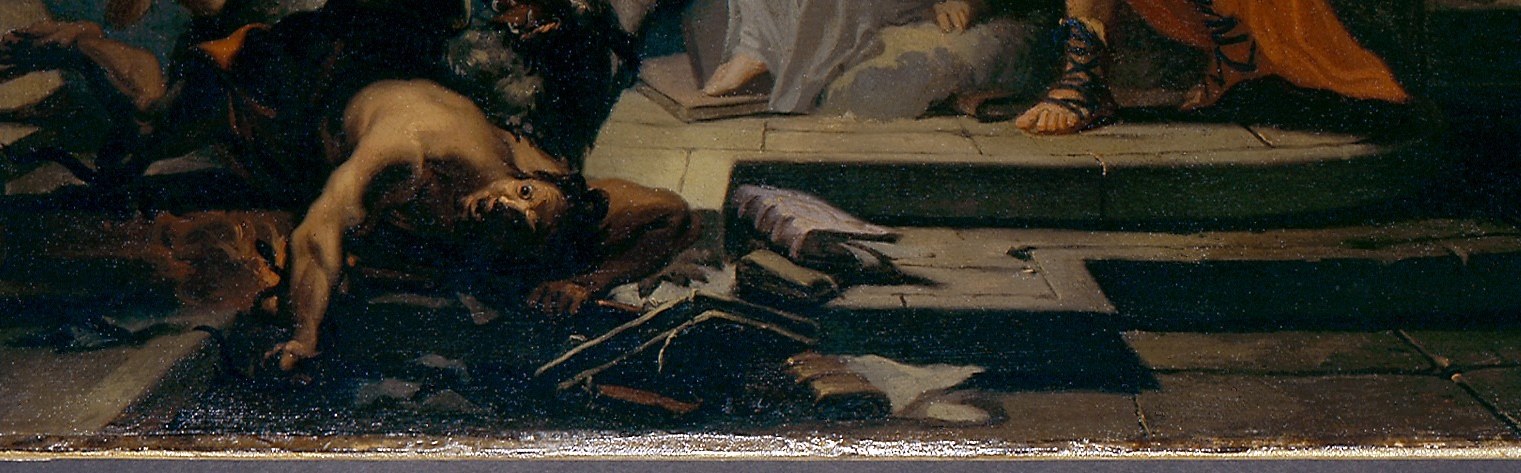
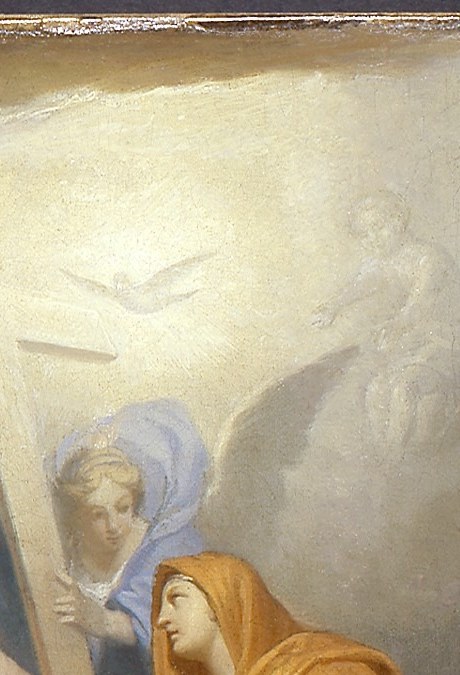
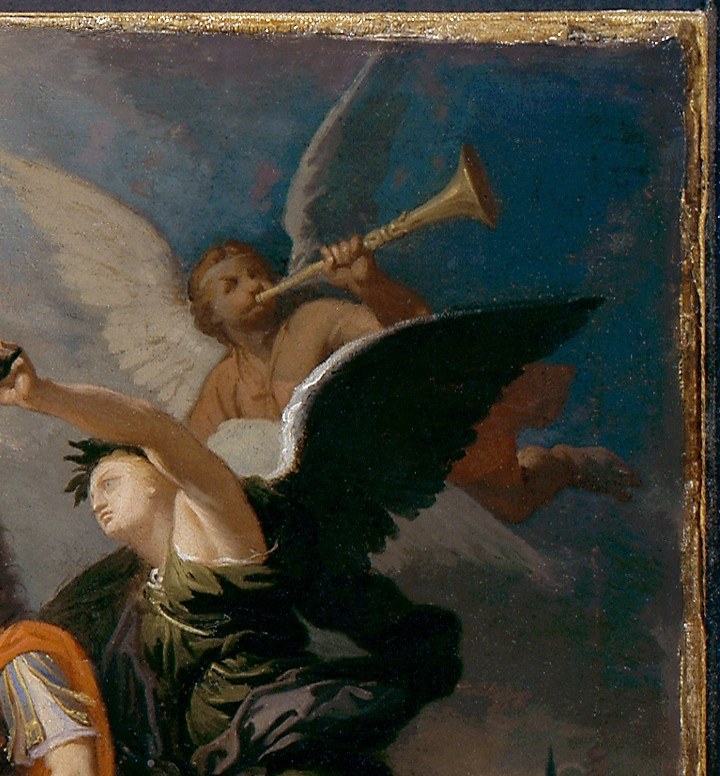
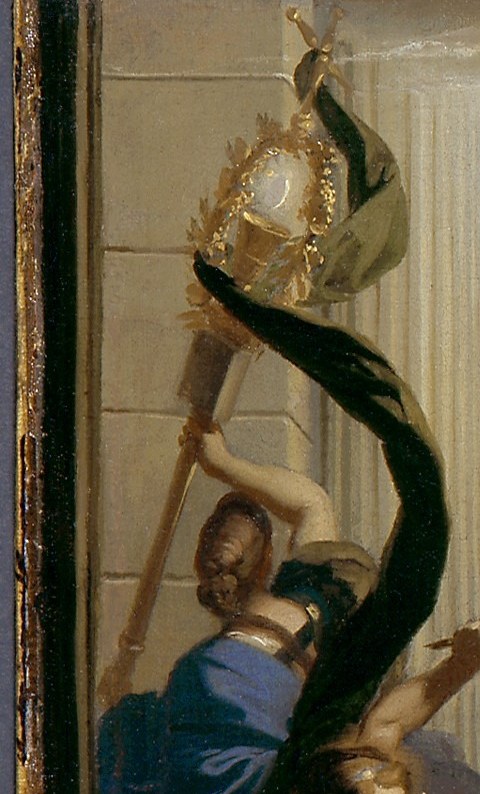
Look first at the drama of light and dark. Rivalz uses a shaft of golden radiance to pull your eye upward to a white dove, the Holy Spirit, while below it a heap of broken swords and a drum lie abandoned. But then scan the upper left corner. A single shadowy figure in a dark cloak is slipping away into the gloom. Most people scroll right past him.
That cloaked figure is the real point. Rivalz was the official painter for Toulouse, a man who knew the city's society inside and out. He understood that a treaty signed in a palace doesn't automatically silence every grudge. The shadow isn't a monster on the battlefield; it is a whisper that danger has merely been pushed to the periphery. The serpent on the left and the retreating figure bookend the central peace, and neither one is dead.
It is an honest allegory. The light is bright, but the corner is dark. What do you suspect that cloaked figure is waiting for?
Details
Transcript
This looks like a straightforward celebration of peace. Allegorical figures seal a treaty under a divine light. The war is over. The weapons are in a heap on the ground. But the painter, Antoine Rivalz, knew peace was fragile. So he hid a warning. Look past the angel, into the dark. A shadowy figure in a dark cloak is retreating. Discord hasn't been destroyed. It's waiting in the margins.