清 吳歷 墨井草堂消夏圖 卷|Whiling Away the Summer at the Ink-Well Thatched Hut by Wu Li
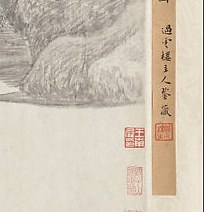
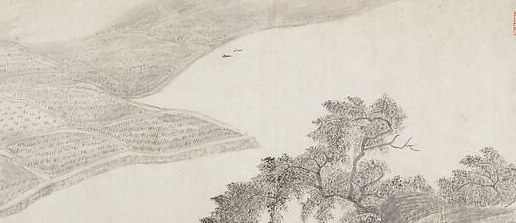
This is Whiling Away the Summer at the Ink-Well Thatched Hut, an ink-on-paper handscroll by the Chinese artist Wu Li, painted in 1679. At a New York auction in 2013, a fierce bidding war drove its price from a modest estimate to a staggering $1.2 million, a testament to its quiet power and extreme rarity.
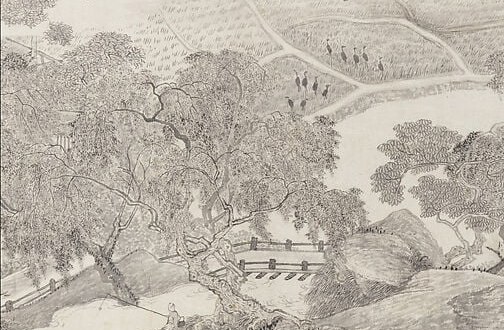
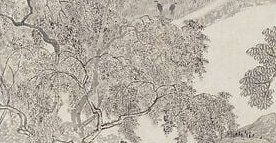
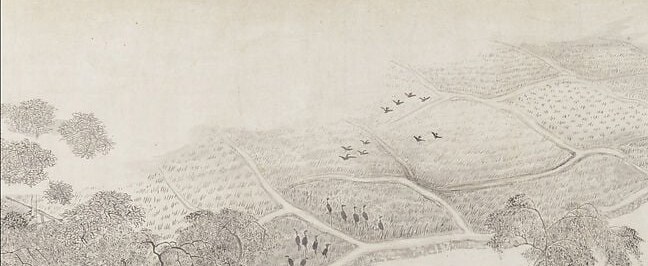
Look first at the lower-left grove. Nestled inside the dense ink-washed trees, barely visible, is a small thatched hut: the ink-well retreat of the title. The painting is largely empty paper; the bare expanse across the center acts simultaneously as river, mist, and the heavy stillness of a humid summer day. The only motion comes from a few small birds gliding above the water.
Wu Li made this scroll for a friend during the Qing Dynasty, mastering the restrained, boneless wash technique of the literati tradition. Much later in life, after being widowed, he converted to Catholicism and, in 1688, became one of the first three Chinese Jesuit priests, spending his remaining thirty years serving rural villages under the name Simon-Xavier a Cunha.
A handscroll painted for a friend, embodying the ideal of retreat from the world. Centuries later, it became the subject of a high-stakes auction fight. A lot of money to whittle away a summer.
Details
Transcript
In 1679, a Chinese scholar-painter made this for a friend. He called it Whiling Away the Summer. Hidden in the trees: an ink-well thatched hut. The paper itself becomes the mist, the river, the heat. In 2013, this scroll came up for auction. Many thought it would sell for a few thousand dollars. The final price, after a fierce bidding war, was $1.2 million. The artist, Wu Li, later became a Jesuit priest.