Charles V (1500–1558), Holy Roman Emperor by http://www.wikidata.org/.well-known/genid/0c13bd9b1b5739a463d7bff51988f13d
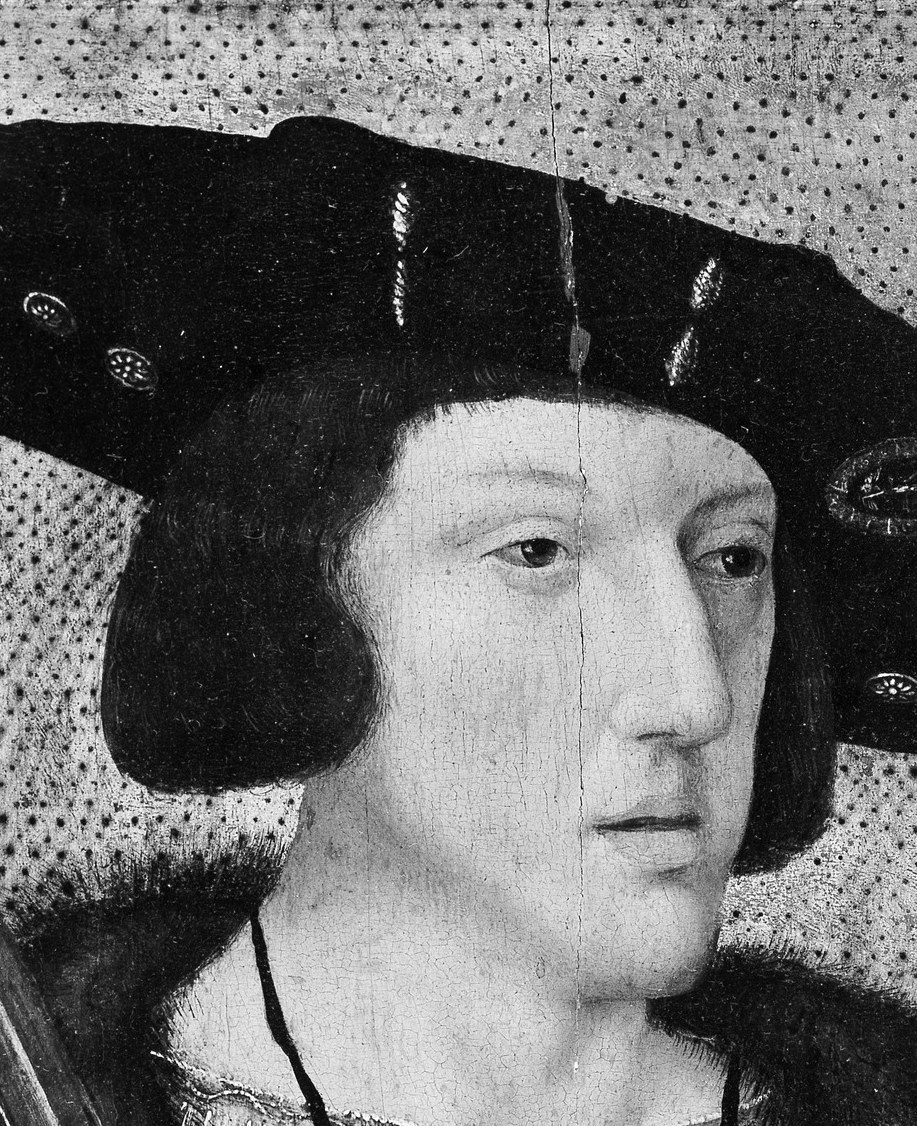
This is Charles V, Holy Roman Emperor, painted by Bernard van Orley around 1519-1520. Charles is barely nineteen here, yet the portrait already projects the gravity of a man who would rule an empire stretching from Spain to the Low Countries and across the Atlantic. The painting hangs today in the Museum of Fine Arts, Budapest, still bearing the scars of a night it nearly ceased to exist.
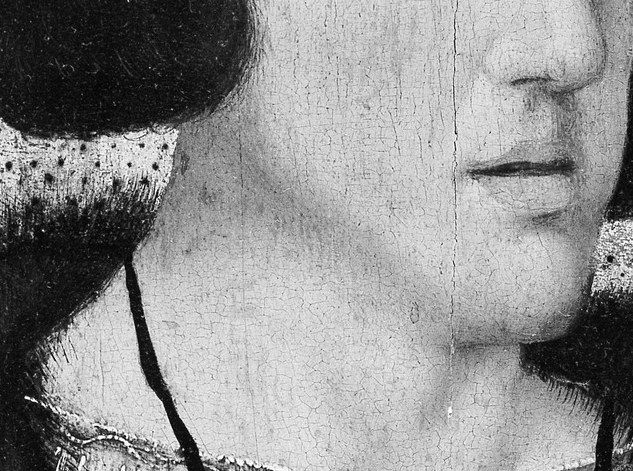
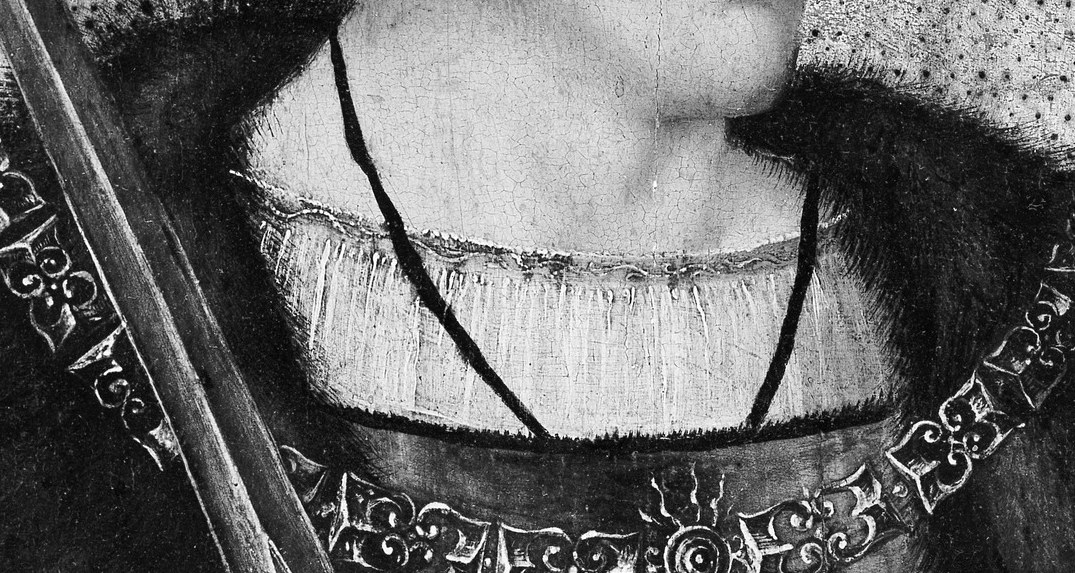
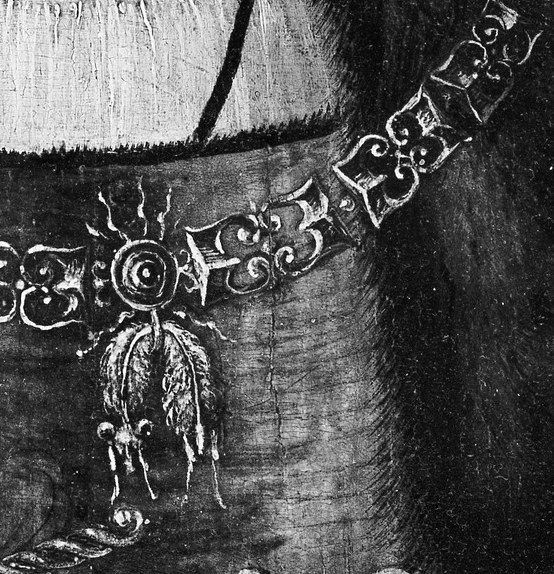
Look at the jaw first. The pronounced Habsburg chin is visible even in youth, a genetic trait historians have traced through centuries of royal portraits. Then move to the golden chain: that is the Order of the Golden Fleece, the premier chivalric honor of the dynasty. The sword held diagonally across the body is not a prop. It encodes military command, and the young emperor's hand grips it with a certainty that feels startlingly adult.
On Christmas Eve, 1734, a fire broke out at the Alcázar palace in Madrid. The royal collection burned for three days. Hundreds of paintings were destroyed. This portrait of Charles was ripped from its frame and thrown from an upper window to save it. It survived the fall, and it survived the fire, and the dark background here, that plain emptiness so typical of Flemish court portraiture, now carries the weight of what nearly vanished behind it.
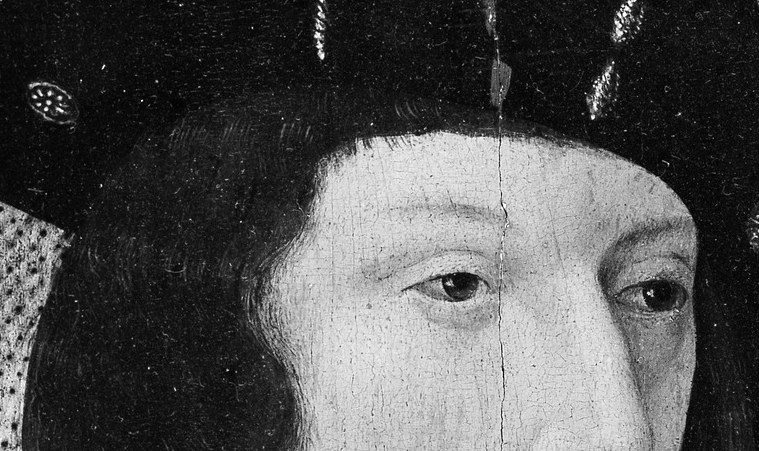
Have you ever stood in front of a painting and felt the sheer luck of its existence? This one, with its cool, level eyes, makes that feeling very hard to ignore.
Details
Transcript
A Habsburg emperor at nineteen. Already he holds a continent. That jaw. The Habsburg chin was famous across Europe. The heavy collar is the Order of the Golden Fleece. His right hand grips a sword, not a sceptre. This painting survived the 1734 fire that destroyed the royal palace in Madrid. It was hacked from its frame and thrown from a window as the roof collapsed.