Portrait of a man by Jan Mostaert
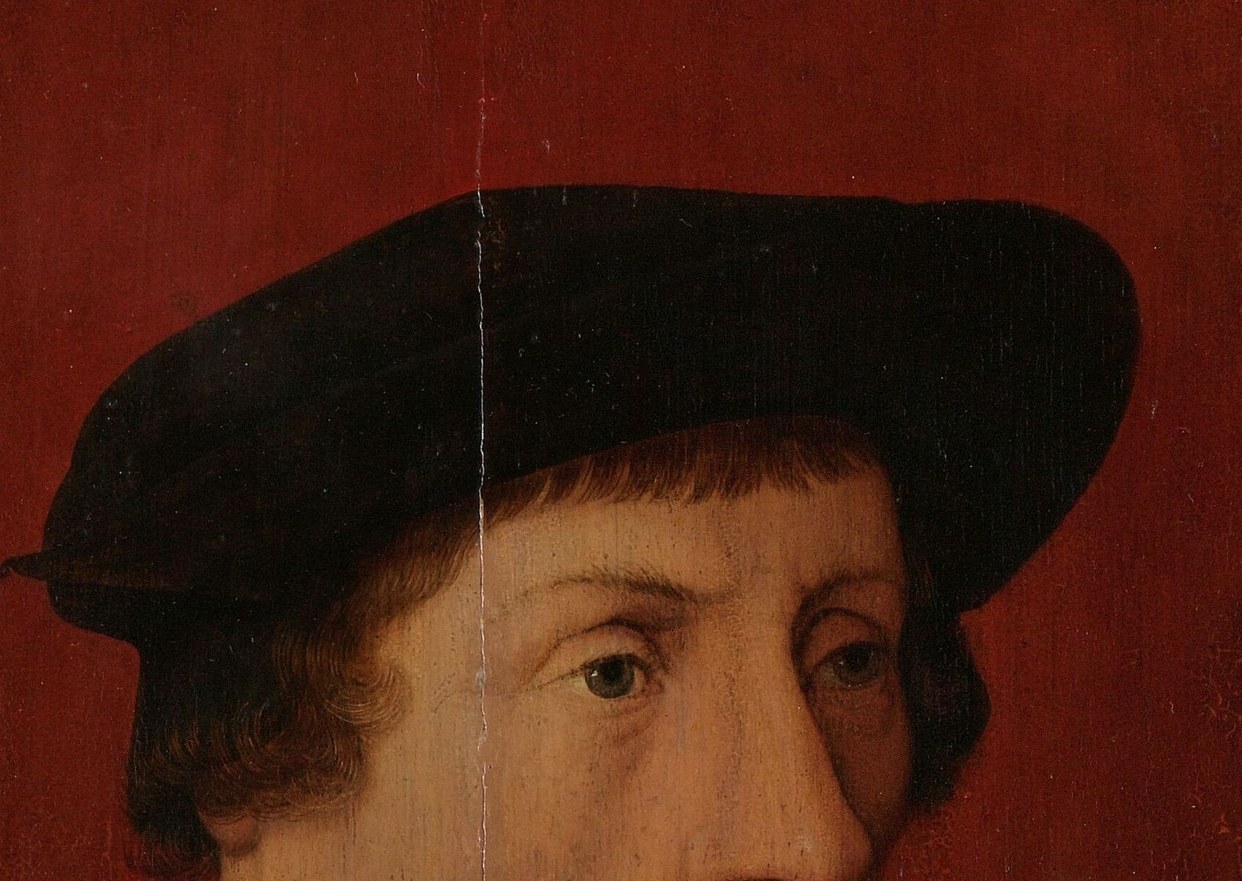
In Jan Mostaert's "Portrait of a man" from 1535, we find a subject whose identity and values are subtly encoded within the painting itself. This work, held in the Rijksmuseum, exemplifies the Mannerist style of the Dutch Renaissance.
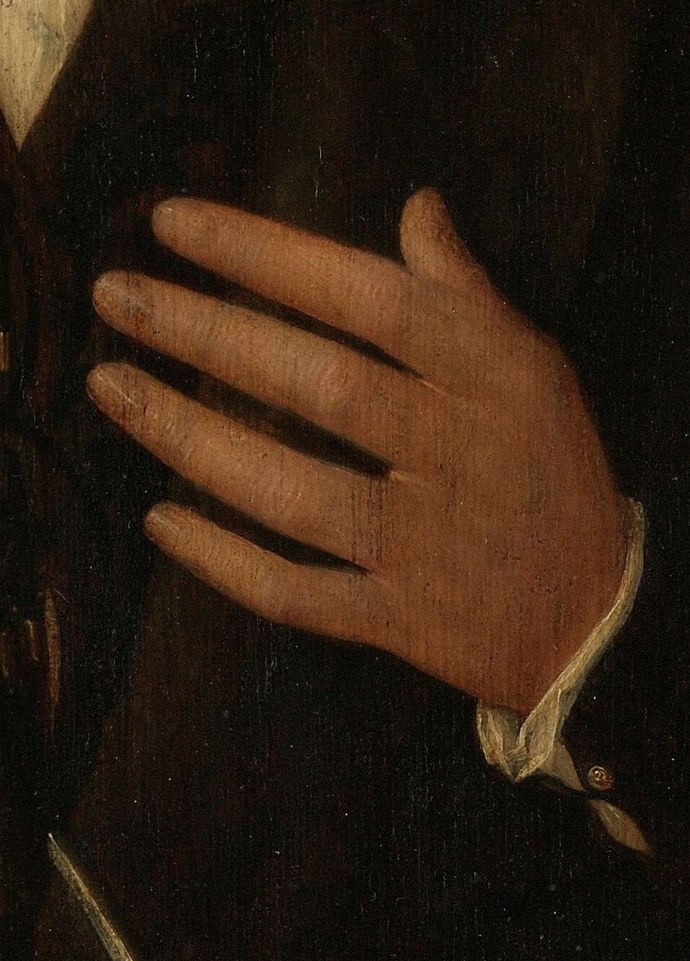
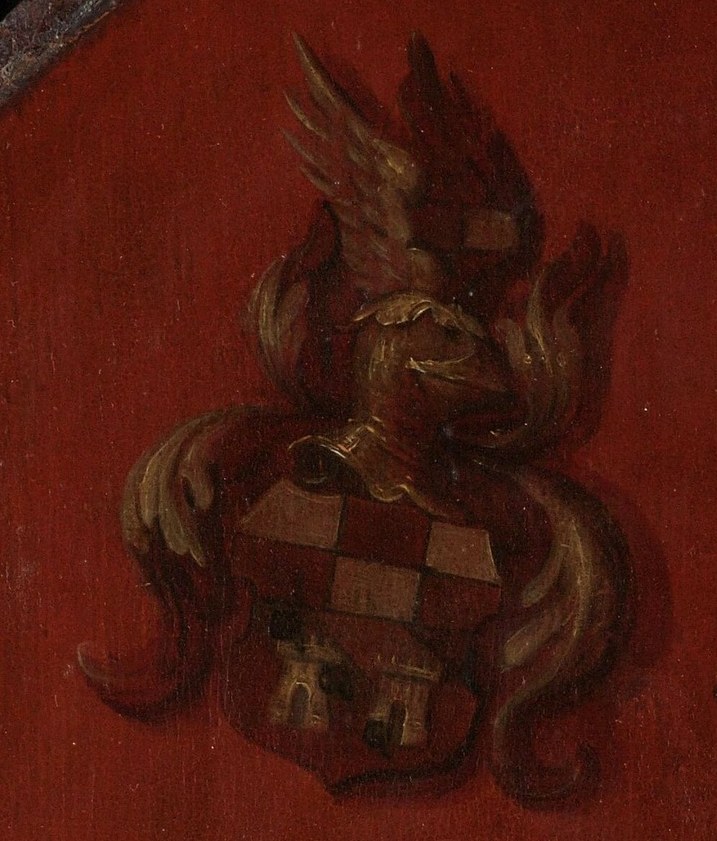
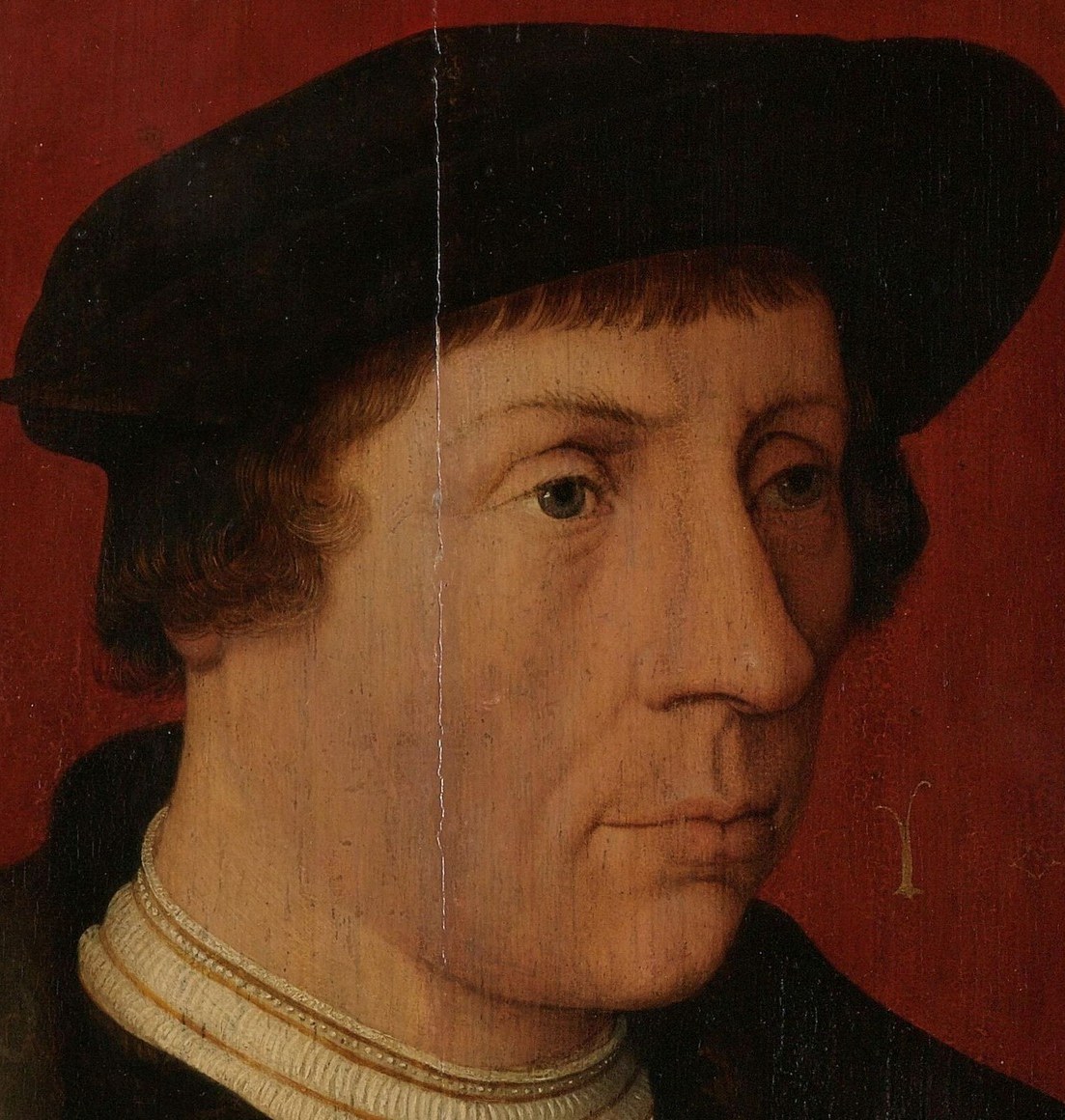
Look closely at the details: the man's hand over his heart, a classic gesture of sincerity, is complemented by the Latin inscription 'fide,' meaning 'faith' or 'trust.' These elements, along with his family's coat of arms, offer significant clues to his character and social standing.
Mostaert, a painter known for his religious subjects and portraits, created this work in a time when such symbolic elements were often used to convey deeper meanings about the sitter. While many details of Mostaert's life are scarce, his skill in capturing individual likenesses and embedding narrative is clear.
What do these visual clues tell you about the man in the portrait?
Details
Transcript
This man from 1535 sits at his desk, writing. His left hand rests on his heart, a sign of sincerity. This inscription means 'faith' or 'trust' in Latin. And his family's coat of arms, a symbol of lineage. The painter, Jan Mostaert, finished this portrait in 1535. Together, these elements tell us who he was.