Stylized Landscape by American 19th Century
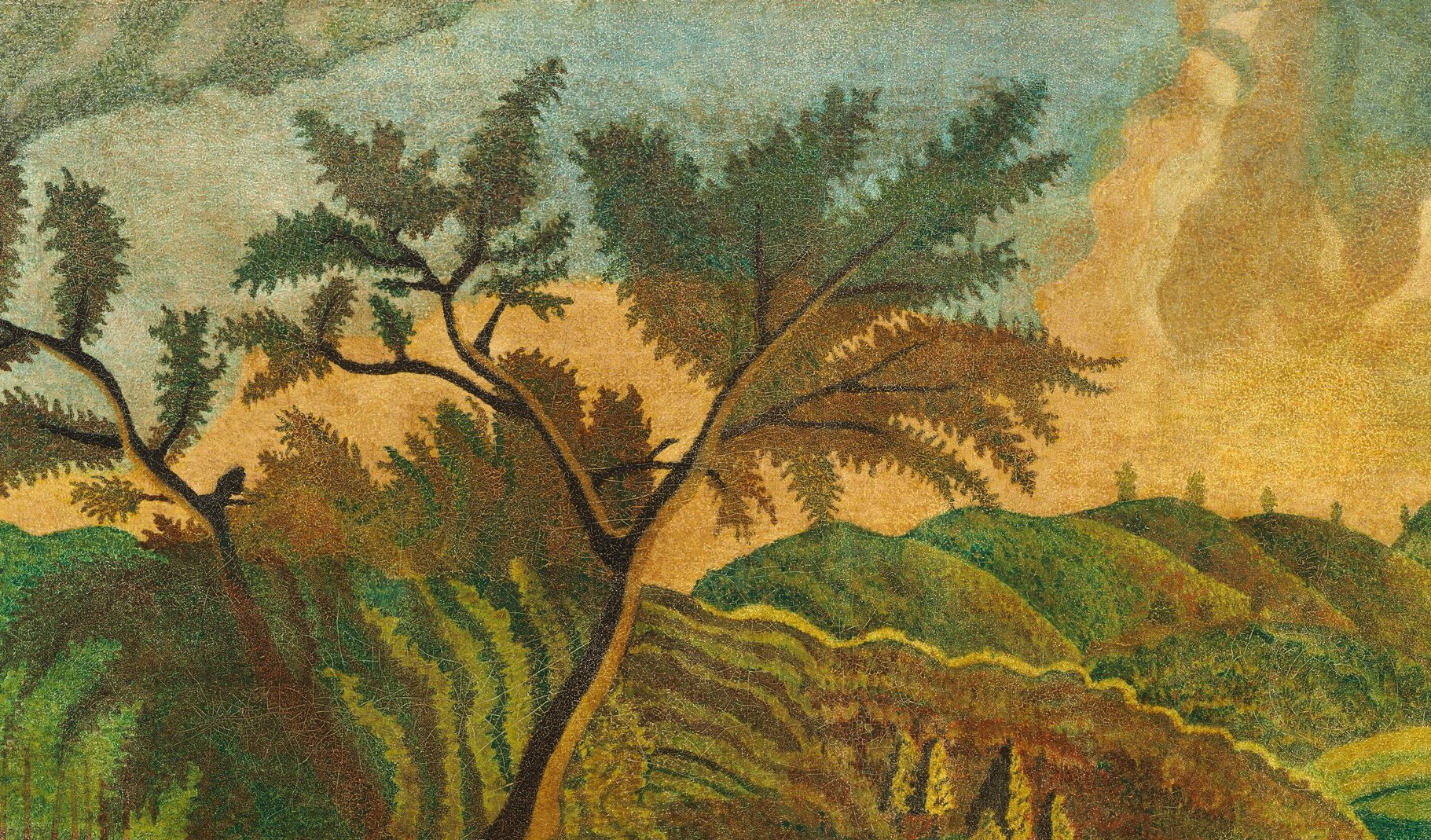
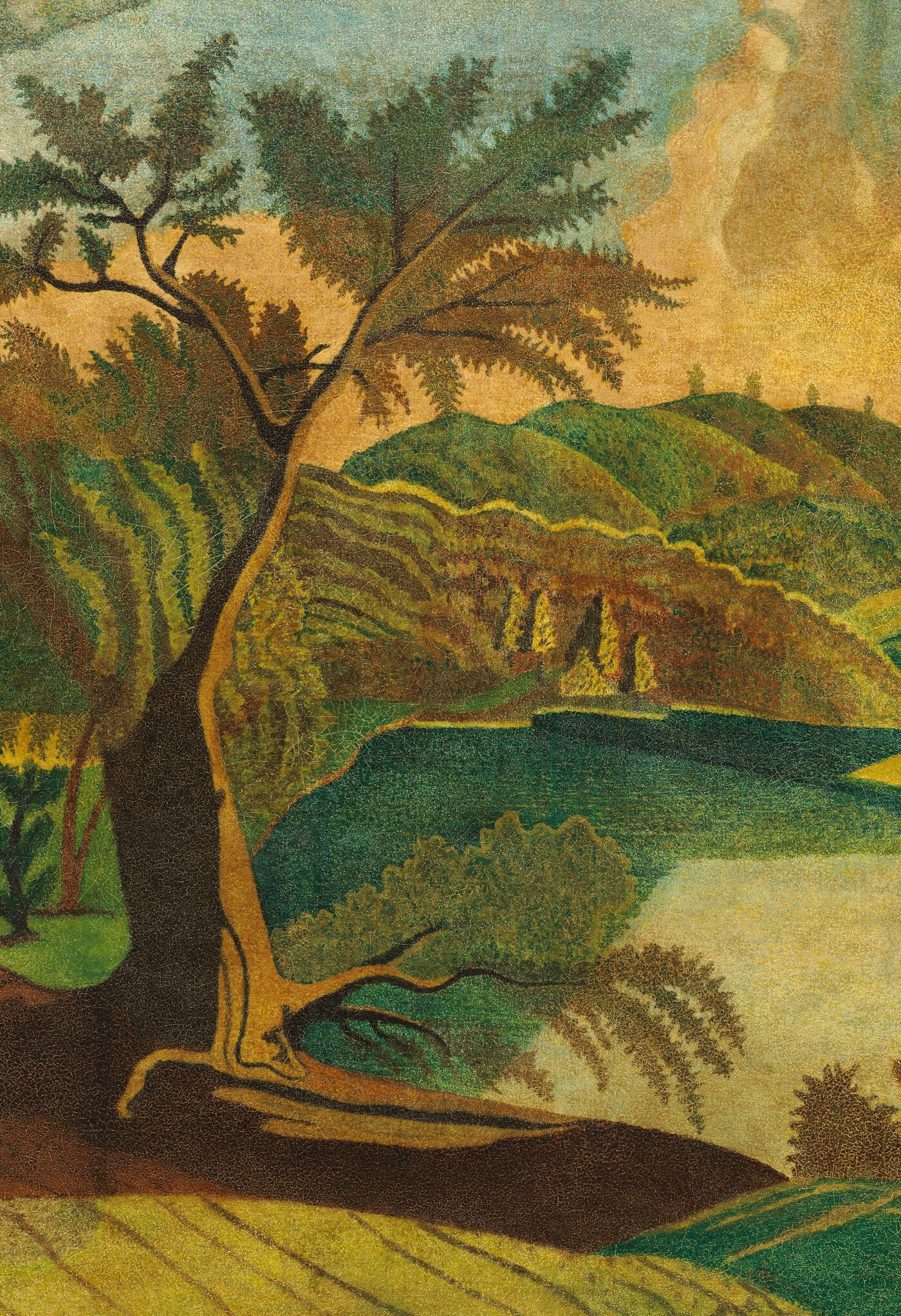
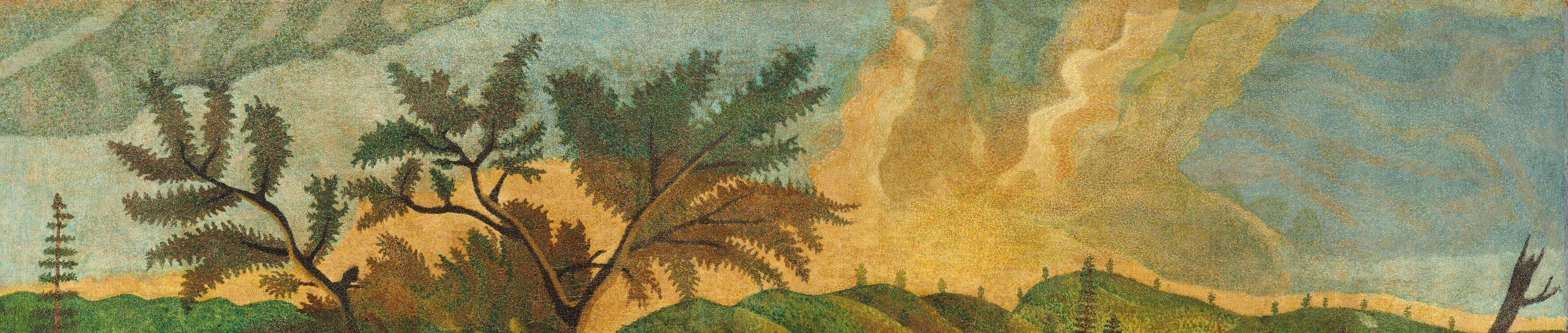
This is "Stylized Landscape," an oil on canvas by an unknown American artist, painted around 1835. It lives at the National Gallery of Art in Washington, and it is far more radical than it first appears. Painted decades before the Impressionists broke the rules, this work already treats a landscape not as a window into nature but as a flat surface where paint itself is the subject.
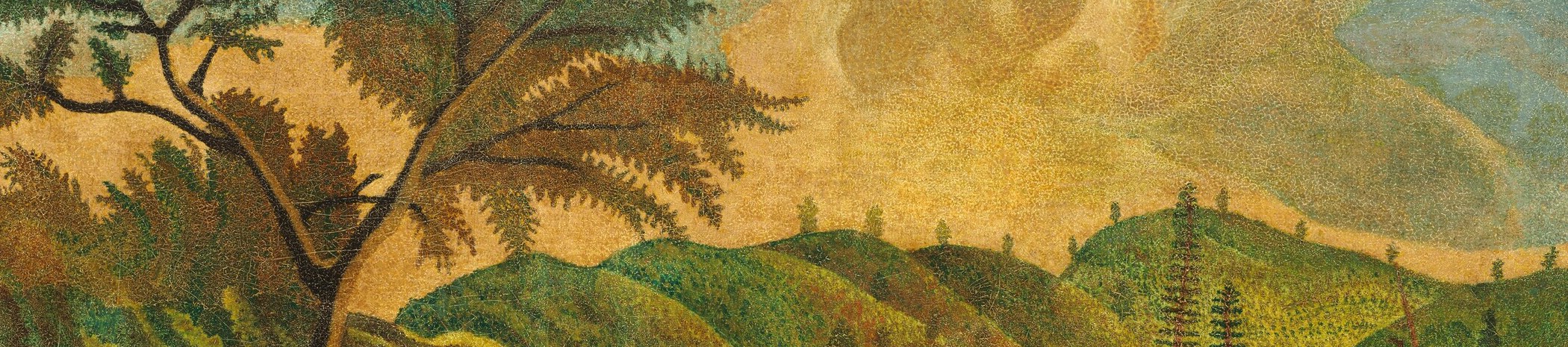
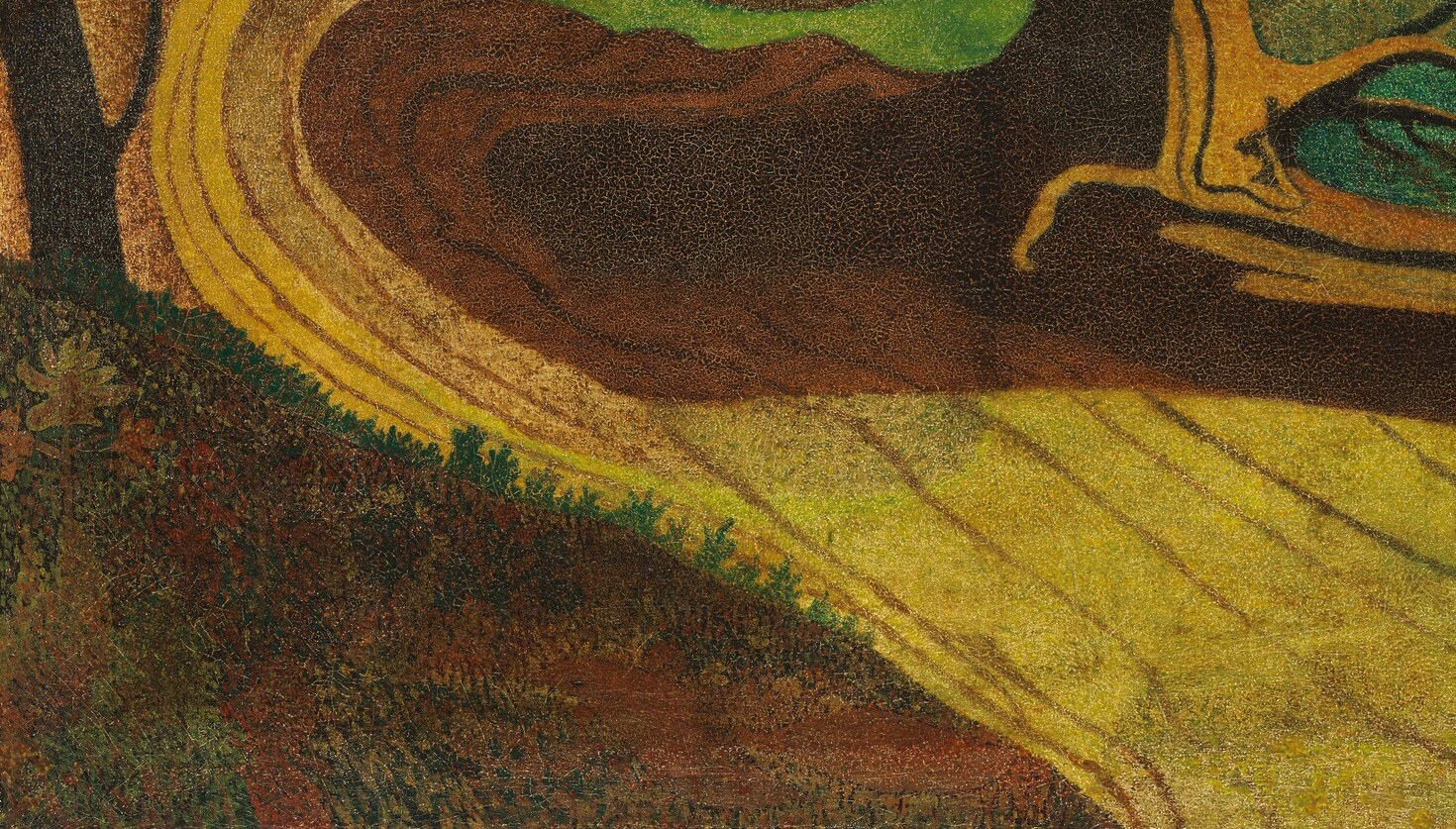
The painter avoids delicate detail: the tree's canopy is a solid dark mass, the hills are broad green shapes with no blending where they meet the sky, and the ground is an unmodulated color field. A slow camera push into the lower-left corner reveals the thick impasto ridges, where paint was likely applied with a palette knife, creating a textured, tactile surface that breaks from the smooth academic finishes of its era.
This deliberate flattening and simplification would become central to modern art more than half a century later. The artist chose bold visual impact over naturalism, giving the scene a strange, dreamlike timelessness. We do not know the artist's name, but the decisions left on the canvas suggest someone deeply interested in the physical possibilities of paint as much as the beauty of a solitary tree.
What do you think the painter was reaching for here? A feeling, or simply the joy of a loaded brush on a canvas?
Details
Transcript
It looks like a simple tree against a warm sky. But watch what happens when we look closer at the leaves. The canopy is not painted leaf by leaf. It is built as a solid, flat green mass with a sculptural edge. The hills use the same trick. Unblended green meeting a cream sky. The ground is not earth. It is a constructed color field. Here is the proof. Thick ridges of paint, laid down with a knife. This American painter chose bold abstraction over delicate detail in 1835.