The Crucifixion with the Virgin and St John by Hendrick ter Brugghen
View the artwork: The Crucifixion with the Virgin and St John →
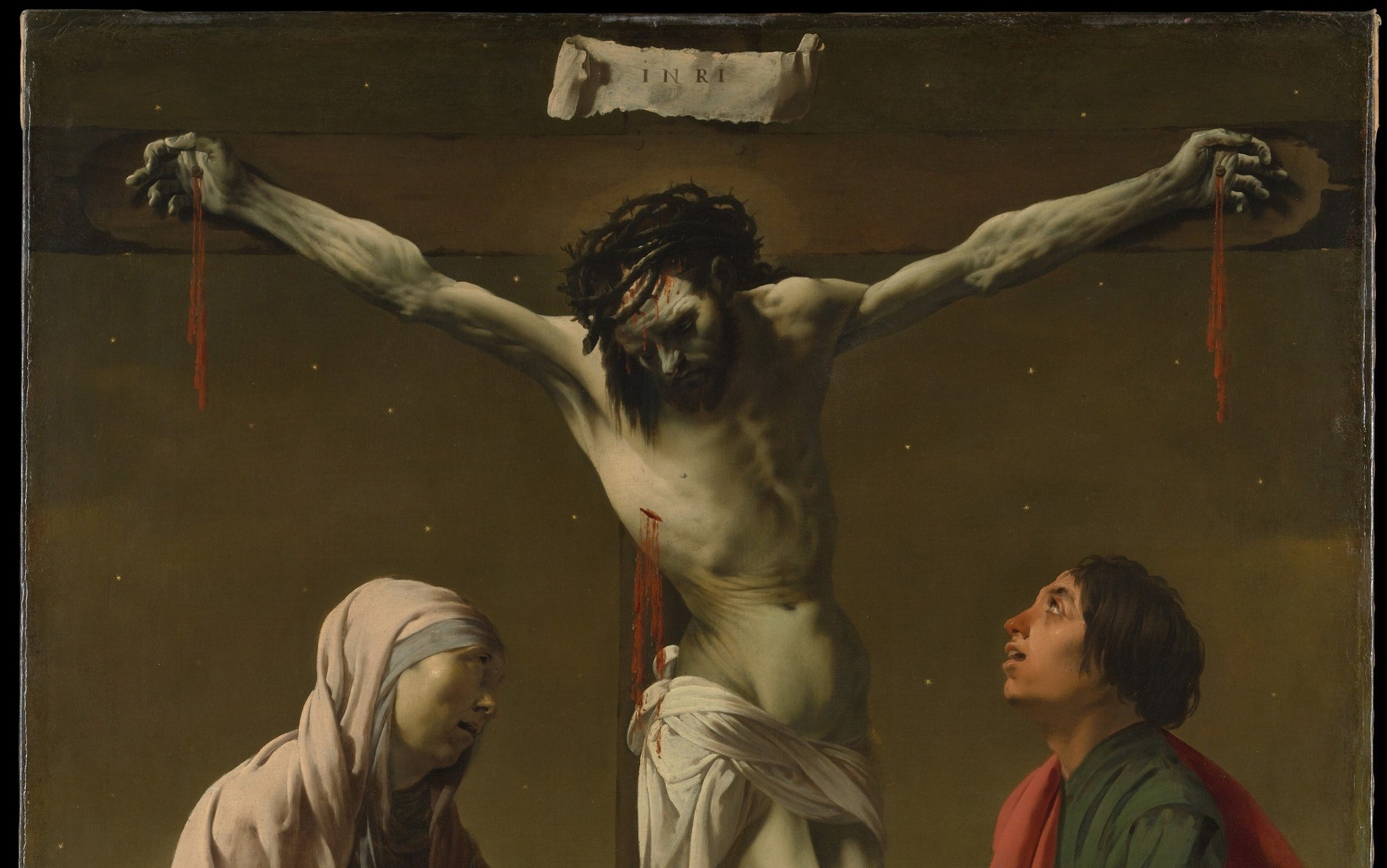
Hendrick ter Brugghen's The Crucifixion with the Virgin and St John was painted around 1625 for a church that officially did not exist. It was an altarpiece for a schuilkerk, a clandestine Catholic church hidden in an attic or private house in Utrecht, where public Catholic worship was outlawed in the Calvinist Dutch Republic. The canvas spent three centuries in obscurity before being found in a bombed church in South Hackney, London, in 1956. It now hangs in the Metropolitan Museum of Art.
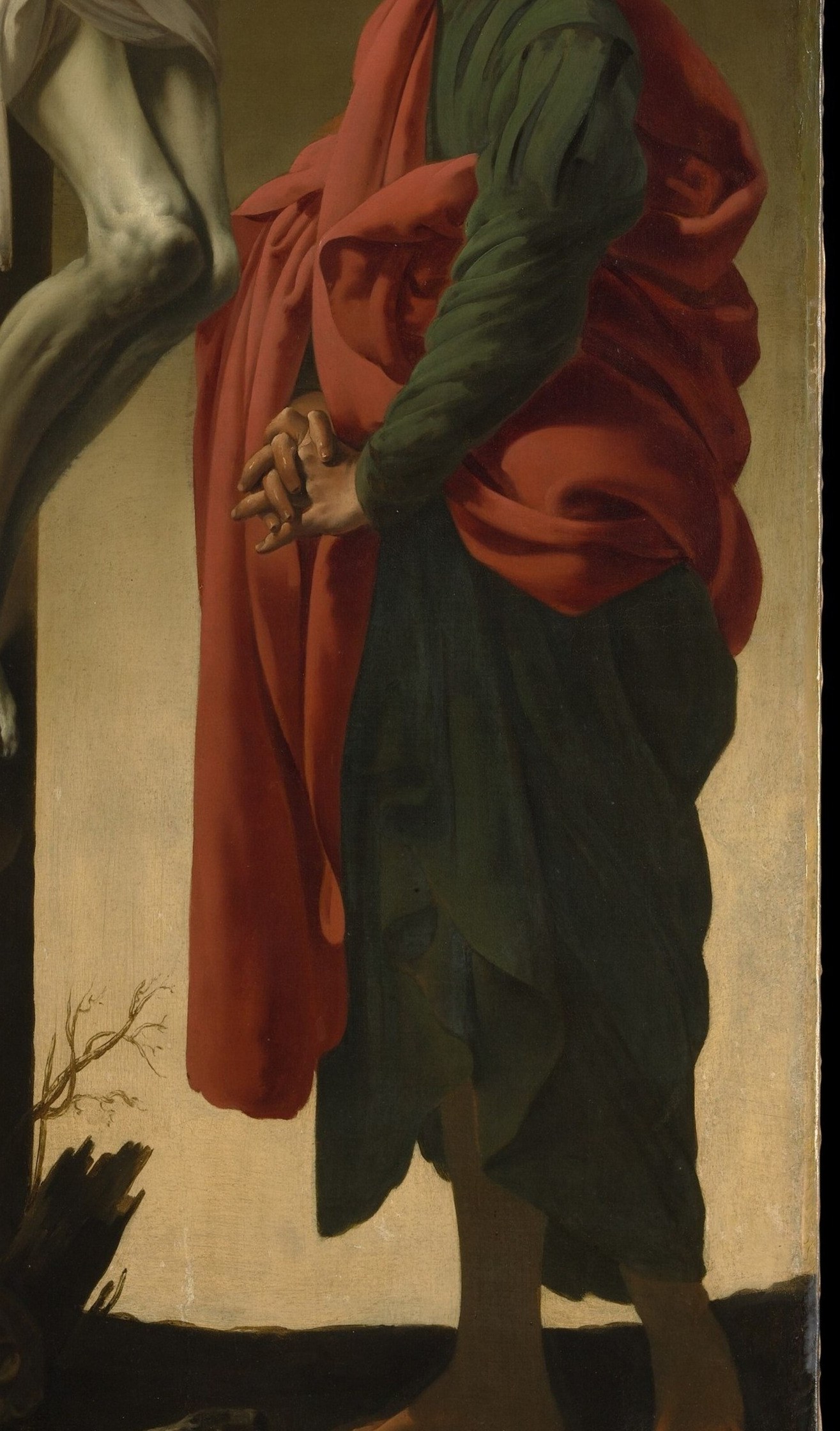
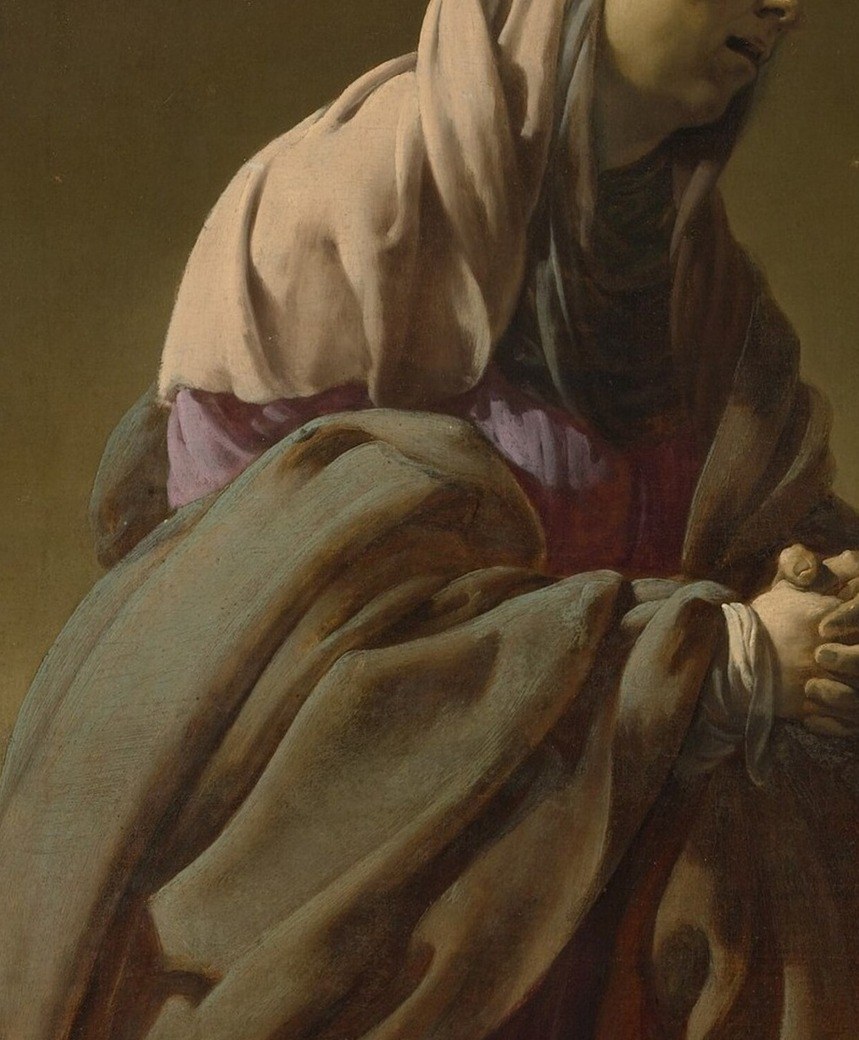
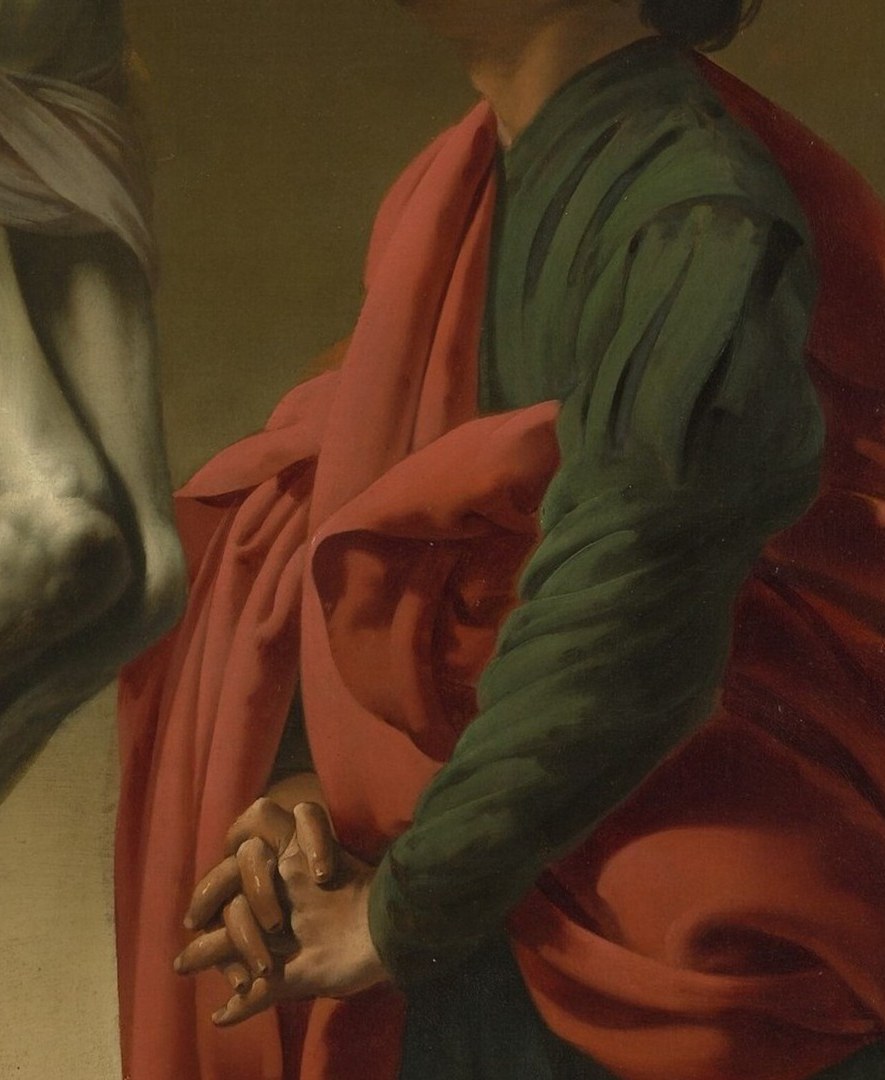
What you notice first is what the painter withholds. Mary's mantle is not the iconic ultramarine blue familiar from so many Renaissance Crucifixions; it is a muted lavender-grey, almost ordinary. The background is not a landscape of Jerusalem but a near-total black void. Ter Brugghen, a leading Utrecht Caravaggist, learned from Caravaggio that darkness removes time and place, it makes a 17th-century Dutch painting feel immediate, happening in the room with you. The only aggressive color is the blaze of St. John's red robe, a compositional anchor that would have been startling in a small space lit by candle.
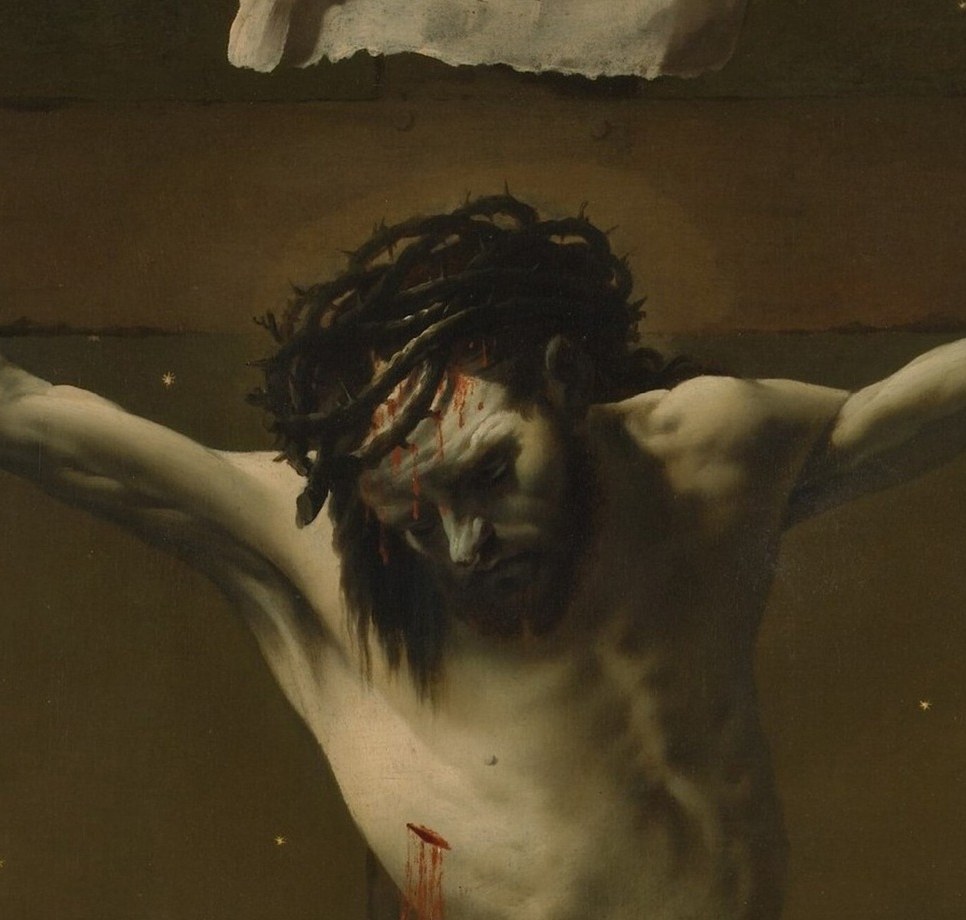
The emotional economy of the three faces is the painting's deepest work. Christ's head droops in silence. The Virgin's face is composed, her grief held painfully inward, no theatrical weeping, just a face that has already broken. Her clasped hands are her only active gesture, physical prayer made visible. St. John, by contrast, shows the raw anguish typical of Caravaggist male figures: open mouth, wide eyes, grief pouring outward. Together the two mourners form a study in how the body carries what it cannot say.
This was an altarpiece made for a congregation that practiced its faith in hiding. It is not a triumphal image. It is an image for people who understood living with loss.
#arthistory #utrechtcaravaggisti #hendrickterbrugghen
Details
Transcript
Three figures. Three ways of surviving the same loss. Christ is silent. The wound in his side means this is already over. This was painted for a hidden church, in a country where Catholicism was banned. The black void strips away time and place. This could be any night. His mother does not scream. She folds her hands and holds the weight. The painter gave her no ultramarine. She wears ordinary lavender-grey. But John, the youngest, cannot contain it. His mouth is open. Ter Brugghen painted three kinds of grief, and trusted us to sit with all of them.