Artwork
The Crucifixion with the Virgin and St John
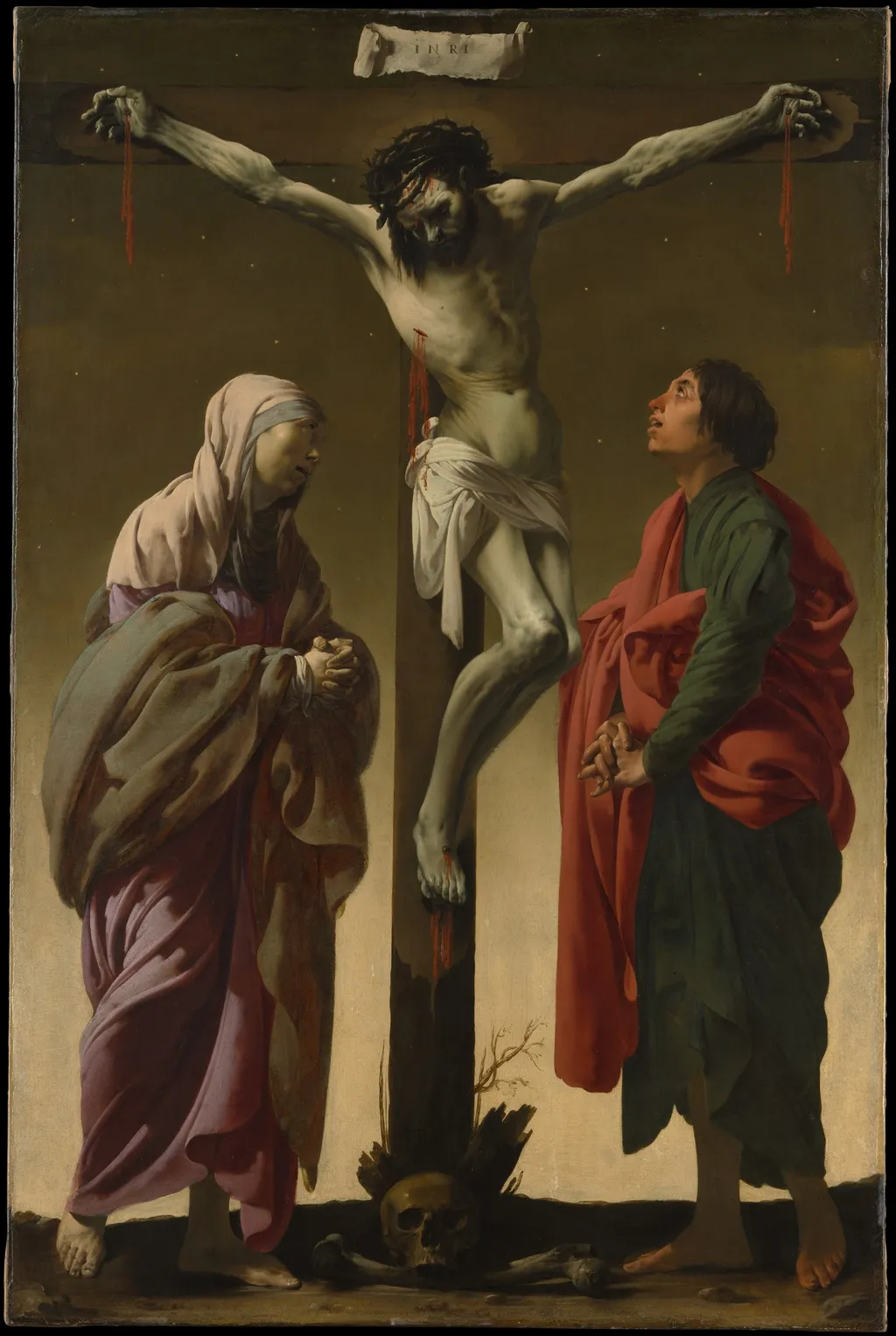
The Crucifixion with the Virgin and St John is an oil painting by the Early Baroque Italian artist Hendrick ter Brugghen. It dates from 1625 and is held in the collection of the Metropolitan Museum of Art.
About this work
Subject & Meaning
The background features a starry sky and deep dusk, referencing the darkness described in the Gospel of Matthew.
The painting depicts the crucifixion of Jesus Christ, featuring the Virgin Mary and John the Evangelist mourning at the foot of the cross, a scene drawn from the Gospel of John. At the base of the cross lie bones, traditionally identified as those of Adam, situating the event at Golgotha. The background features a starry sky and deep dusk, referencing the darkness described in the Gospel of Matthew.
Iconographically, the unnatural, archaic rendering of Christ's blood, appearing to float on the picture plane, serves as a potent symbol of the Eucharist and a Counter-Reformation statement. In this context, Mary functions as an intercessor for the faithful, while John represents the priesthood. The composition juxtaposes the archaic depiction of Christ with the modern, Caravaggesque style of the mourners, creating a memento mori that confronts the viewer with both geographical and existential realities.
History & Provenance
The Crucifixion with the Virgin and St John is held by the Metropolitan Museum of Art in New York City. The painting was sold at Sotheby's on 28 November 1956 as lot 115. Before that sale it had served as a fixed altarpiece rather than a traveling object: it hung in a side chapel of Christ Church, South Hackney, London, from about 1898 until the church's closure and demolition in 1956.
It was briefly moved to the Church of St John-at-Hackney before being sold. The work had not been widely recognized as a major Utrecht Caravaggist example until its reappearance in the Sotheby's salesroom and subsequent entry into the Metropolitan Museum of Art.
Context
The Crucifixion with the Virgin and St John (c. 1625) by Hendrick ter Brugghen exemplifies Utrecht Caravaggism, a style that fused dramatic chiaroscuro with Counter-Reformation symbolism. Originally an altarpiece for a clandestine Catholic chapel, the work was later displayed in a London church before being sold at Sotheby's in 1956 and entering the Metropolitan Museum of Art. Scholarship emphasizes its archaic rendering of Christ's blood as a Eucharistic sign, the inclusion of Adam's bones, and a starry sky referencing the darkness of the crucifixion narrative.
Comparative analysis links the composition to earlier Northern crucifixion imagery, underscoring ter Brugghen's role in transmitting Italianate naturalism to Dutch religious painting.
Legacy
The painting's modern reputation stems from its 1956 reappearance at Sotheby's, where it was recognized as a significant example of Utrecht Caravaggism and subsequently entered the Metropolitan Museum of Art's collection. Since its acquisition, the work has been regularly cited in scholarship on ter Brugghen and the Utrecht Caravaggisti, featured in exhibitions exploring Dutch Baroque religious painting, and treated as a reference point for the artist's use of chiaroscuro and his symbolic blood motif. Its presence in a major American museum has cemented its standing as a touchstone for the study of Counter-Reformation art in the Northern Netherlands.
Overview
This oil painting by Hendrick ter Brugghen, titled The Crucifixion with the Virgin and St John, dates to approximately 1625. It depicts the central event of Christian theology with dramatic intensity. Now housed at the Metropolitan Museum of Art, the work is a significant example of Utrecht Caravaggism, characterized by its powerful use of light and shadow and emotional realism. It was likely created as an altarpiece for a clandestine Catholic church in the Netherlands.
Technique & Style
Ter Brugghen's work exemplifies Utrecht Caravaggism through its dramatic use of chiaroscuro. Intense light illuminates Christ's pale form and the faces of the mourners, contrasting sharply with the deep, dark background. This technique emphasizes the figures and their emotional states, creating a powerful sense of three-dimensionality and theatricality.
The artist renders the physical pain and emotional distress with a directness characteristic of the Caravaggesque style, drawing the viewer into the scene.
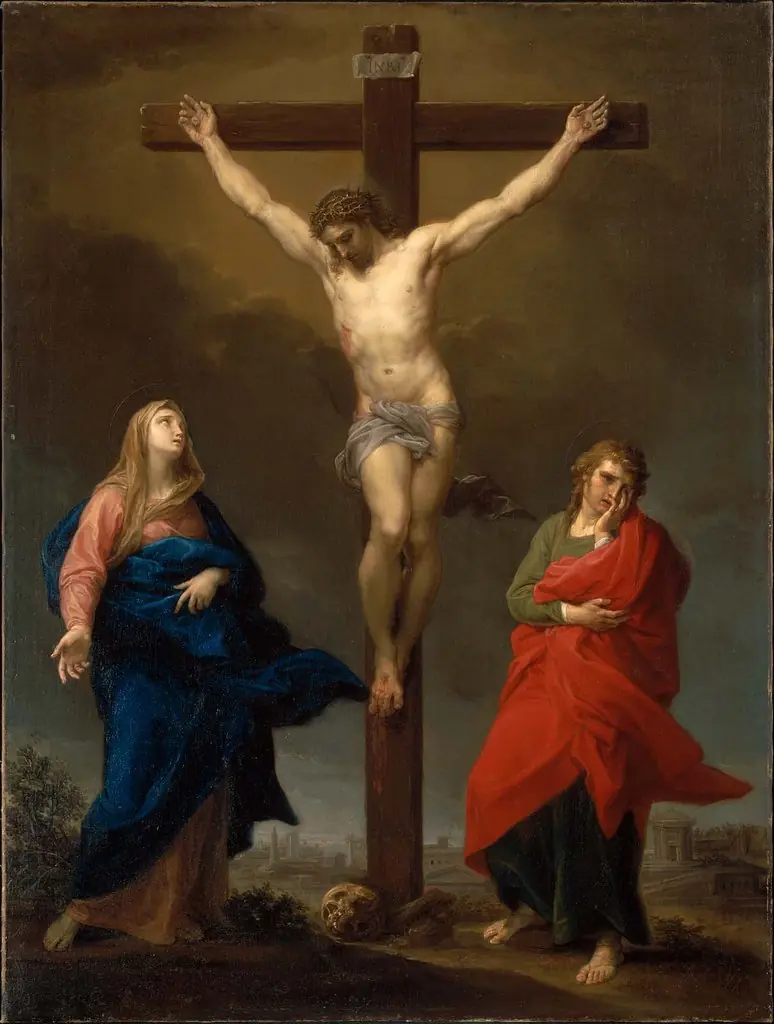
Own this work as a print
Artist & collection
Artist
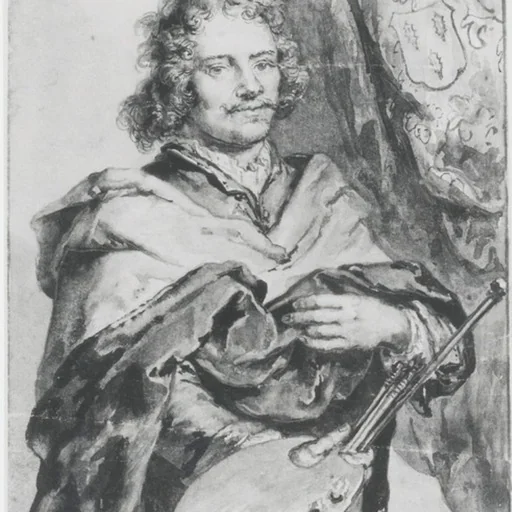
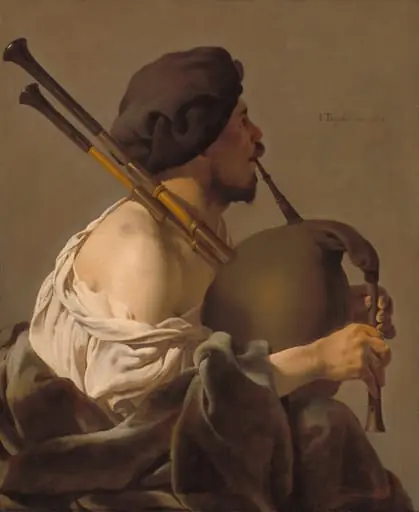
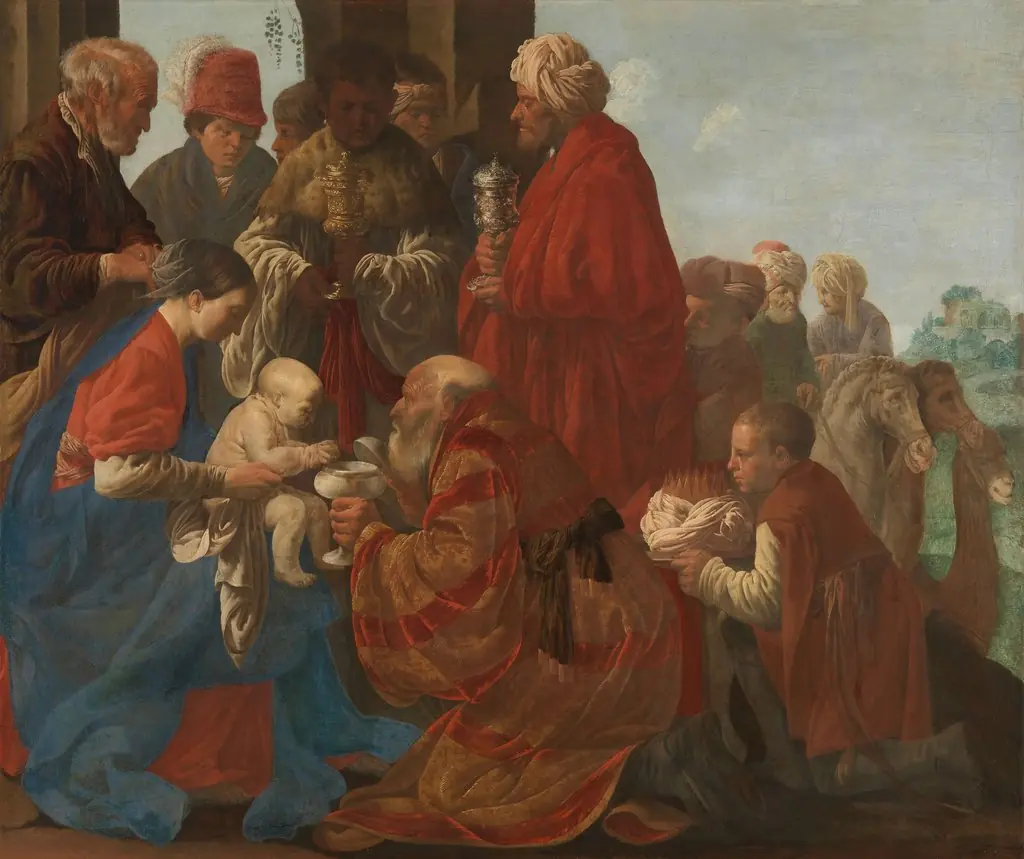
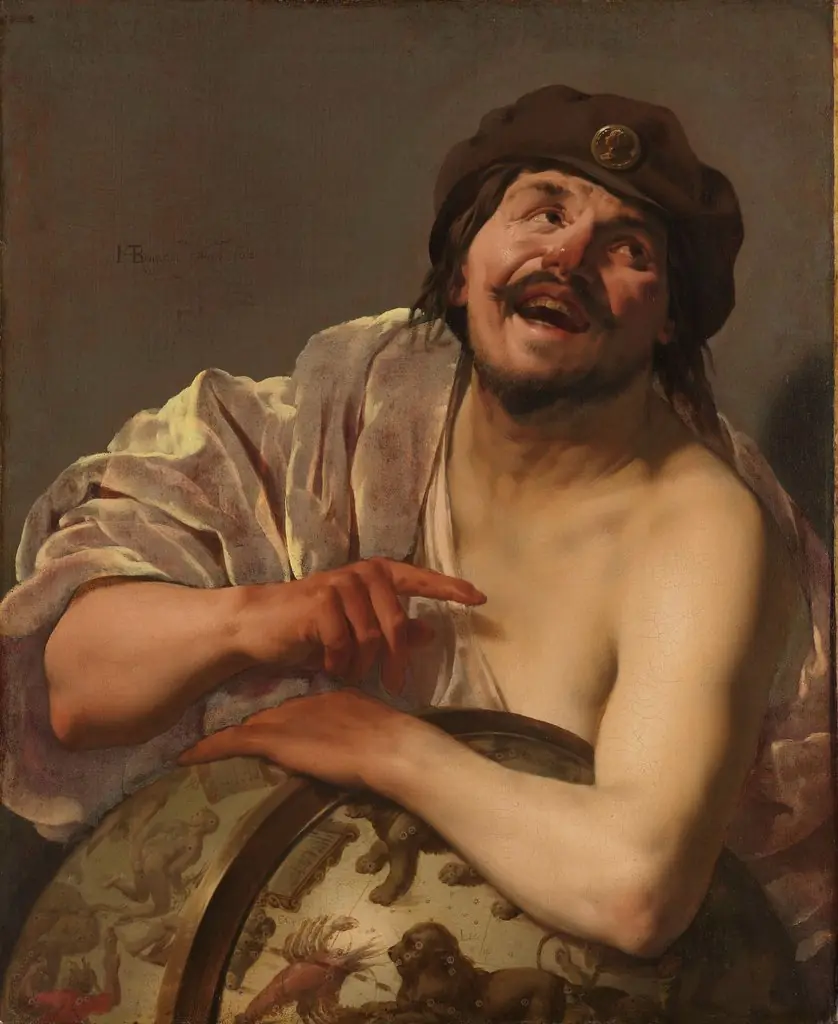
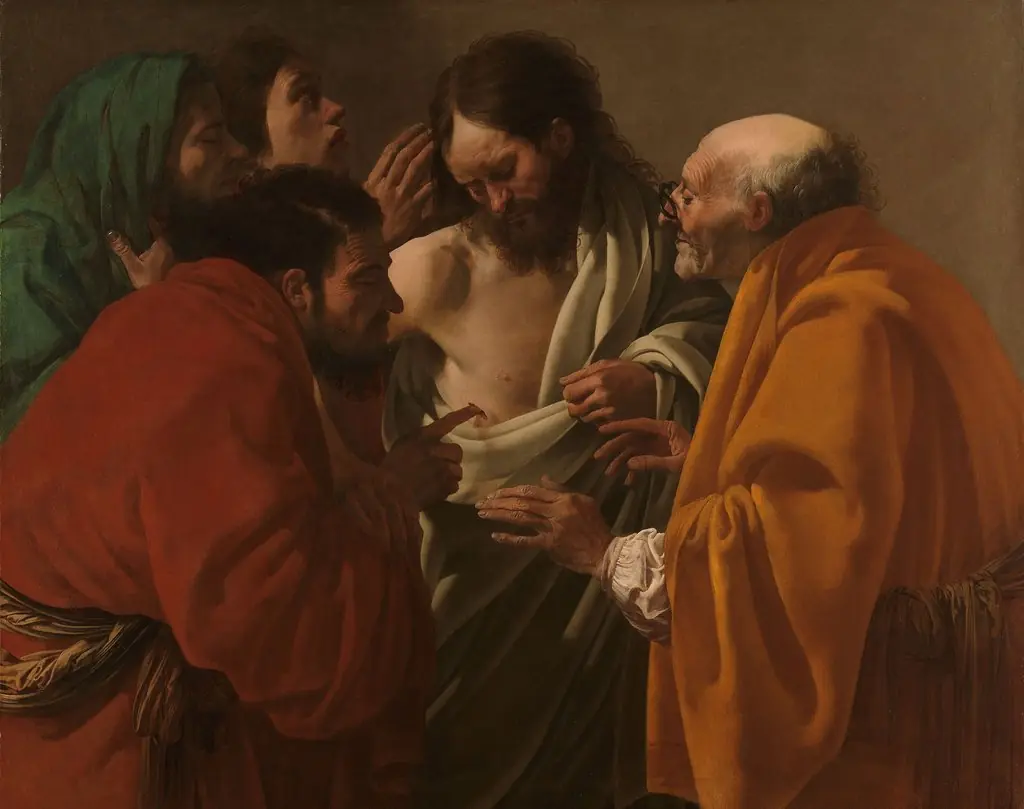
Hendrick Jansz ter Brugghen (or Terbrugghen; 1588 – 1 November 1629) was a Dutch painter of genre scenes and religious subjects.

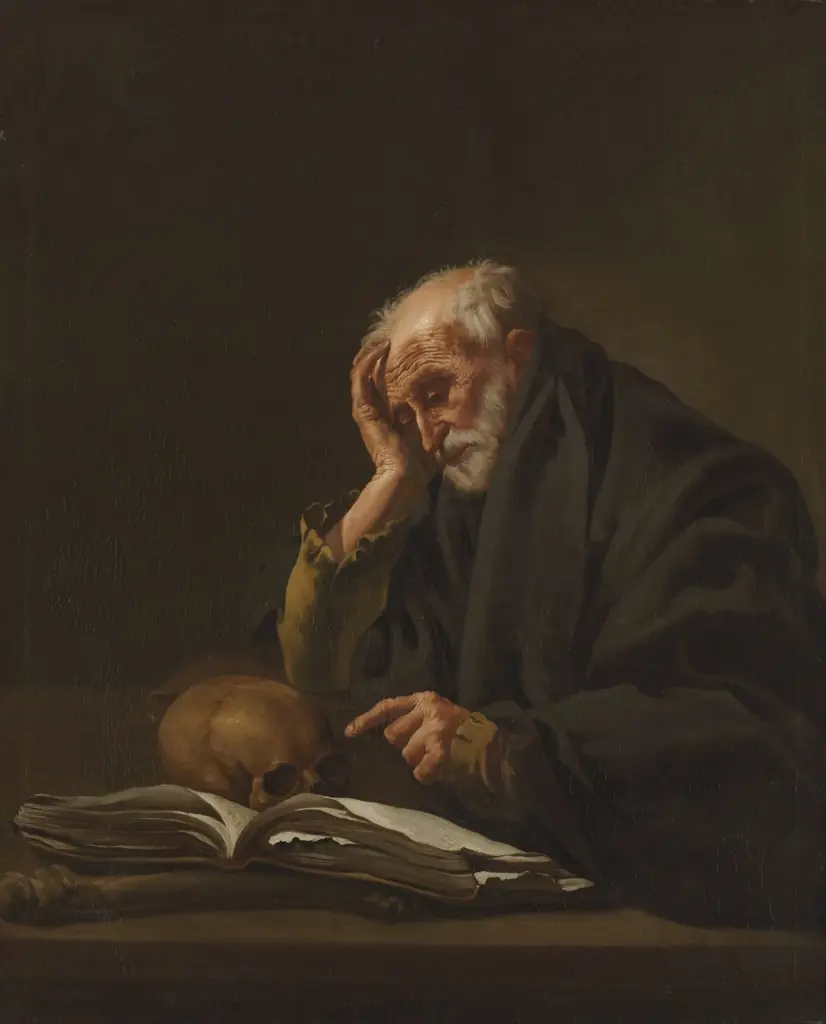
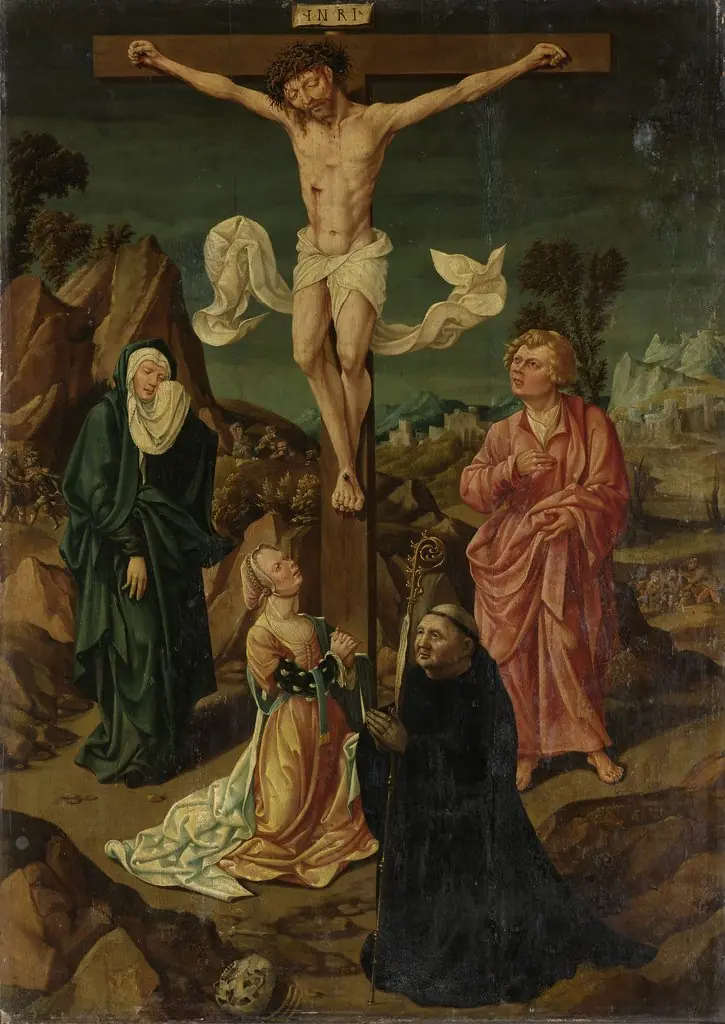 Crucifixion with the Virgin, Saint John, Mary Magdalene, a Donor
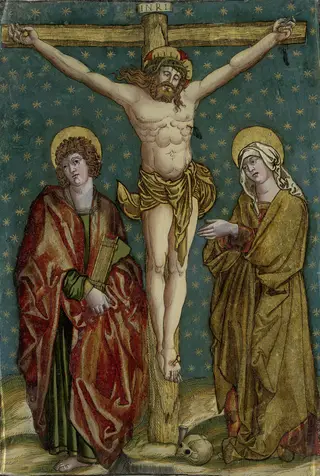 Crucifixion of Christ, with the Virgin and St John
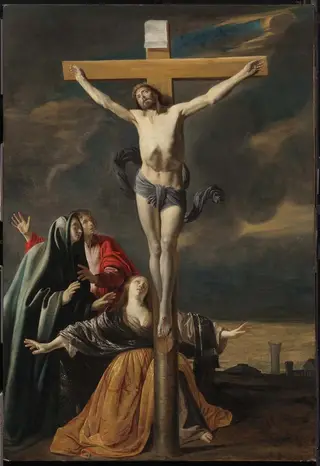 The Crucifixion with the Virgin, Saints John, and Mary Magdalen
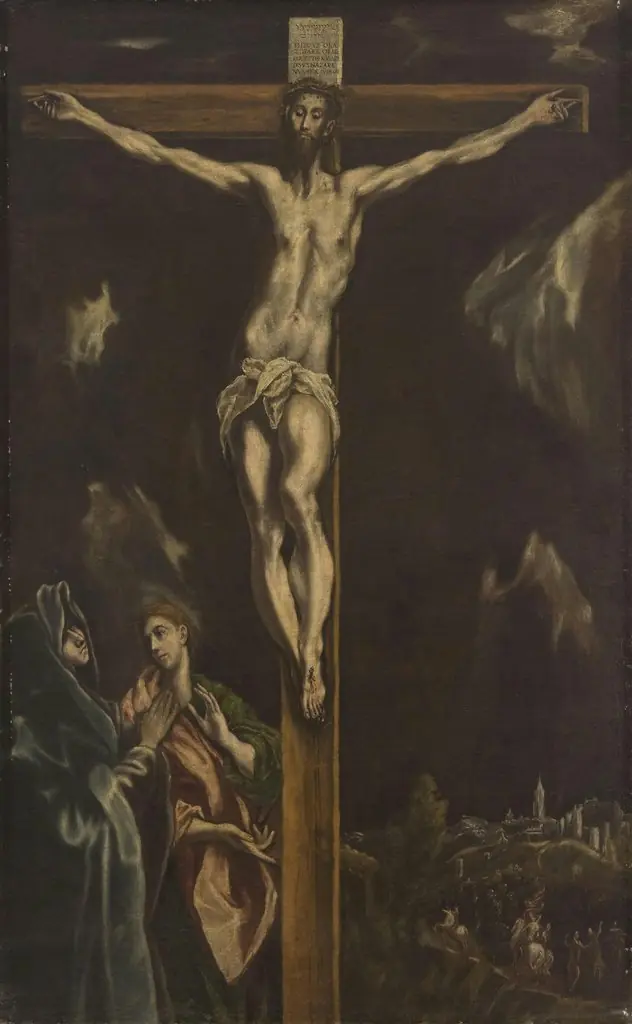 Crucifixion with the Virgin Mary and Saint John the Evangelist
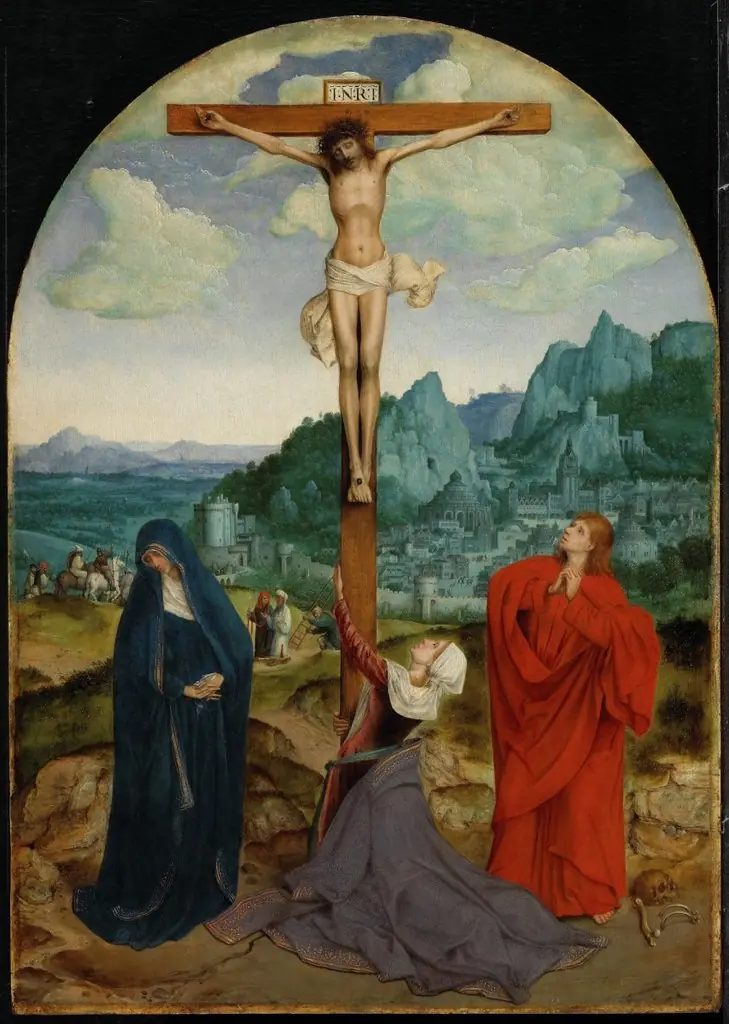 Crucifixion, with the Virgin and Saint John
![The Crucifixion with the Virgin, Saint John, Saint Jerome, and Saint Mary Magdalene [middle panel], by Pietro Perugino](https://artifactworldgallery.com/img/pietro-perugino--the-crucifixion-with-the-virgin-saint-john-saint-jerome-and--a9b4c312771e3f71-w320.webp) The Crucifixion with the Virgin, Saint John, Saint Jerome, and Saint Mary Magdalene [middle panel]
The Crucifixion with the Virgin, Saint John, Saint Jerome, and Saint Mary Magdalene [middle panel]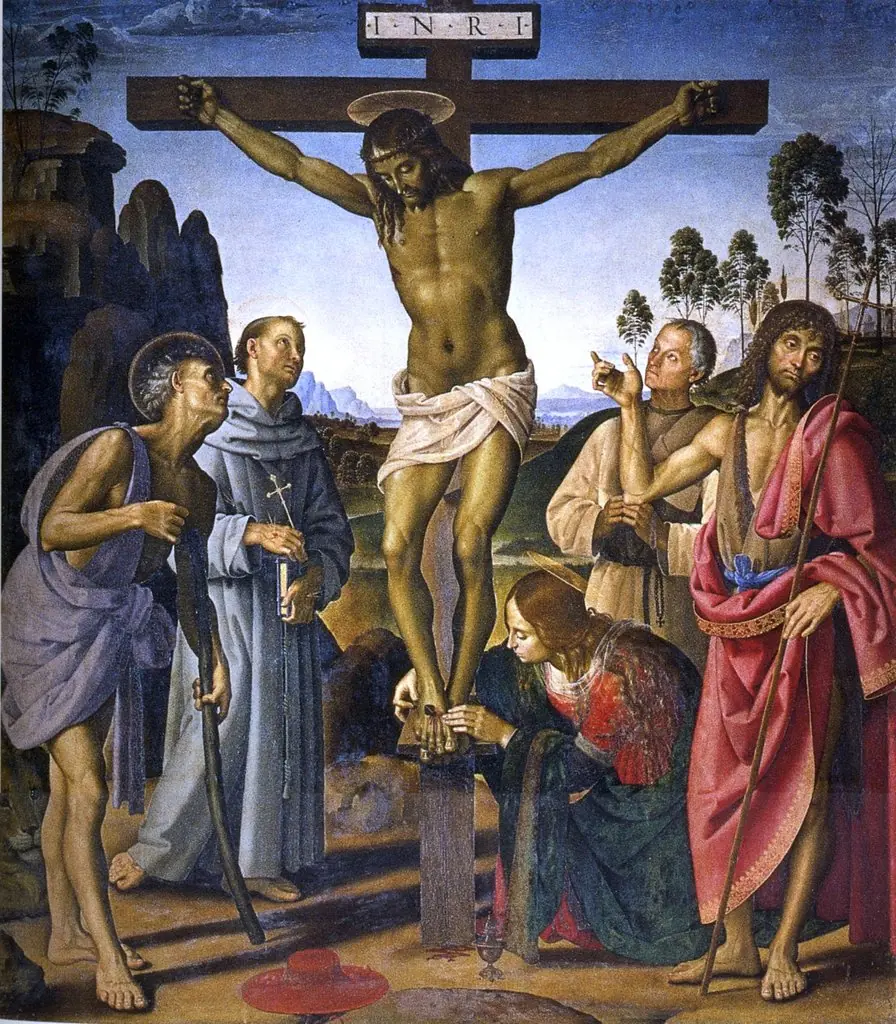 Crucifixion of Christ with saints
 Studied in the Caravaggio & Baroque course