Catherine Yates Pollock (Mrs. George Pollock) by Stuart, Gilbert
This is Catherine Yates Pollock, painted by Gilbert Stuart in 1794, now in the collection of the National Gallery of Art in Washington, D.C. Stuart was the portraitist of the early American republic, his George Washington is the face on the dollar bill, but his real gift was this: he made his sitters look directly at the viewer with an intimacy that still feels startling.
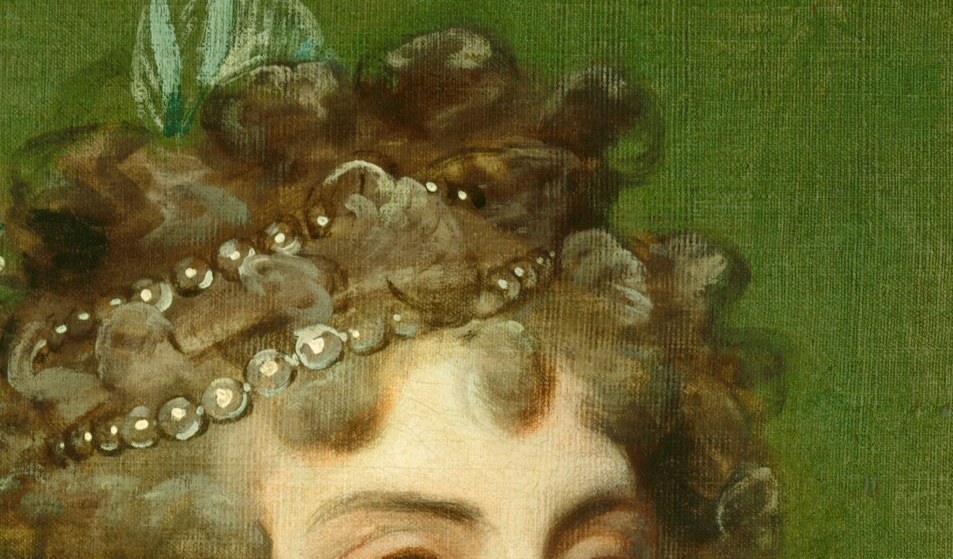
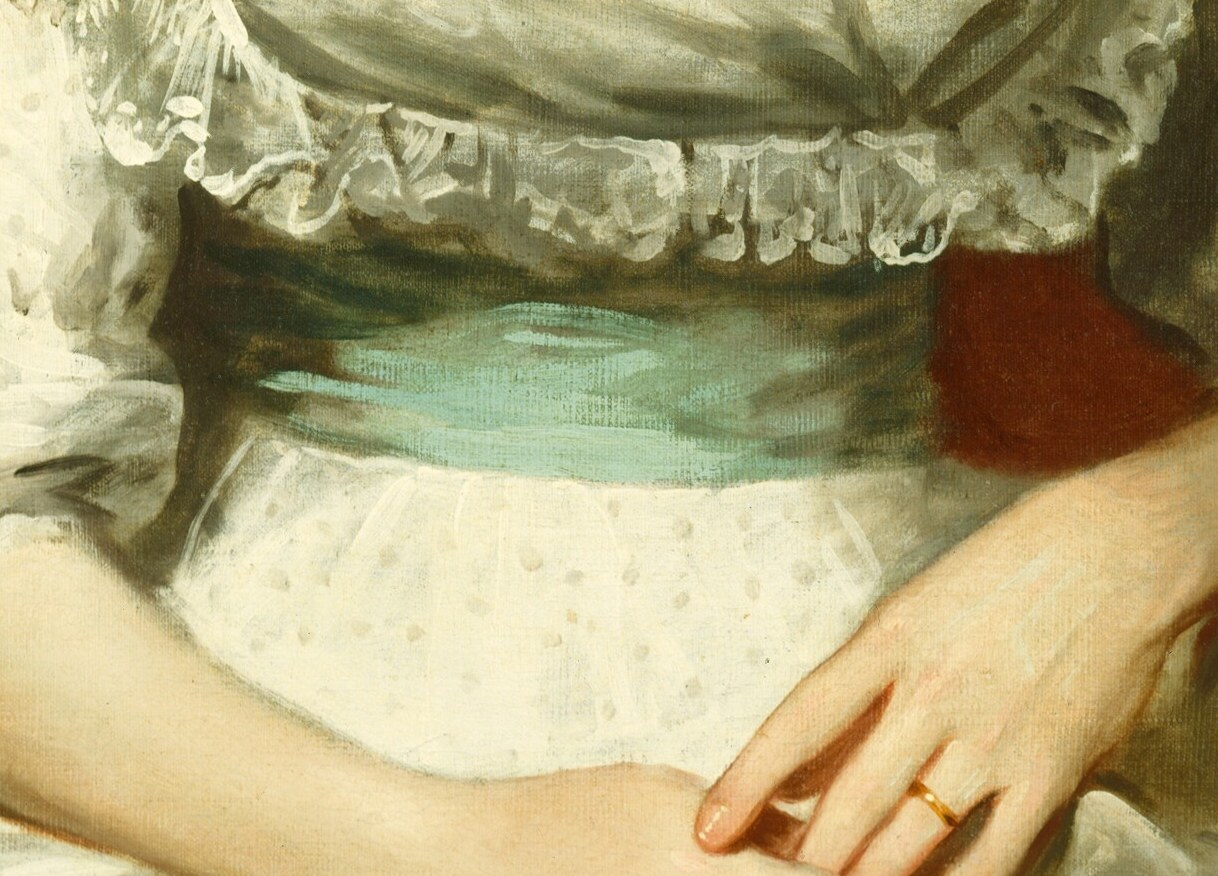
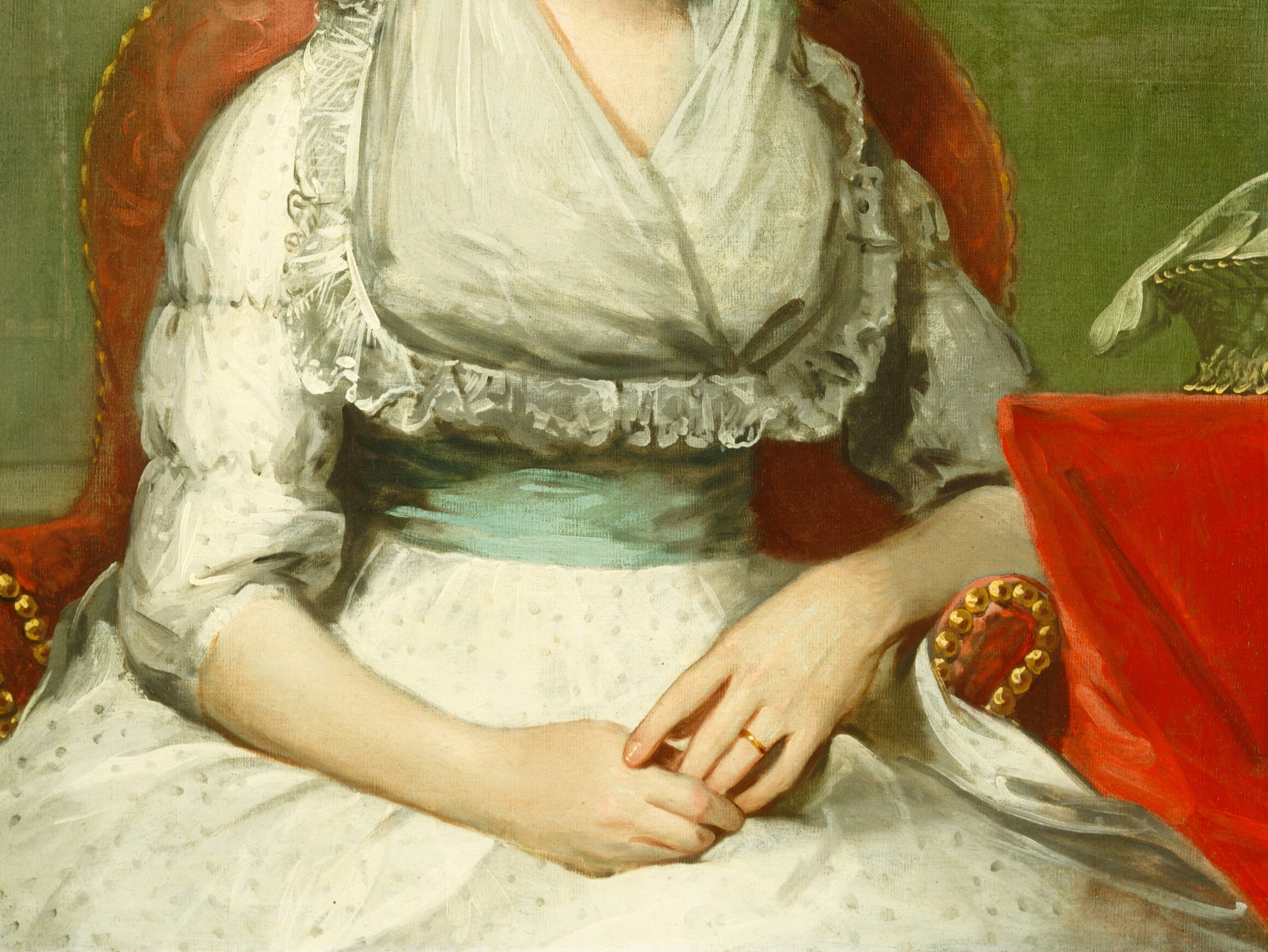
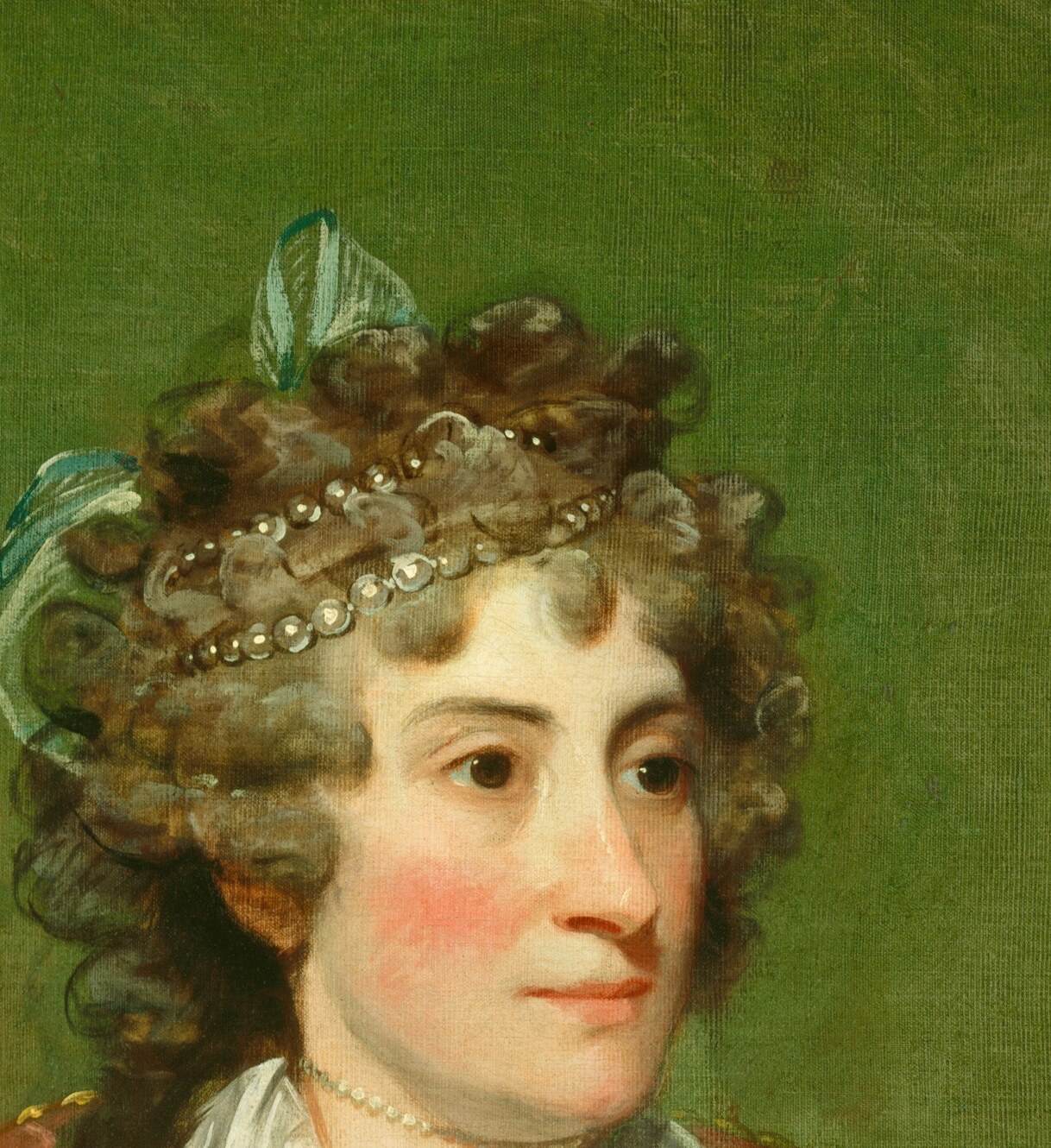
Look at her eyes. Stuart trained himself to paint the unbroken frontal gaze, a look that seems to acknowledge you are there, looking back. Then drop to the hands, folded with quiet composure. Every formal signal says dignity, self-possession, intelligence, not a stiff icon of status, but a person present in the room.
The white muslin dress is more than fashion. In the 1790s, the neoclassical white gown was a deliberate rejection of ornate, aristocratic European court dress. It was the uniform of the new republican woman. Catherine Yates Pollock sat for this portrait in New York during the first decade of the United States, and Stuart wrapped her in the ideals of the moment.
The painting is unassuming, no grand allegories, no crowded background, just one woman meeting your eye across 230 years. What do you think she would make of us, still watching?
Details
Transcript
She looks straight at you. Not past you. At you. Gilbert Stuart gave his sitters this trick: an unbroken, frontal stare. It makes a portrait painted in 1794 feel alive and aware, right now. Her hands rest folded in her lap. Composed, still. Catherine Yates Pollock sat for this in New York, in the early years of the republic. That white dress was a political choice: neoclassical simplicity for a new democracy. She has been meeting our eyes for two hundred and thirty years.