Madonna and Child by Perugino, Pietro
View the artwork: Madonna and Child →
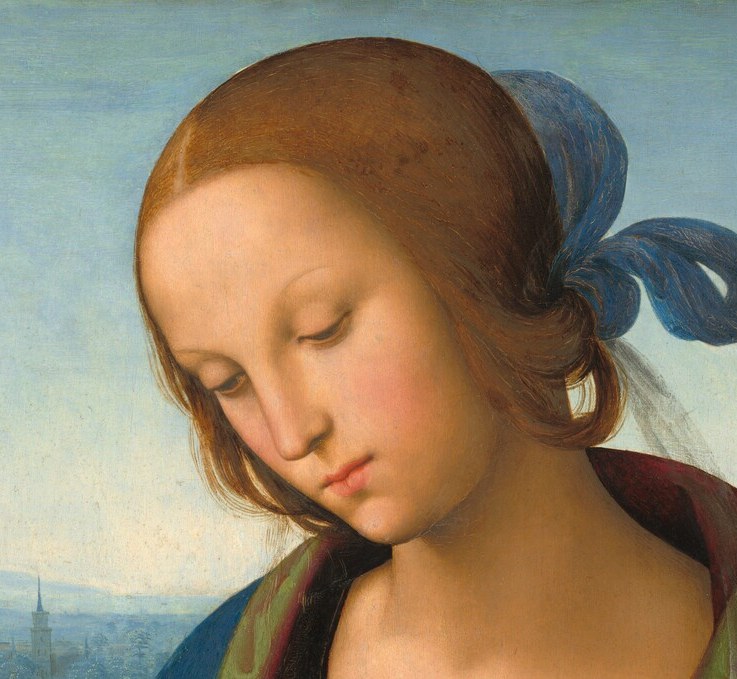
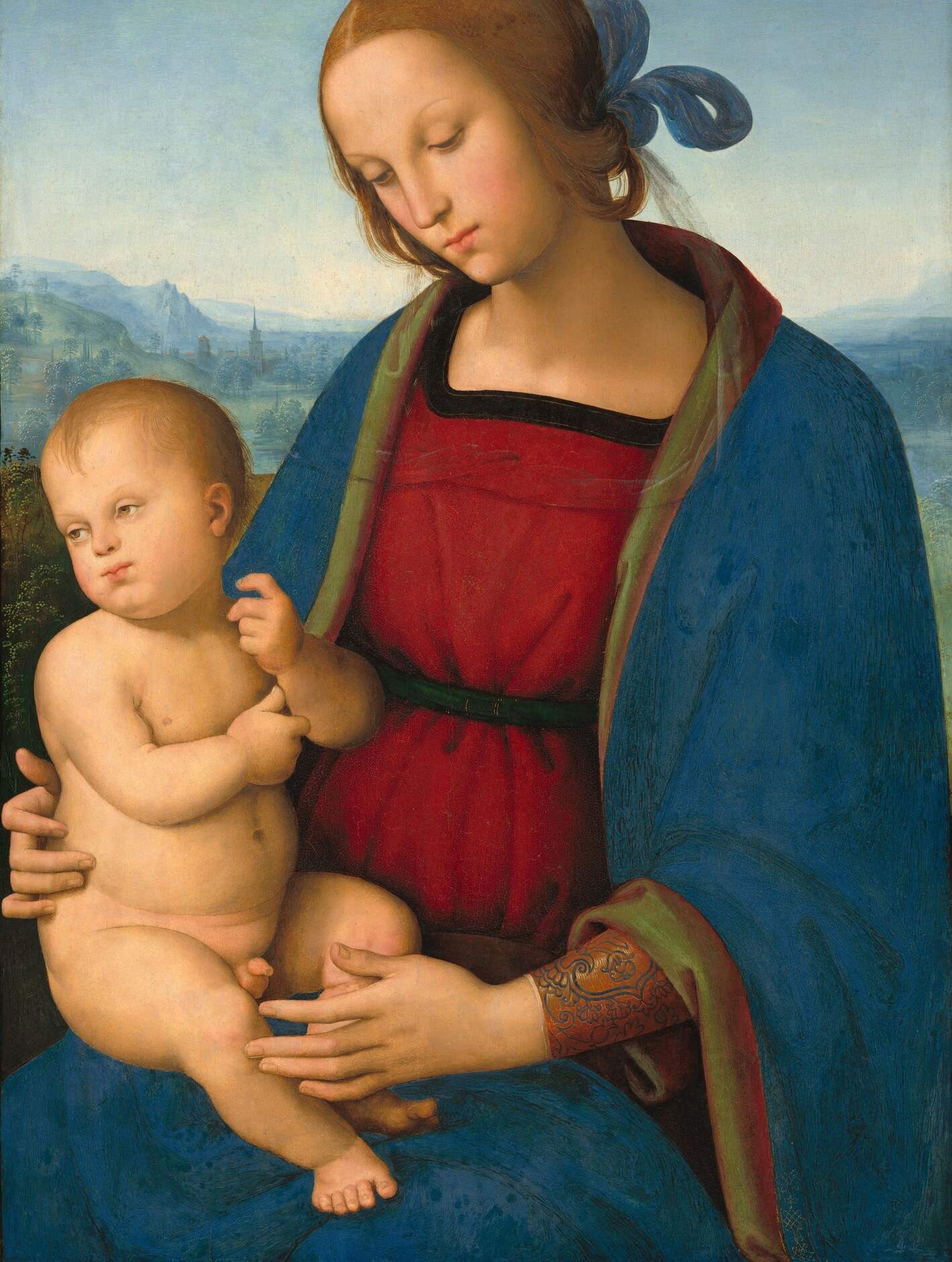
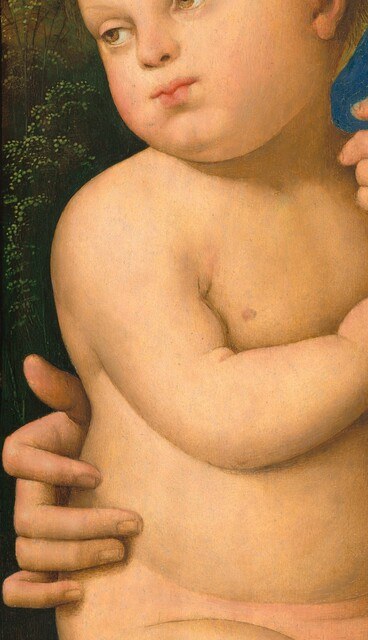
Pietro Perugino painted this small devotional panel, Madonna and Child, around 1500, and it sits today in the National Gallery of Art in Washington. It looks at first like a simple, tender moment between mother and infant. But a Renaissance viewer would have read it like a text, and every detail here is a word in a theological sentence.
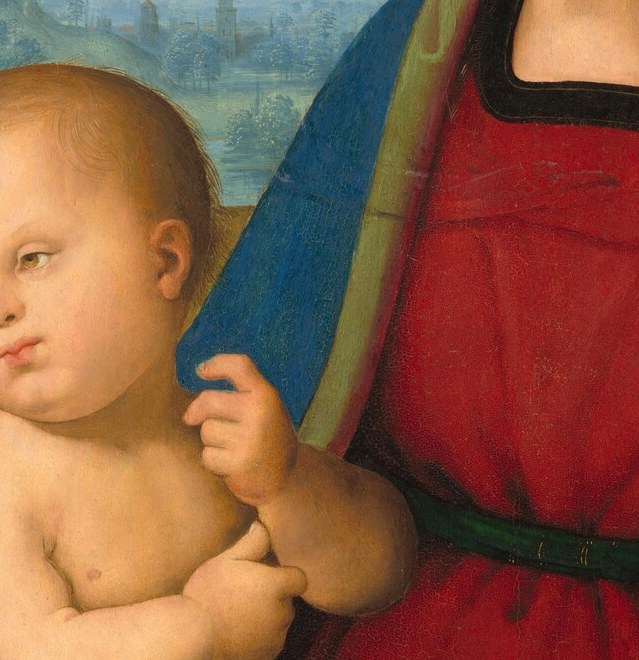
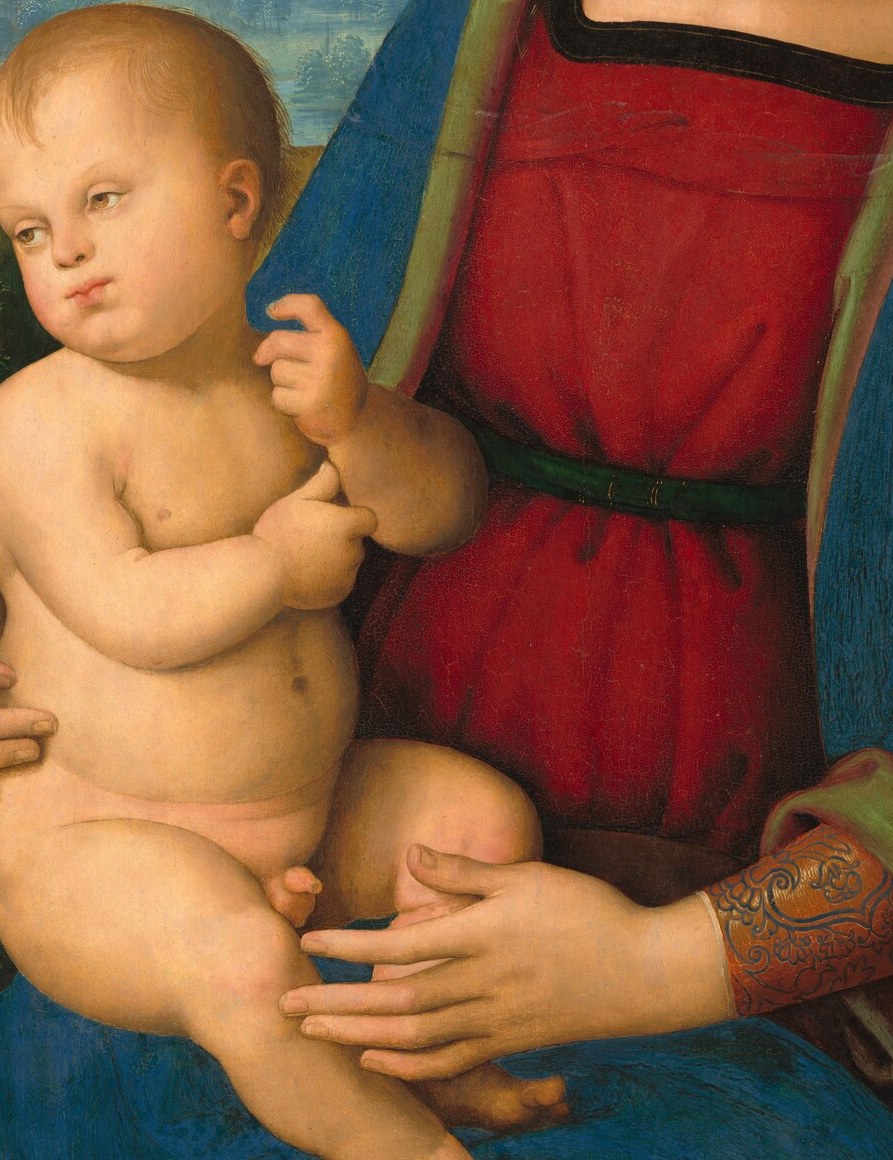
Look at the Christ Child's raised right hand. It is not quite a full gesture of blessing yet, but the fingers are poised, a signal embedded in what seems like natural infant movement. The crimson lining visible at Mary's cuff was not a random accent. That specific red signified the Passion, the sacrifice her son would eventually make.
Perugino built this image in oil on poplar, using the most expensive blue pigment available, ultramarine, ground from lapis lazuli. He reserved it only for Mary's mantle, a visual declaration of her status as Queen of Heaven. The jewel barely visible in her hair reinforces that quiet claim to sovereignty. In the background, the Umbrian hills dissolve into a soft atmospheric haze, a technique Perugino mastered and then taught directly to his most famous pupil, Raphael.
The painting belonged to Clarence H. Mackay and later entered the vast Samuel H. Kress Collection before coming to the National Gallery in 1939 as a founding gift. Its quiet clarity proved so universally legible that the U.S. Postal Service chose it for a Christmas stamp in 1986. What other painted details do you think carry a hidden meaning the modern eye might simply scroll past?
#arthistory #ItalianRenaissance #Perugino
Details
Transcript
A quiet mother and child. That is what you are meant to see first. His hand rises. Not a random baby movement, but a blessing. The crimson at her sleeve signals the Passion to come. Ultramarine blue: a pigment costlier than gold, reserved for the Queen of Heaven. Perugino painted the hills of Umbria, fading into a soft, hazy eternity. He taught Raphael how to do that. This painting is a lesson in grace. A jewel hidden in her hair, easy to miss. A whisper of her queenship. The full message: Incarnation, blessing, sacrifice, and a silent queen who knows.