Artwork
Madonna and Child
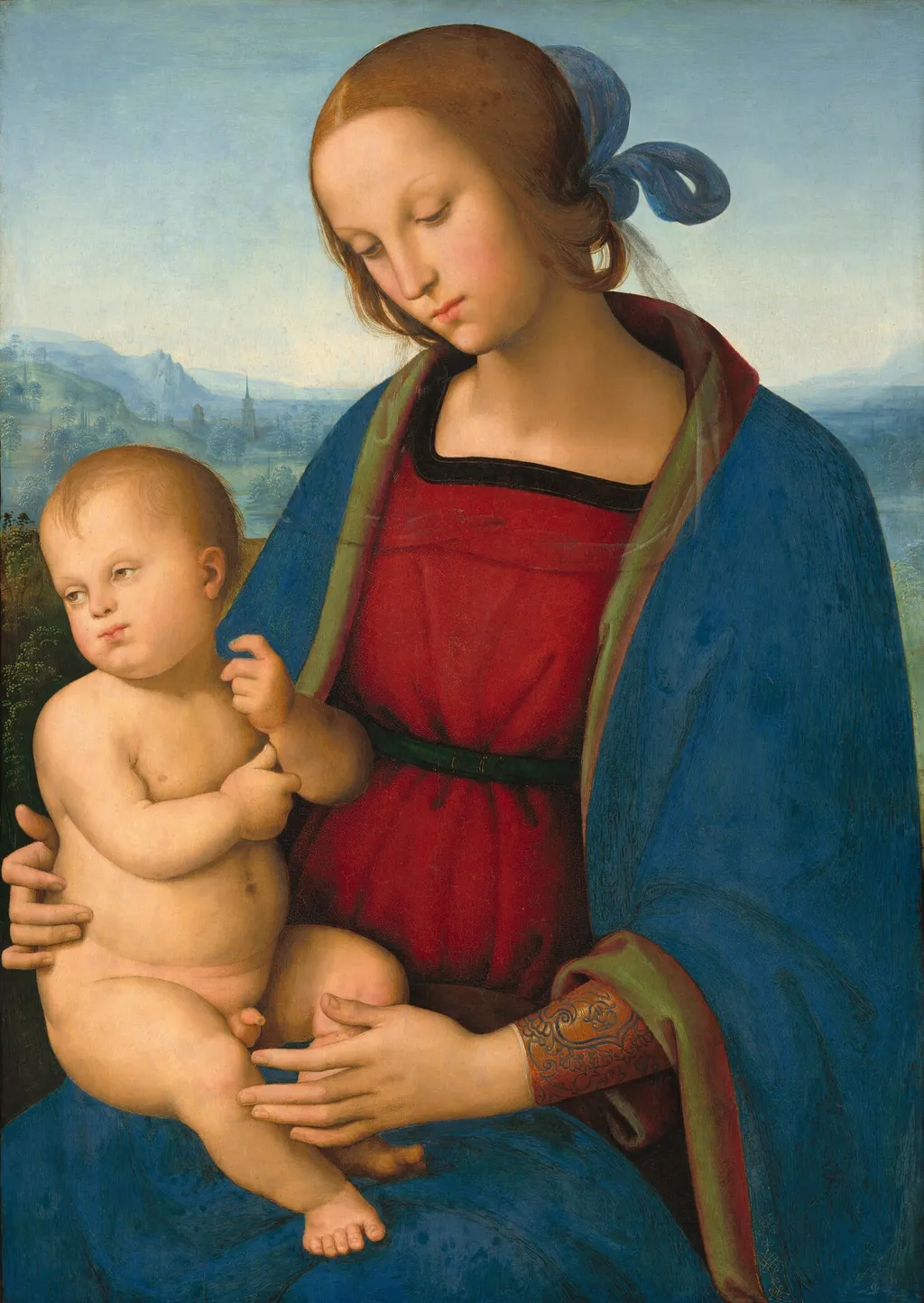
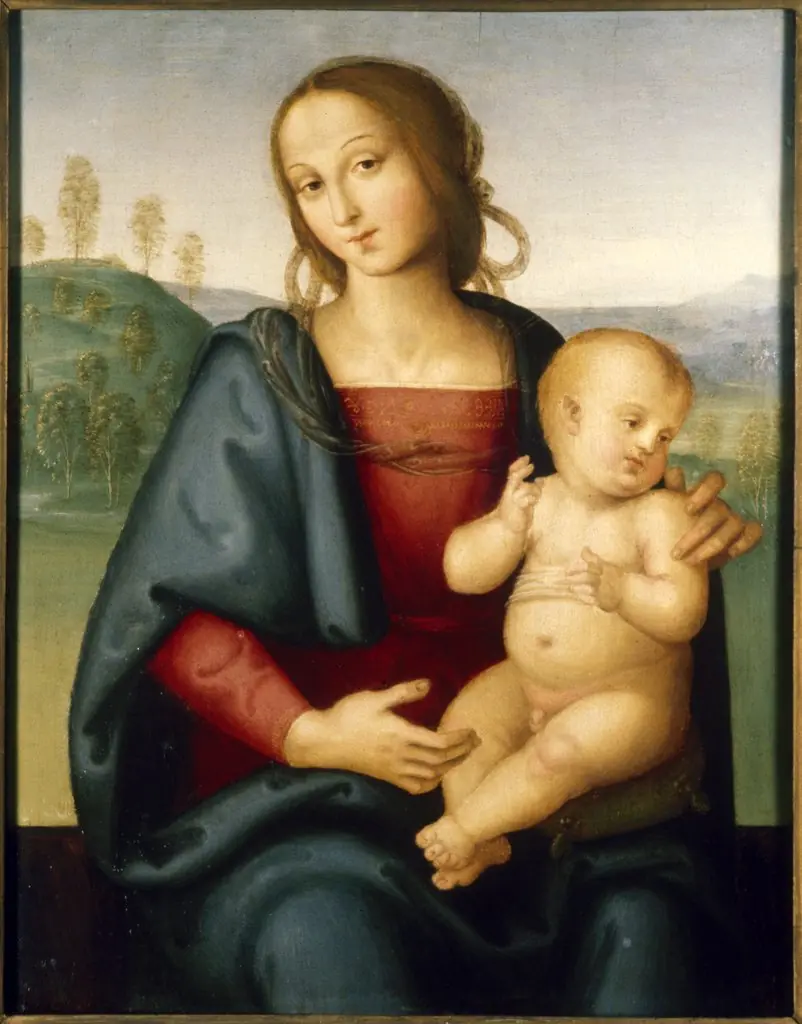
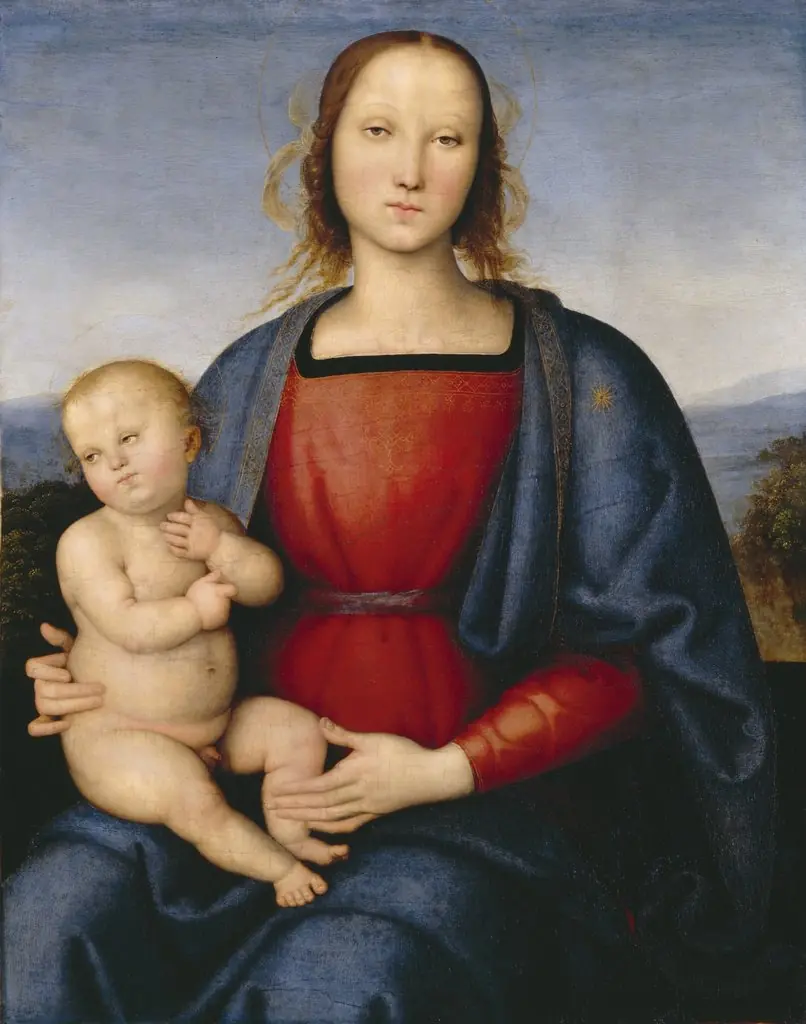
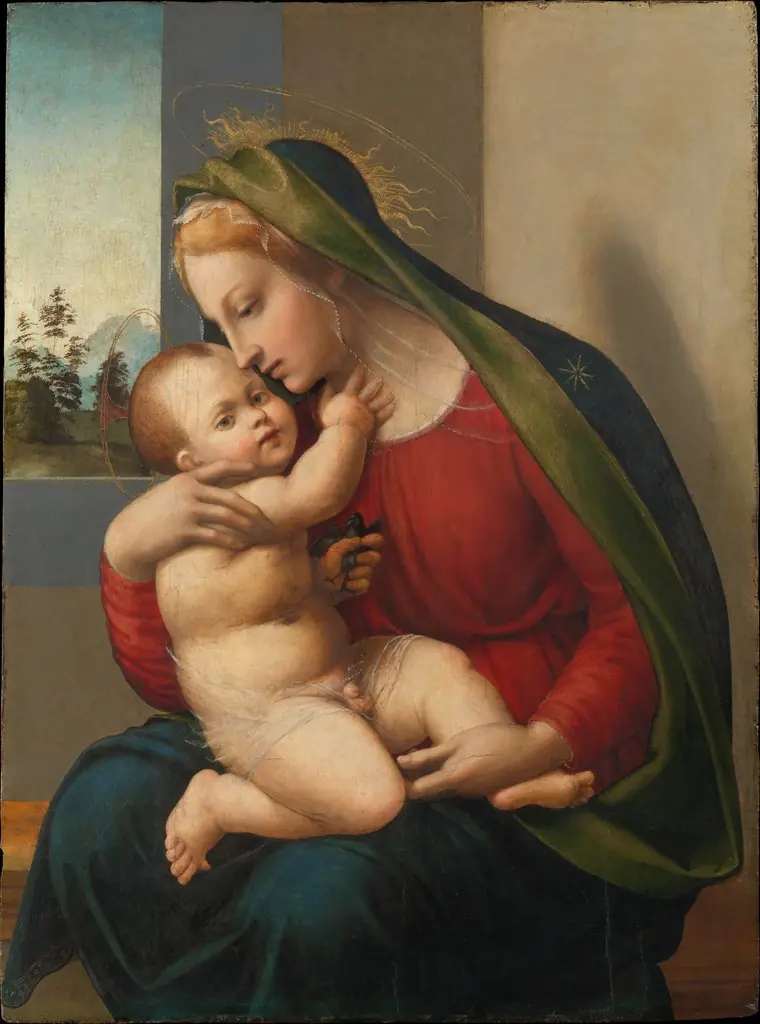
Madonna and Child is an oil painting by the High Renaissance artist Pietro Perugino. It dates from 1500 and is held in the collection of the National Gallery of Art.
About this work
Mary's blue robe folds back at the wrists to reveal crimson as she steadies the nude Christ child on her lap, a hazy Umbrian landscape behind her. Pietro Perugino painted it around 1500 on a small poplar panel. The composition proved popular enough that the U.S. Postal Service put it on a 1986 Christmas stamp. It now hangs at the National Gallery of Art.
Subject & Meaning
Mary is shown in bust-length, seated, with the nude baby Jesus on her lap, their poses emphasizing an intimate embrace.
The painting depicts the Virgin Mary and the Christ Child, a central theme in Christian art. Mary is shown in bust-length, seated, with the nude baby Jesus on her lap, their poses emphasizing an intimate embrace. Her traditional red and blue garments carry theological symbolism: red prefigures Christ's Passion, while blue represents the Church, alluding to the union of the Church with Christ's sacrifice.
The serene composition, achieved through soft sfumato and atmospheric perspective in the background, reinforces the devotional intent, inviting contemplation of the divine maternal bond.
Technique & Style
Painted in oil on panel, the support is identified as poplar by the National Gallery of Art, though other sources cite oak. The panel measures 70.2 × 50 cm. Stylistically, Perugino employs a soft sfumato to unify the composition, particularly in the atmospheric landscape where azure and green tones dissolve into mist. Mary’s vivid red and blue garments contrast with the pale flesh of the nude Christ Child, who sits on her lap.
Decorative touches, such as the arabesque-patterned sleeve and Mary’s elaborate coiffure, enhance the work’s harmony. The figure of Mary is reportedly based on the artist’s wife, Chiara Fancelli. The overall effect is one of balanced, ideal composition typical of Perugino’s High Renaissance style.
History & Provenance
Painted by Pietro Perugino, the work is dated to around 1500. Its early provenance is only tentatively traced: it may have been with the Marchesi of Villafranca in Italy before entering Spanish collections, passing from the Marquès de la Romana, Madrid, by bequest to the Marquès de Villamayor, also Madrid. From there it was purchased by the Duveen Brothers.
By 1926 it belonged to Clarence H. Mackay of Roslyn, New York. In 1936 Mackay sold it to the Samuel H. Kress Foundation, which gifted it to the National Gallery of Art in Washington in 1939.
Context
Painted around 1500, Perugino's Madonna and Child exemplifies the transition from the Umbrian school to the High Renaissance. Scholars have noted the painting's harmonious composition and its use of sfumato and atmospheric perspective to create depth. The work is stylistically linked to Perugino's contemporaneous pieces such as the Polyptych of the Certosa di Pavia and the Madonna del Sacco.
The painting's soft modeling and serene landscape background place it within Perugino's mature period, reflecting the balanced ideal of early 16th-century central Italian painting.
Overview
Pietro Perugino's painting, Madonna and Child, created around 1500, depicts the Virgin Mary cradling the infant Christ. Executed in oil on a poplar panel measuring approximately 70 by 50 centimeters, this devotional work exemplifies the artist's refined style. It is presently housed in the collection of the National Gallery of Art in Washington, D.C., where it represents a significant example of early 16th-century Italian Renaissance art.
Legacy
The enduring appeal of Perugino's Madonna and Child is reflected in its broader cultural recognition. In 1986, the United States Postal Service selected the painting's composition for reproduction on a Christmas stamp. This choice underscored the artwork's widespread familiarity and its capacity to convey a message of traditional reverence, reaching a diverse public audience beyond the museum setting.
Own this work as a print
Artist & collection
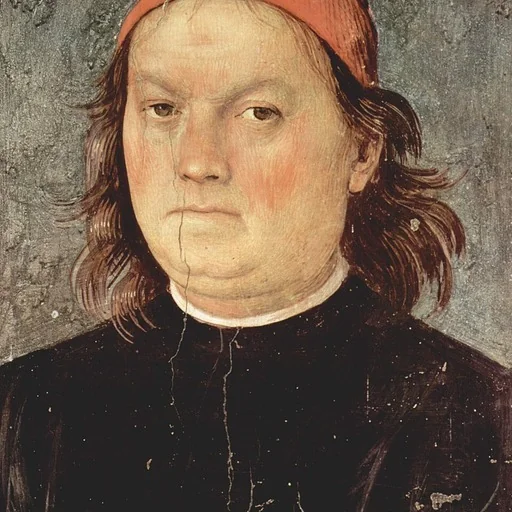
Artist
Pietro Perugino (US: PERR-ə-JEE-noh, -oo-; Italian:; born Pietro Vannucci or Pietro Vanucci; c.

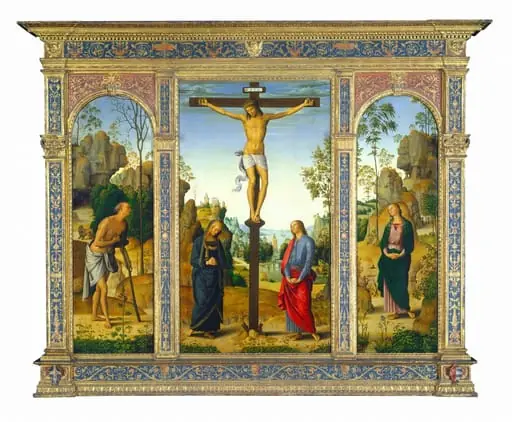 The Crucifixion with the Virgin, Saint John, Saint Jerome, and Saint Mary Magdalene
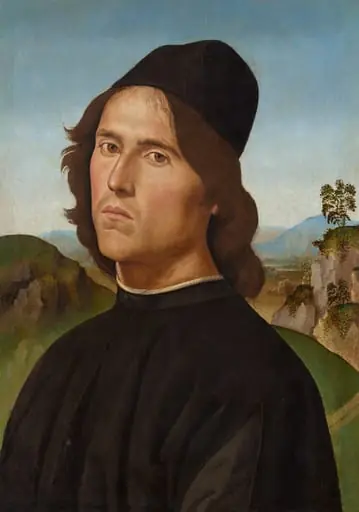 Portrait of Lorenzo di Credi
![The Crucifixion with the Virgin, Saint John, Saint Jerome, and Saint Mary Magdalene [right panel], by Pietro Perugino](https://artifactworldgallery.com/img/pietro-perugino--the-crucifixion-with-the-virgin-saint-john-saint-jerome-and--7d9a2b1f47b9fc9b-w320.webp) The Crucifixion with the Virgin, Saint John, Saint Jerome, and Saint Mary Magdalene [right panel]
The Crucifixion with the Virgin, Saint John, Saint Jerome, and Saint Mary Magdalene [right panel]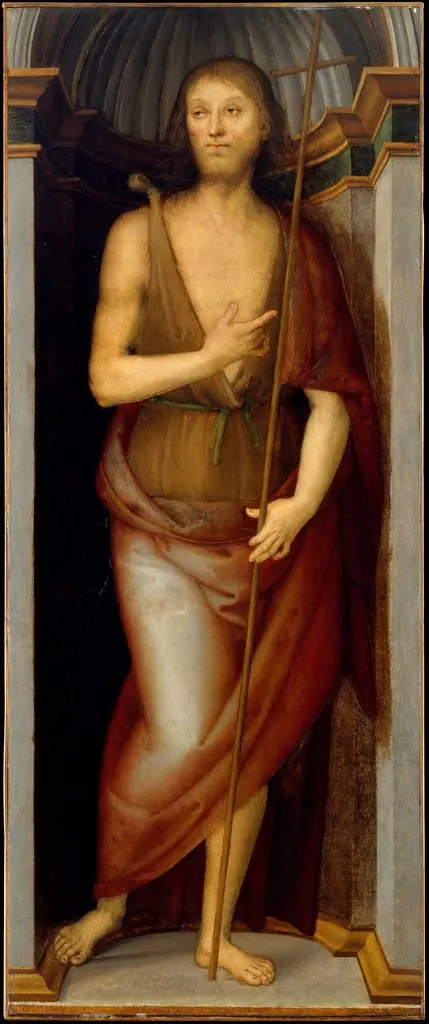 Saint John the Baptist; Saint Lucy
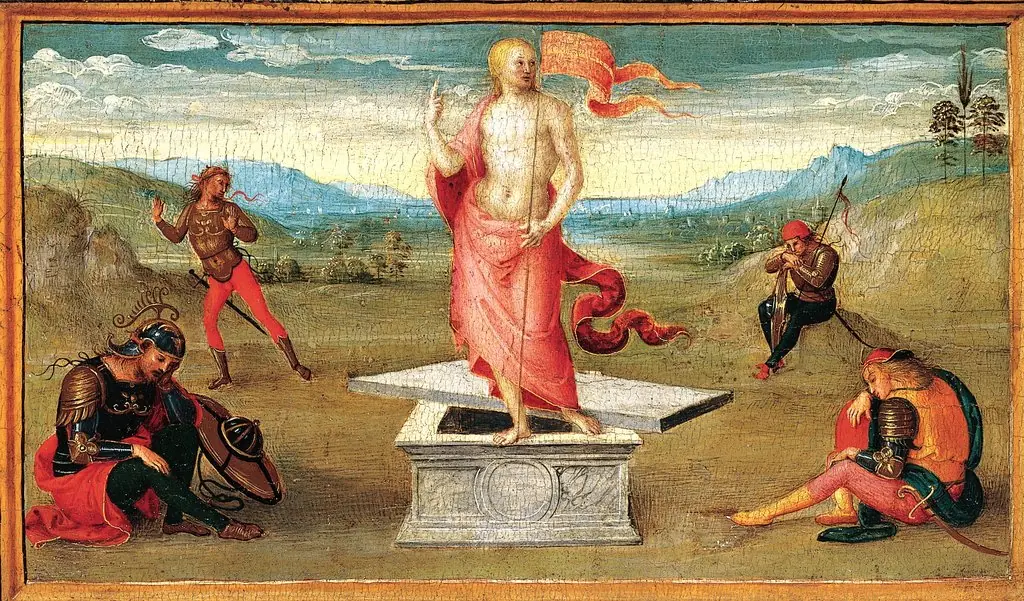 The Resurrection
![The Crucifixion with the Virgin, Saint John, Saint Jerome, and Saint Mary Magdalene [left panel], by Pietro Perugino](https://artifactworldgallery.com/img/pietro-perugino--the-crucifixion-with-the-virgin-saint-john-saint-jerome-and--1017dec17318baa5-w320.webp) The Crucifixion with the Virgin, Saint John, Saint Jerome, and Saint Mary Magdalene [left panel]
The Crucifixion with the Virgin, Saint John, Saint Jerome, and Saint Mary Magdalene [left panel]![The Crucifixion with the Virgin, Saint John, Saint Jerome, and Saint Mary Magdalene [middle panel], by Pietro Perugino](https://artifactworldgallery.com/img/pietro-perugino--the-crucifixion-with-the-virgin-saint-john-saint-jerome-and--a9b4c312771e3f71-w320.webp) The Crucifixion with the Virgin, Saint John, Saint Jerome, and Saint Mary Magdalene [middle panel]
The Crucifixion with the Virgin, Saint John, Saint Jerome, and Saint Mary Magdalene [middle panel]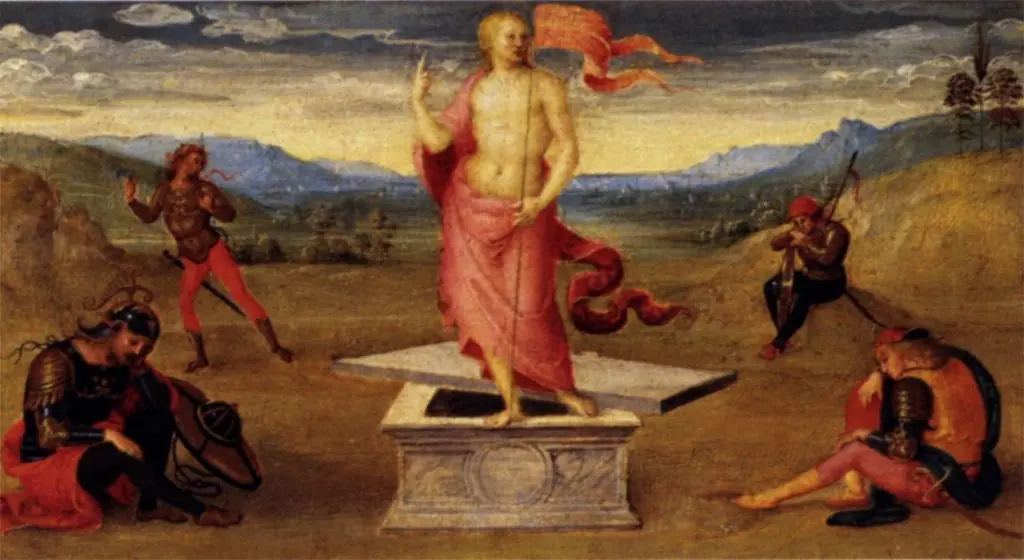 Resurrection of Christ