Still Life with Apples by Paul Cézanne
Painted by Paul Cézanne in 1896, *Still Life with Apples* is a quiet yet revolutionary work from the State Hermitage Museum collection. Cézanne's methodical approach to still life subjects bridged the gap between Impressionism and Cubism, profoundly influencing 20th-century art.
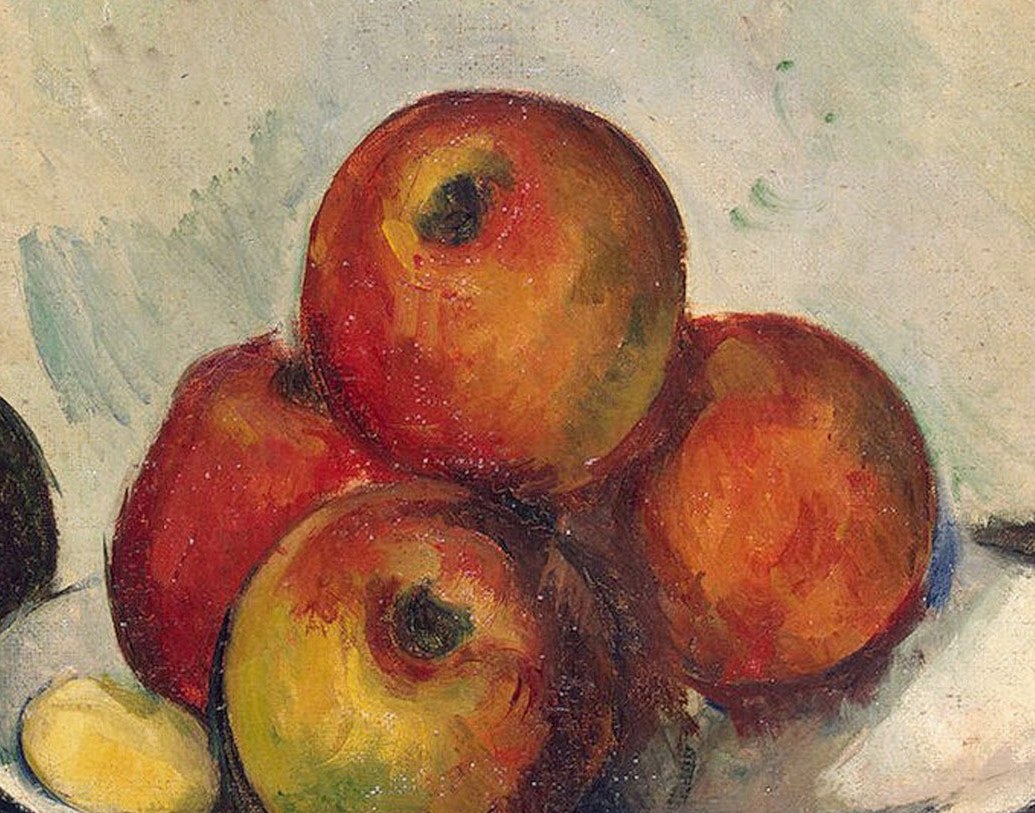
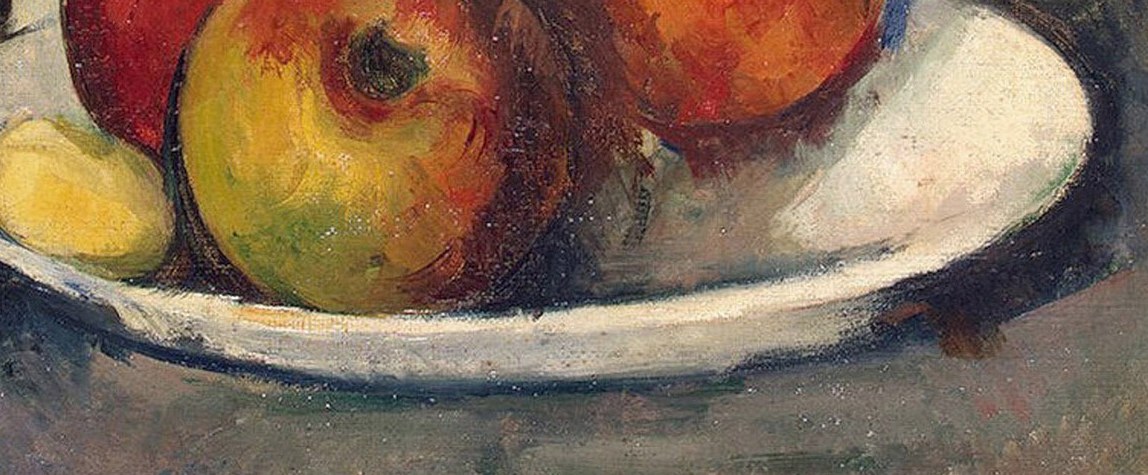
Look closely at how Cézanne uses color and texture to build form. The thick, visible brushstrokes create a sense of volume in the fruit, making a simple arrangement feel monumental.
Cézanne spent years meticulously studying everyday objects, reducing them to their underlying geometric shapes. This intense exploration of form and space, often in his studio, laid the groundwork for future avant-garde movements like Cubism. His paintings initially met with incomprehension, but his impact proved immense.
What details do you notice that give these ordinary objects such a strong presence?
Details
Transcript
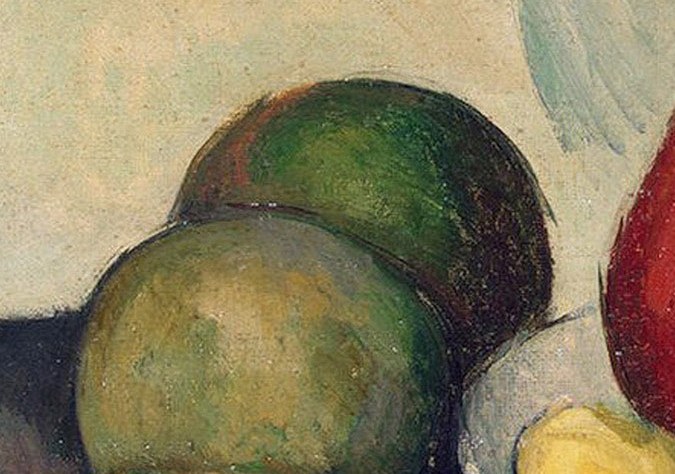
This painter bridged Impressionism and Cubism, in 1896. He explored form by reducing natural shapes to their essence. Notice the subtle shifts in green, giving this pear volume. He used thick, textured brushstrokes, called impasto, to build forms. This studio still life became a profound influence on Cubism. His systematic study of objects changed how painting was understood.