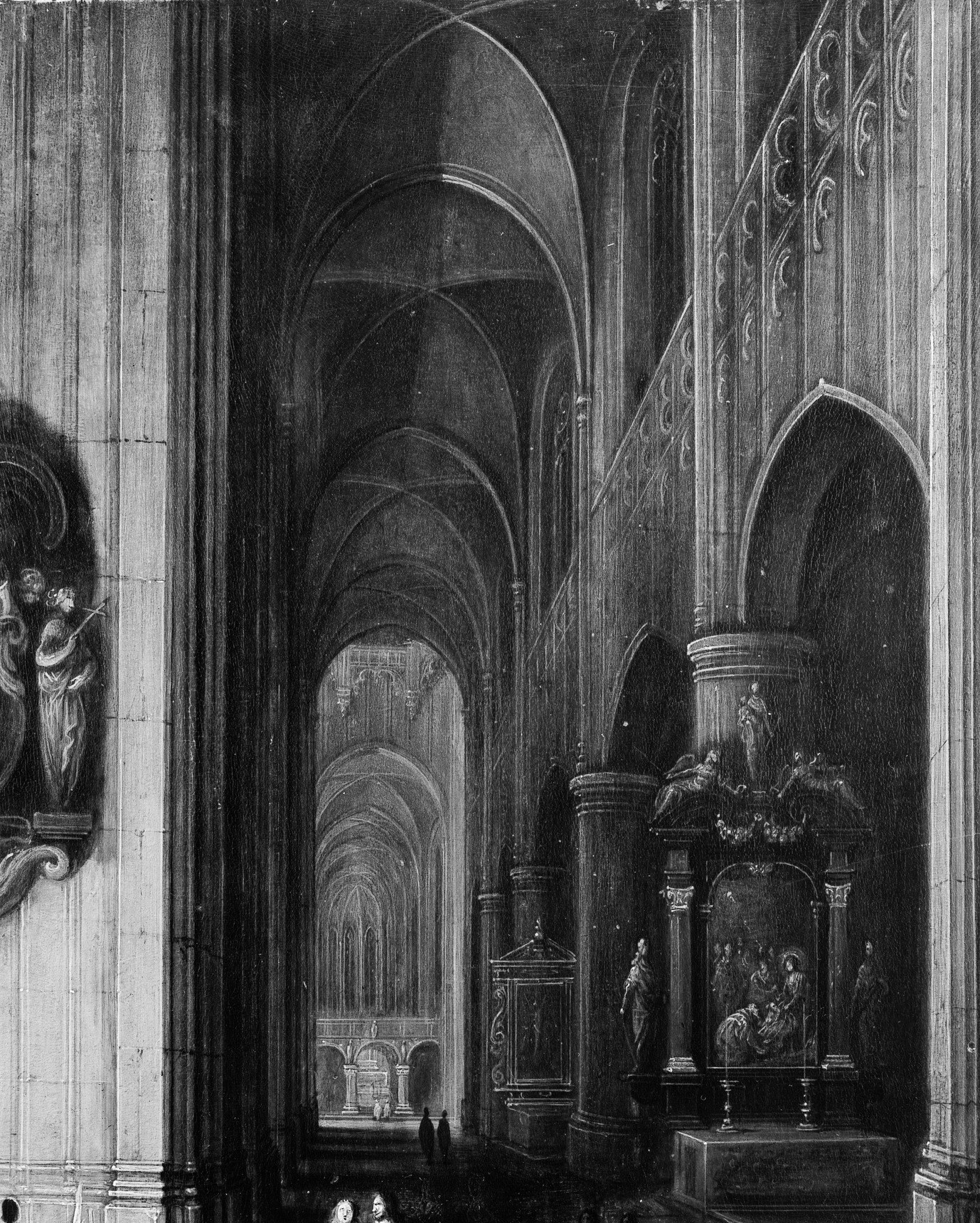
Interior of a Gothic Church at Night by Pieter Neefs the Younger
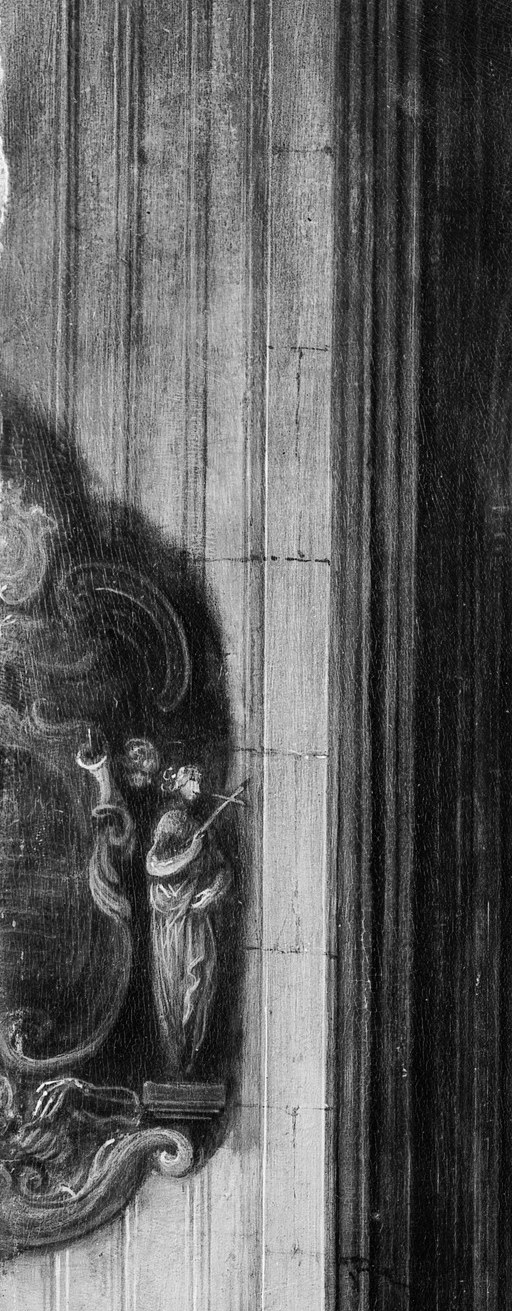
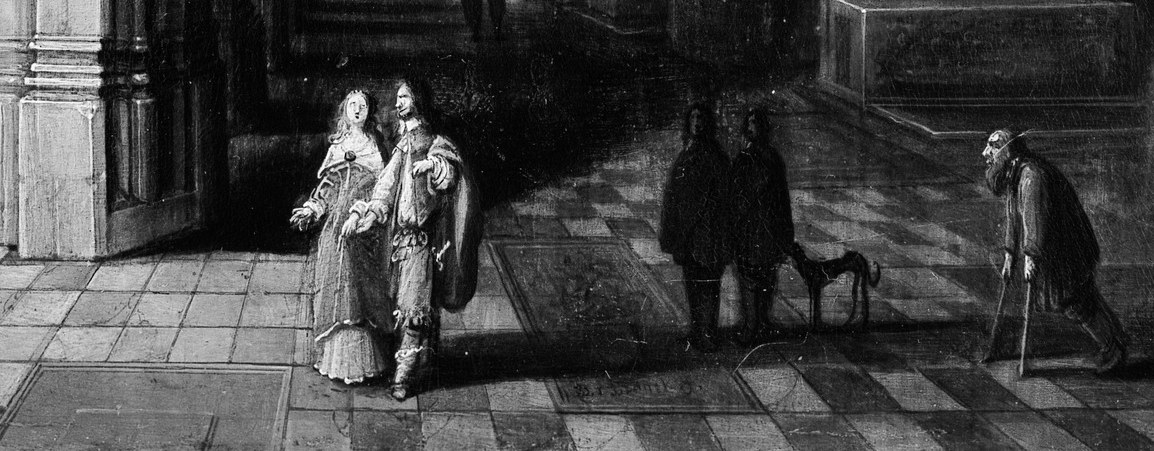
A Baroque church interior that works like a memento mori. Pieter Neefs the Younger painted this in 1660, and from the moment you step in, death surrounds you. That enormous sculpted wall on the left is a funerary monument, a real, high-status tomb built into the architecture. The stone slabs underfoot are almost certainly grave markers. You are standing on the dead.
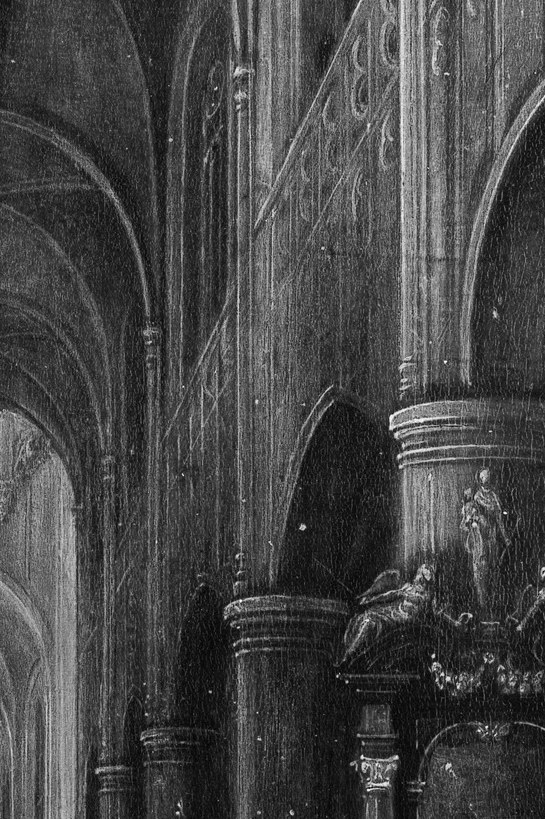
The painting guides your eye with ruthless precision. The rib-vaulted ceiling and the receding colonnade pull you toward the back of the church, fading into deeper and deeper darkness. The only warm light in the entire composition is a distant altar glow at the vanishing point, so small and so deliberate that it reads as a destination. A solitary dark-cloaked figure stands near the left column, apart from everyone else, meditative and still.
Neefs the Younger was a Flemish architectural specialist who often collaborated with figure painters, so the staffage, the small human figures, was likely added by a colleague. But the program is unified: life is short, the grave is near, and the light is up ahead. The painting is held at The Metropolitan Museum of Art.
You decode it one step at a time. What looks like a moody church scene is really a quiet argument about where you should be looking.
Details
Transcript
Entering a Gothic church at night. Lights are few. This towering left wall is a tomb. Someone important is buried here. The floor slabs beneath you are grave markers too. A lone figure in black stands apart. A mourner, or a reminder of your own death. The architecture pulls your eye down the nave, into shadow. And at the vanishing point: one warm, distant altar glow. Death in the foreground, light in the distance. The message is the journey.