Santa Teresa de Jesús by http://www.wikidata.org/.well-known/genid/bb901df55e430571458f96e65d6f1f06
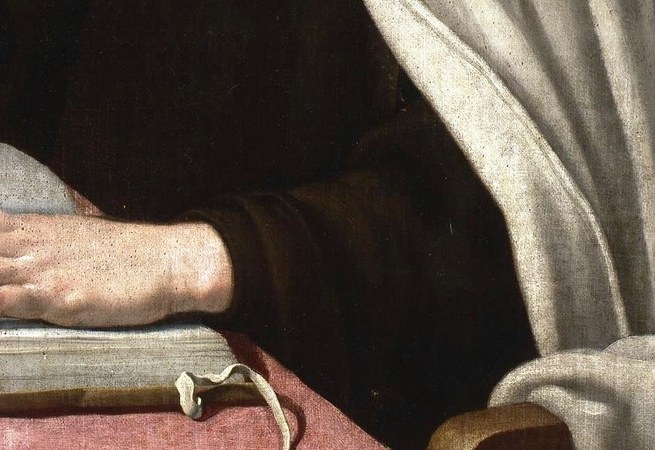
In Peter Paul Rubens' "Santa Teresa de Jesús," painted around 1601, light isn't just illumination; it's a dramatic, almost tangible presence. This painting, housed in the Museum of Fine Arts, Boston, showcases Rubens' mastery of chiaroscuro, a technique that uses strong contrasts between light and dark.
Look closely at how the light falls upon Santa Teresa's face, perfectly defining her features and conveying a sense of divine contemplation. The dramatic glow appears to emanate from a hidden source, highlighting the spiritual intensity of the scene.
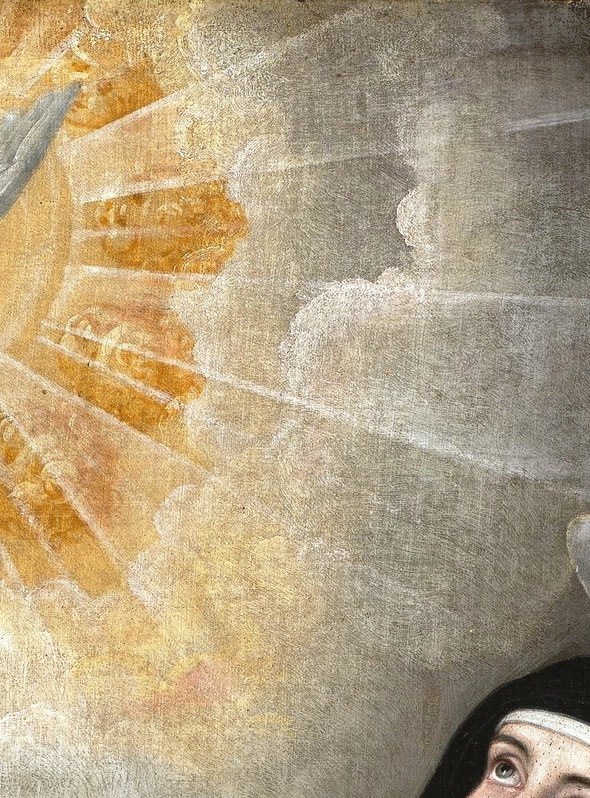
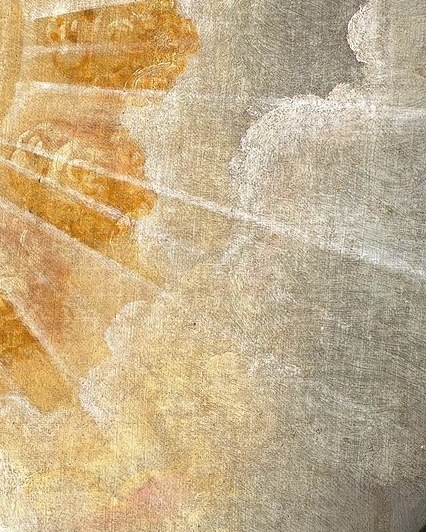
The true brilliance, however, lies in the luminous dove of the Holy Spirit. Rubens creates the illusion that the dove itself is a source of light, achieved entirely through his skillful application of oil paint. This visual trick transforms pigment into pure radiance, making the divine presence feel real and immediate.
Rubens was a key figure in the Baroque movement, known for his dynamic compositions and vibrant use of color and light. This painting exemplifies how he used artistic technique to evoke profound spiritual experiences.
Details
Transcript
This painter uses light as if it were a physical force. He creates a dramatic glow from a hidden source. Notice how the light perfectly molds her face. But the real trick is this luminous dove. It seems to emit its own light, painted purely with pigment. The effect is spiritual, and entirely from paint.