Heaton Park Races by Ferneley, John
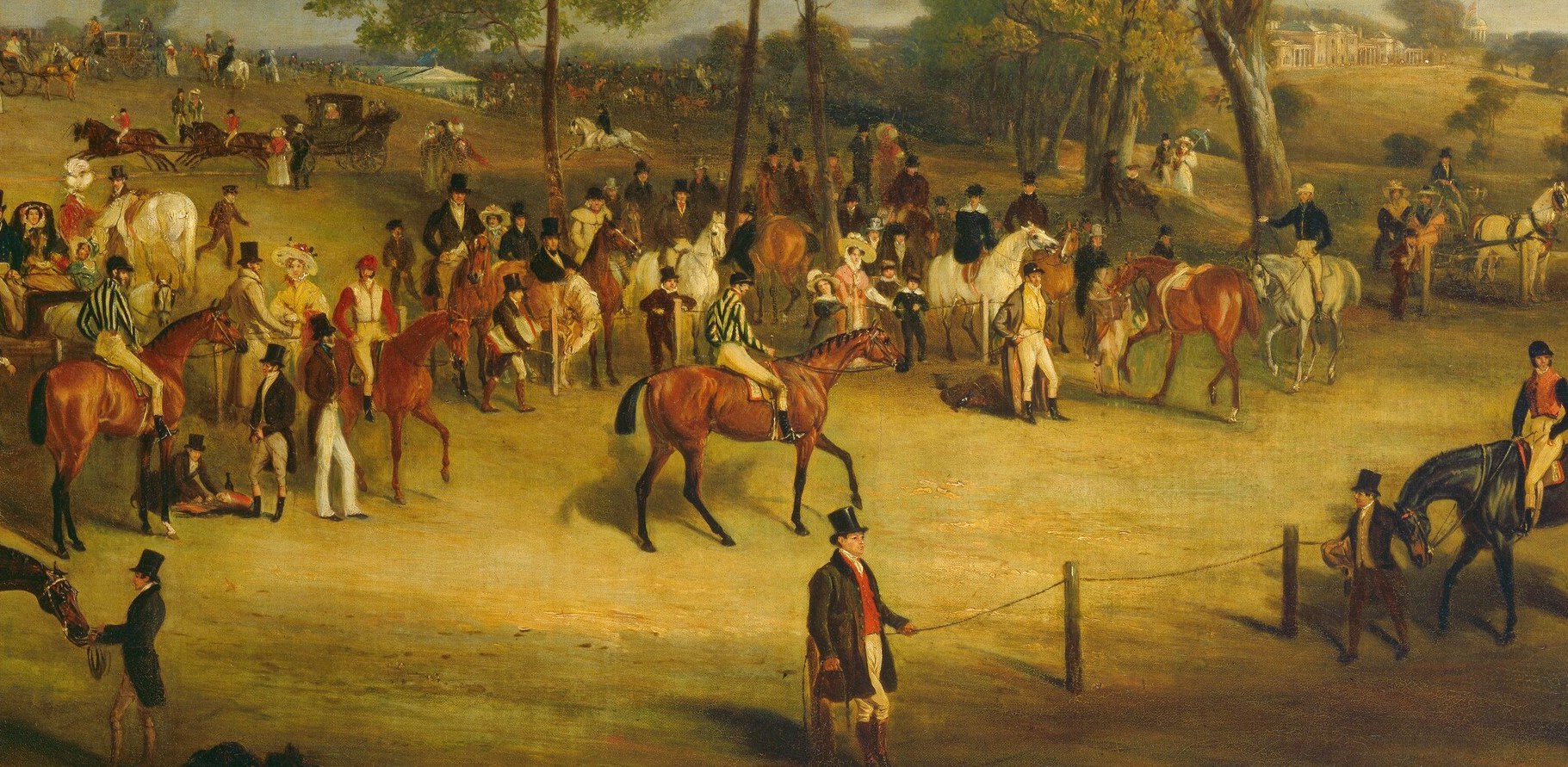
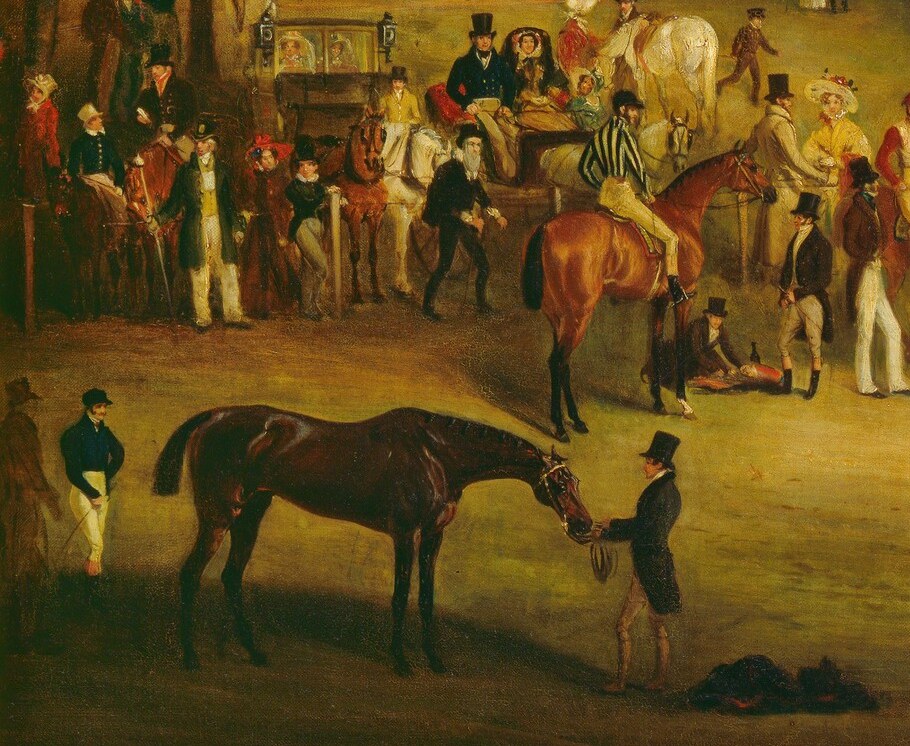
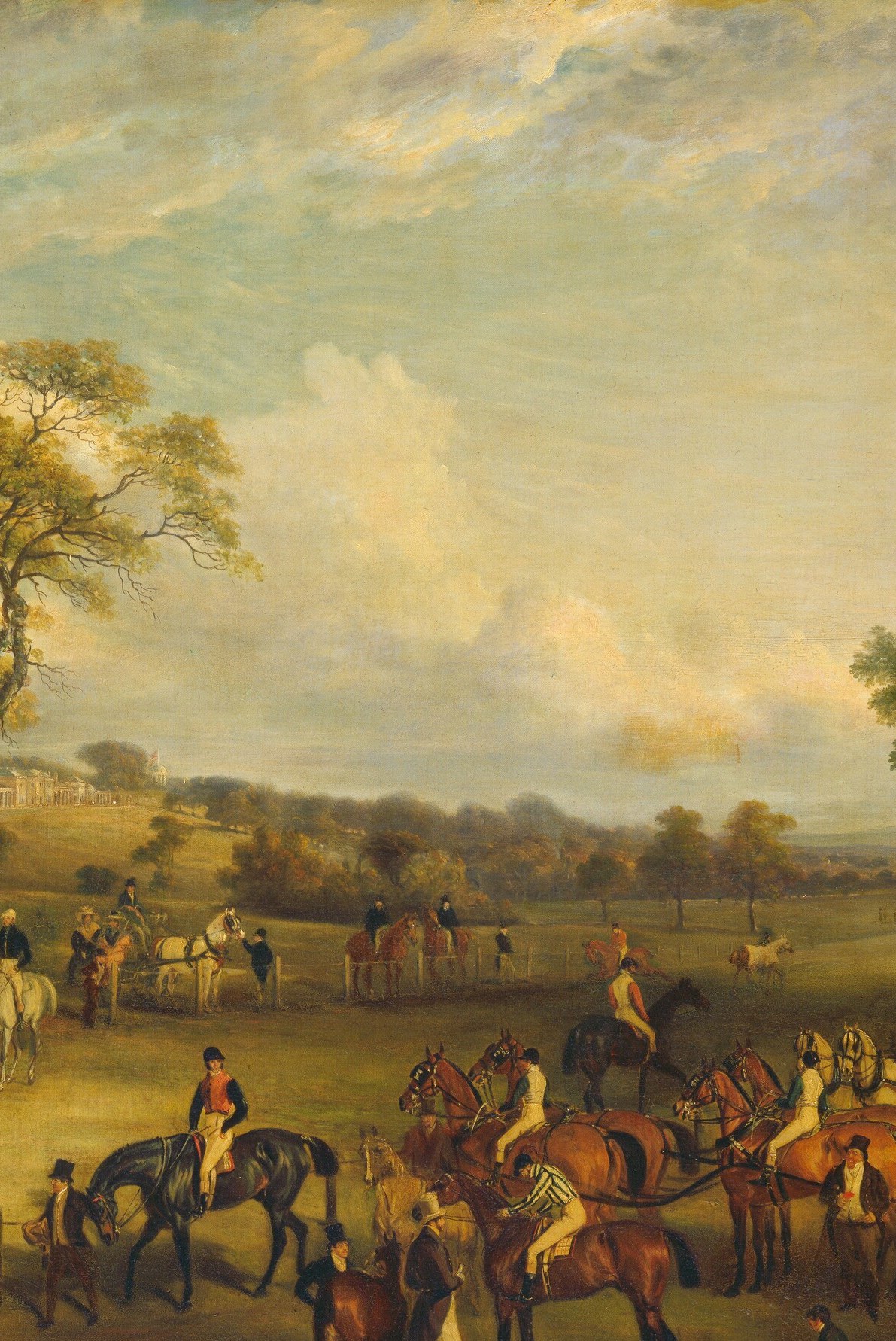
This is John Ferneley's Heaton Park Races, painted in 1829 and now held at the Manchester Art Gallery. The painting records a real race day on the grounds of a grand estate north of the city, and it does something that should have been impossible: it freezes six galloping horses in mid-stride, forty years before the first true motion photographs existed.
The thing to look at is the horses' legs. Ferneley shows them at different phases of the stride, some hooves tucked, some extended, giving the whole field a sense of continuous speed. A running horse's legs move faster than the human eye can resolve, so Ferneley was not painting what he saw. He was painting what he knew: the equine skeleton, the muscle groups, the sequence of a gallop studied from dissection and decades of drawing hunts.
Ferneley came from Leicestershire and settled in Melton Mowbray, the capital of English fox hunting. He built his career on commissions from landed patrons who wanted their best horses immortalized. Those commissions depended on anatomical accuracy, a patron would recognize his own animal in the painting, and he would notice if a leg bent wrong. That demand for precision turned Ferneley into something between a portraitist and a biomechanics researcher.
Go back and look at the grass in the foreground: scuffed, muddy, worn by hooves. He painted the ground conditions of that specific afternoon. Then lift your eye to the pale, silvery sky, the whole thing feels less like a sporting trophy and more like a weather report from a Tuesday in 1829.
Details


Transcript
Count the horses in mid-air. Not one. Not two. Six, all at full gallop. No photograph existed in 1829. This is pure memory. A horse's legs move too fast for the eye to track. Yet Ferneley rebuilt every joint and tendon from anatomy. Look at the mud on the turf, right at the rail. He painted the weather: a race-day chill you can feel. The trick? He knew horses the way a surgeon knows bone.