Madonna and Child by Jaume Serra
Jaume Serra's "Madonna and Child" (1359) from the Museo del Prado is a masterpiece of medieval symbolism.
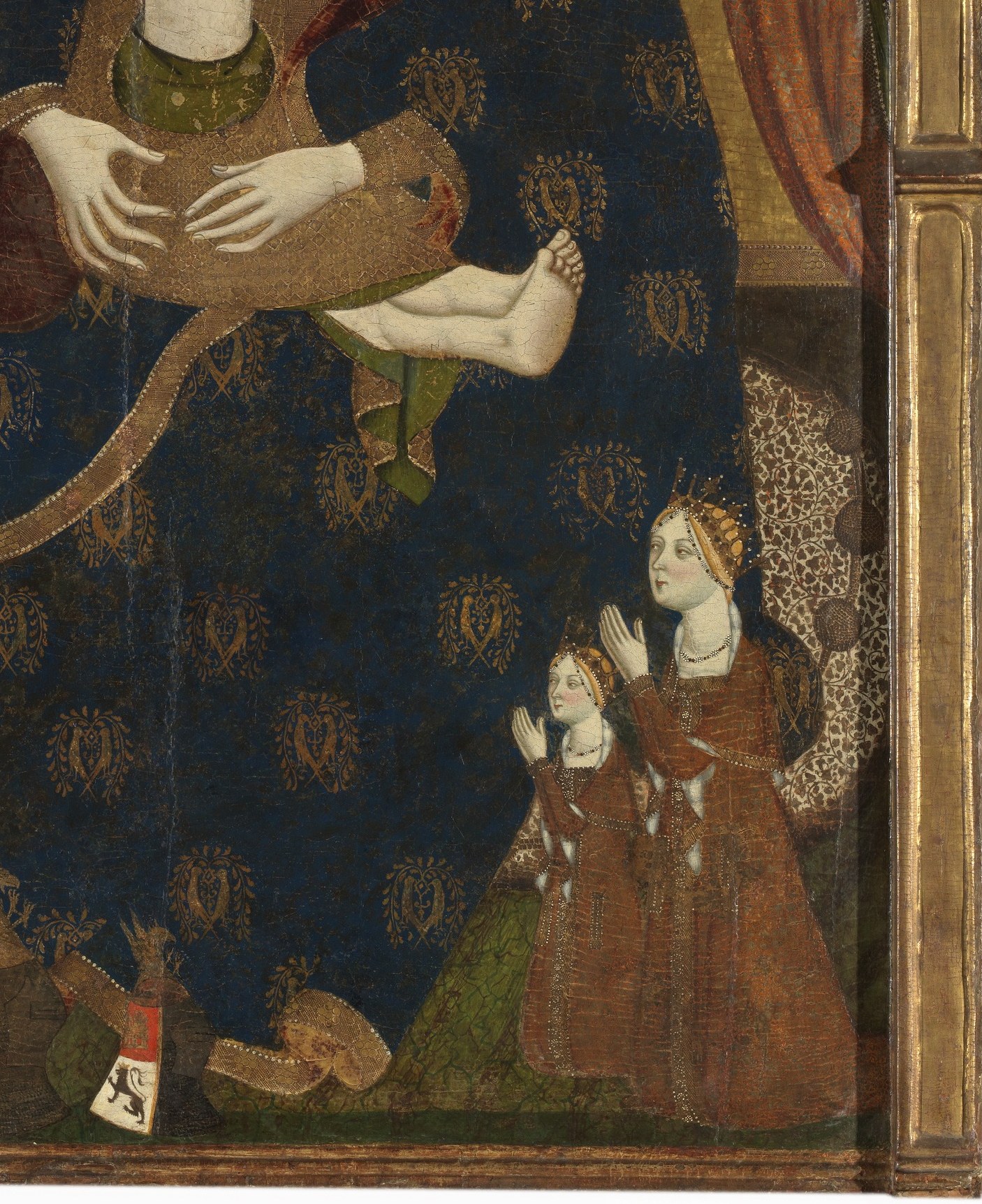
Look closely at the coats of arms framing the scene; they identify the patron who commissioned this devotional work. The intricate gold patterns on Madonna's robe further speak to the wealth and status of this patron, while the inscription at the bottom confirms the artist, Jaume Serra.
This tempera painting, created in 1359, holds layered meanings. The infant Christ's gesture of bringing his hand to his mouth foreshadows the sacrament of the Eucharist, a central tenet of Christian faith. His bare foot offers a poignant reminder of his earthly vulnerability.
The surrounding figures, including the kneeling supplicants, amplify the painting's theme of reverence and divine grace. Together, these elements create a powerful testament to faith and patronage in the 14th century.
Details
Transcript
Who paid for this Madonna and Child? Look for these two family crests. The gold patterns show rich patronage. An inscription names the artist Jaume Serra. This was painted in 1359. The child's hand to mouth signals the Eucharist. His bare foot grounds the divine in earth. Devotion surrounds the divine mother and child.