The Chariot of Aurora by Giovanni Battista Tiepolo
View the artwork: The Chariot of Aurora →
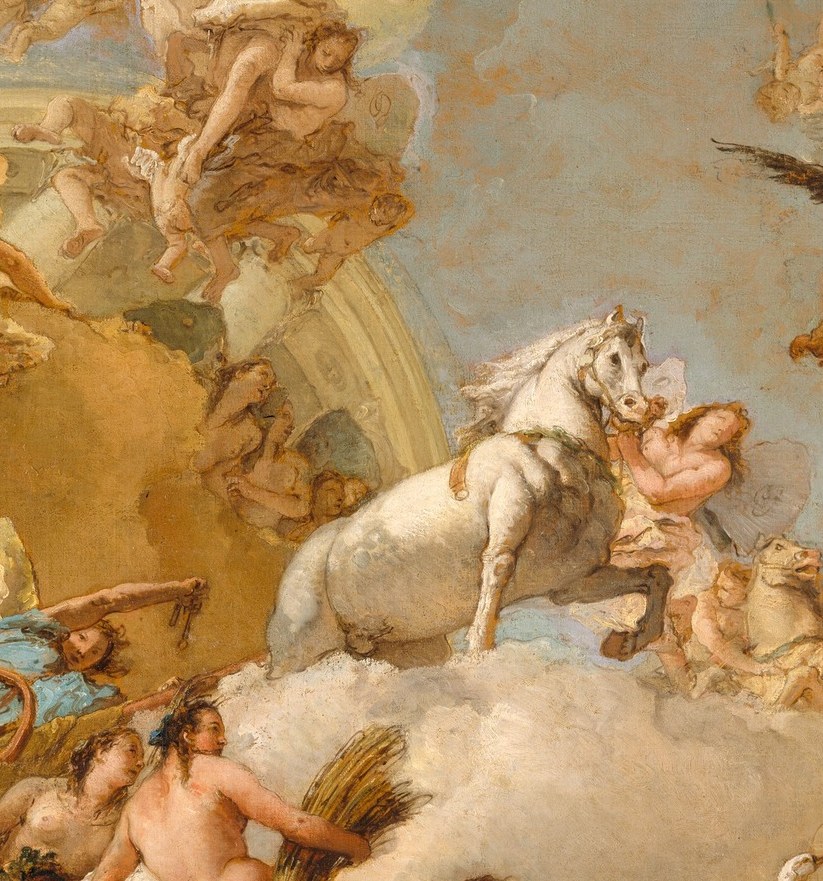
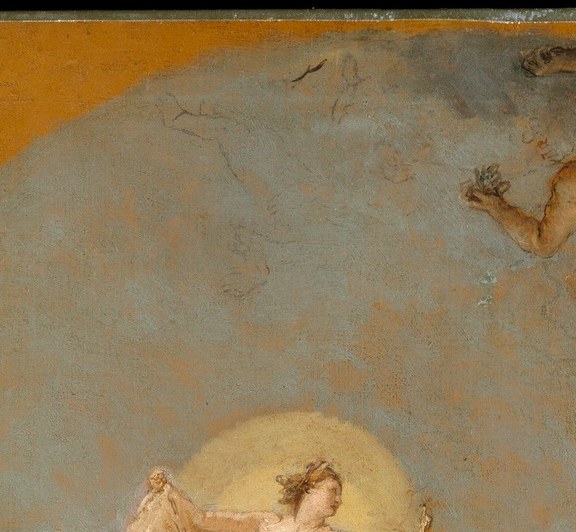
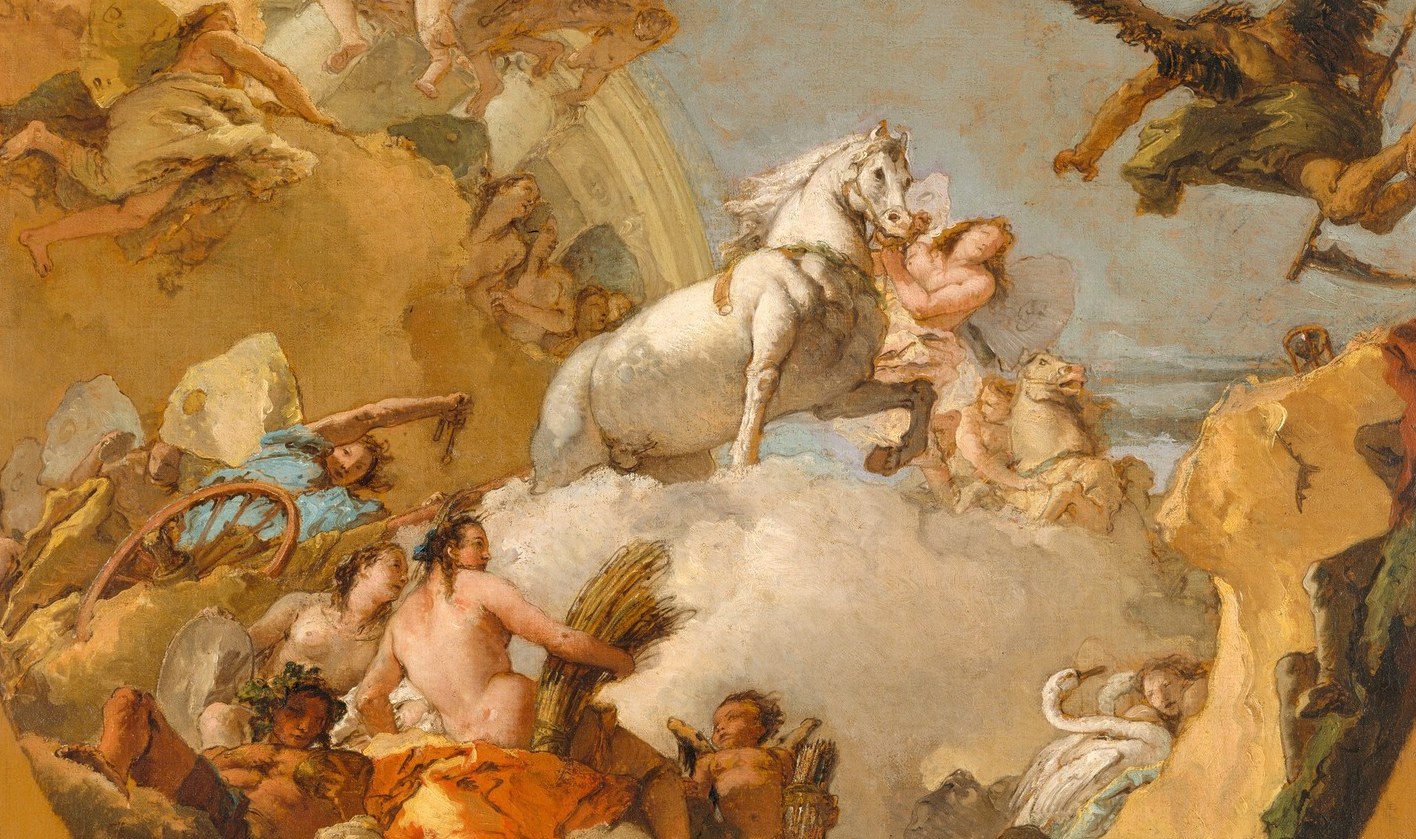
This is The Chariot of Aurora, painted by Giovanni Battista Tiepolo in 1764. The whole canvas is a rush of golden light, horses, and winged figures, and it is easy to think you have seen it all in one glance. The goddess of dawn rides a white horse at center, her glow pushing back a cool blue sky. Tiepolo built his career on ceilings like this: vast, weightless illusions that made 18th-century Venice feel like Olympus.
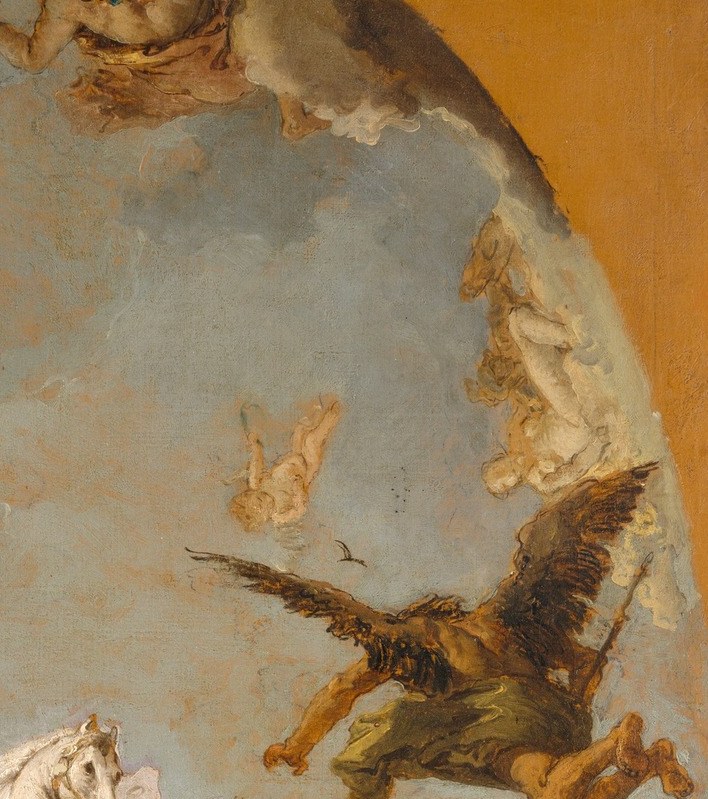
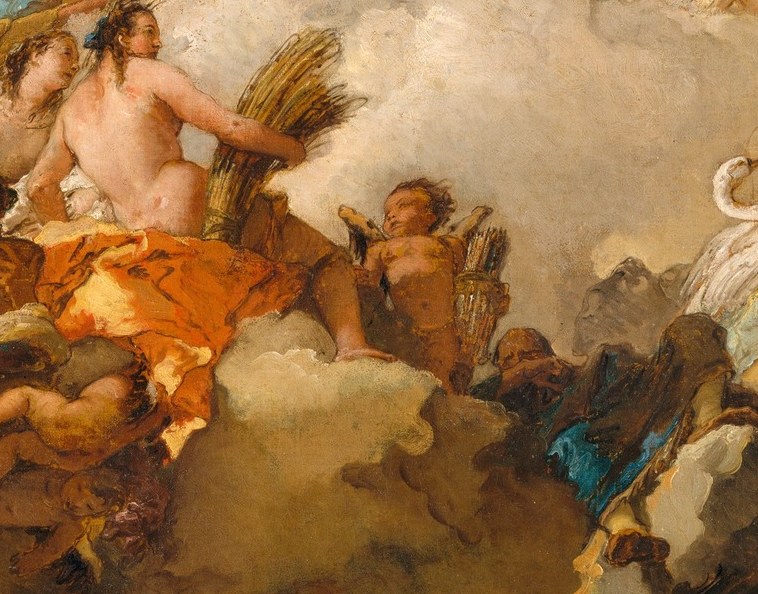
But the painting actually tells two stories at once, and the second one is easy to walk past. At the bottom center, a dark horse plunges downward, half-swallowed by shadow. That is Night in flight. And tucked into the upper left corner, nearly invisible against the oval frame, is a winged figure painted in such dark, angular strokes that she almost dissolves. That is Night herself, her body already half out of the picture, fleeing the light she can never outrun.
Tiepolo was the last great master of the Venetian fresco tradition, working across Italy, Germany, and Spain. By the 1760s his reputation was so immense that a painting like this was not just a decoration; it was a demonstration of absolute command. The foreshortened white horse alone, its belly facing the viewer in a trick called di sotto in sù, was a signature of his illusionism. He could make a flat ceiling feel like the sky was opening.
Next time you see a Tiepolo, let your eye drift to the edges. He often hid his most interesting figures in the margins, where only the patient looking.
#arthistory #tiepolo #rococo
Details
Transcript
She is Aurora, the goddess of dawn. Tiepolo painted her as pure light in oil. She commands the white horse of morning. Now look where the light does not reach. A dark horse flees downward. Night is in retreat. And up in this corner, one figure is nearly invisible. A shadowed, winged shape leaving the frame. That is Night herself, already forgotten.