Artwork
The Chariot of Aurora
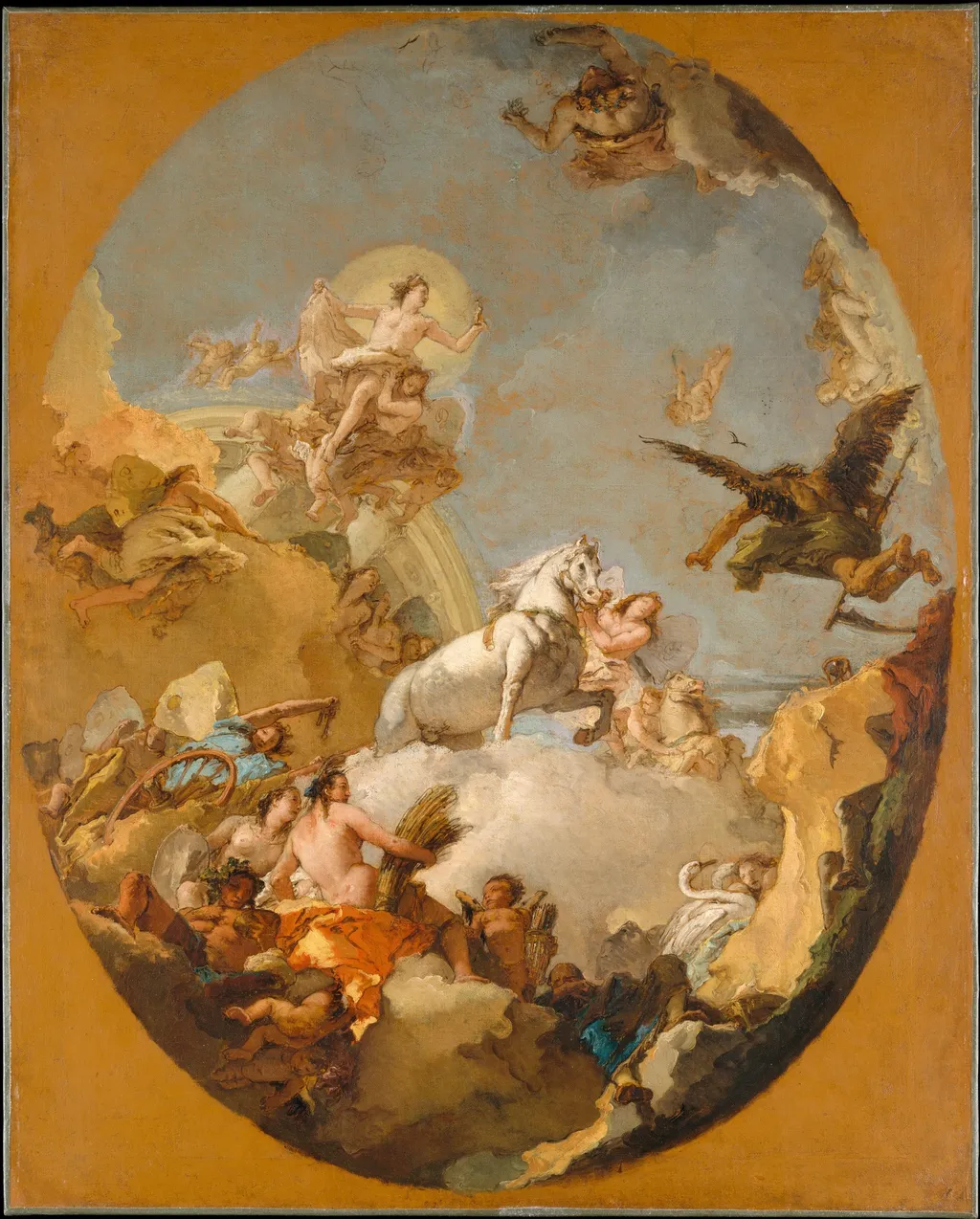
The Chariot of Aurora is an oil painting by the Rococo painting artist Giovanni Battista Tiepolo. It dates from 1764 and is held in the collection of the Metropolitan Museum of Art.
About this work
A crowded sky of figures drifting on clouds. At the center a woman rides a white horse and holds the reins of a two-horse chariot, winged figures around her, a dark horse galloping below. Soft blues, golds, and whites, with a warm glow marking the woman as Aurora, goddess of dawn. Giovanni Battista Tiepolo, 1764.
Subject & Meaning
She is accompanied by Apollo, the sun god, and Bacchus, the god of wine, while a swan, often linked to Apollo and love, appears nearby.
The painting portrays Aurora, the Roman goddess of dawn, driving a chariot across the sky. She is accompanied by Apollo, the sun god, and Bacchus, the god of wine, while a swan, often linked to Apollo and love, appears nearby. The chariot, drawn by horses, symbolizes the arrival of daylight and the renewal of day. Together, these figures convey an allegory of light, rebirth, and celebratory abundance characteristic of Rococo themes.
Technique & Style
Created in 1764, The Chariot of Aurora is an oil painting executed on a canvas support by Giovanni Battista Tiepolo. The work measures 90.2 centimeters in height and 72.7 centimeters in width, adhering to the Rococo movement's stylistic traditions. The painting depicts a mythological scene featuring a chariot drawn by horses, accompanied by figures such as Apollo, Bacchus, and a goddess, alongside a swan.
As a finished easel painting rather than a fresco, the work demonstrates the artist's handling of oil pigments to achieve the luminous effects characteristic of his late career. The piece is held within the collection of the Metropolitan Museum of Art in Manhattan.
History & Provenance
Giovanni Battista Tiepolo executed The Chariot of Aurora in 1764 as an oil on canvas. Classified as a Rococo work, it depicts a mythological scene with Apollo, Bacchus, a goddess, a swan, horses, and a chariot. The painting is held in the collection of the Metropolitan Museum of Art, which records its dimensions as 90.2 by 72.7 cm and its date of execution as 1764.
Context
Giovanni Battista Tiepolo's The Chariot of Aurora, executed in 1764, is an example of late Rococo painting from the final years of the artist's career. Rendered in oil on canvas, its mythological subject, Apollo, Bacchus, and a goddess accompanied by horses and a swan, reflects Tiepolo's sustained engagement with classical themes. The work is held in the collection of the Metropolitan Museum of Art in Manhattan, United States, and serves as a reference point for the persistence of Rococo aesthetics in the mid-eighteenth century.
Legacy
The Chariot of Aurora, an oil on canvas painted by Giovanni Battista Tiepolo in 1764, entered the collection of the Metropolitan Museum of Art, where it contributes to the museum's holdings of 18th-century European painting. Its visual program, a horse, Apollo, Bacchus, a swan, and a goddess within a chariot, continues to inform studies of Rococo iconography and the treatment of mythological subjects in museum displays.
Overview
The Chariot of Aurora is an oil painting that presents a vibrant celestial tableau. The composition features a multitude of figures navigating a sky filled with clouds, with a central female figure as the focal point. The artist utilizes a palette of soft blues, golds, and whites, which collectively establish an ethereal ambiance and guide the viewer's eye toward the primary narrative.
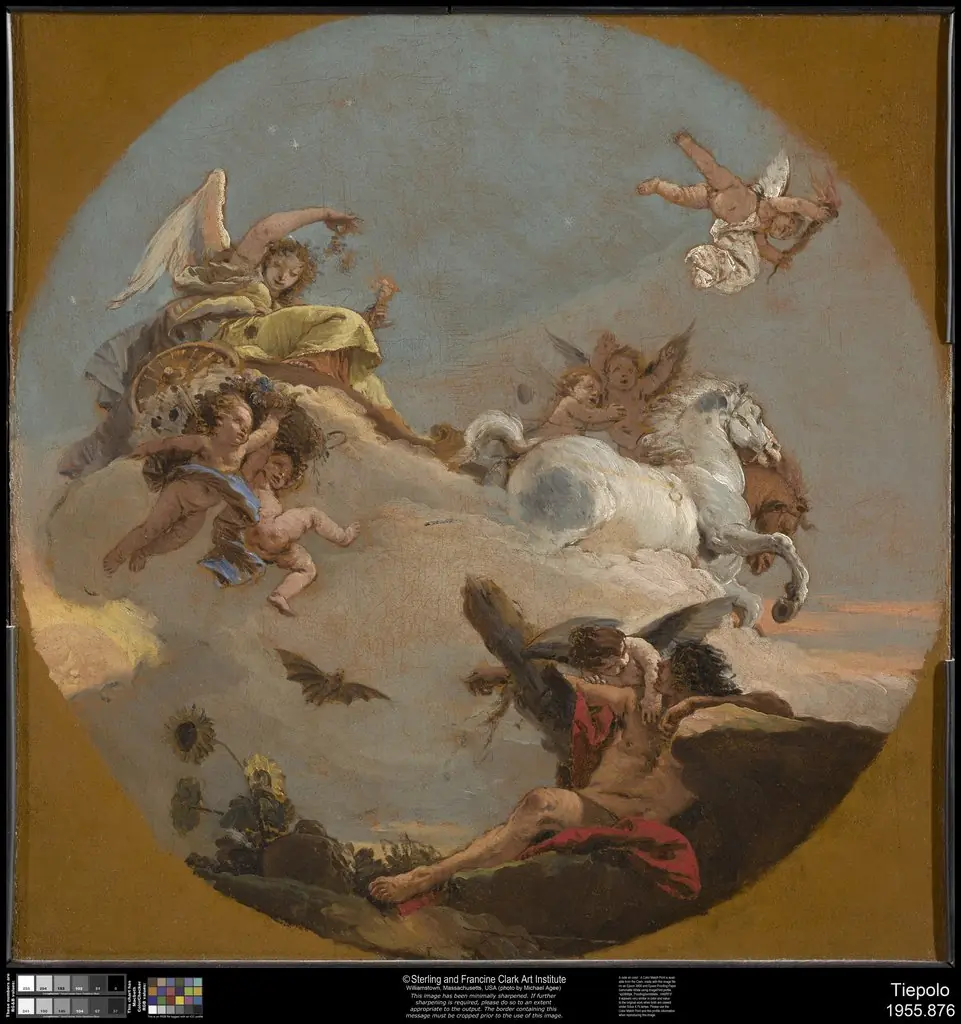
Own this work as a print
Artist & collection

Artist
Giovanni Battista Tiepolo, also known as Giambattista Tiepolo, was an Italian painter and printmaker from the Republic of Venice who painted in the Rococo style, considered an important member of the 18th-century Venetian school.

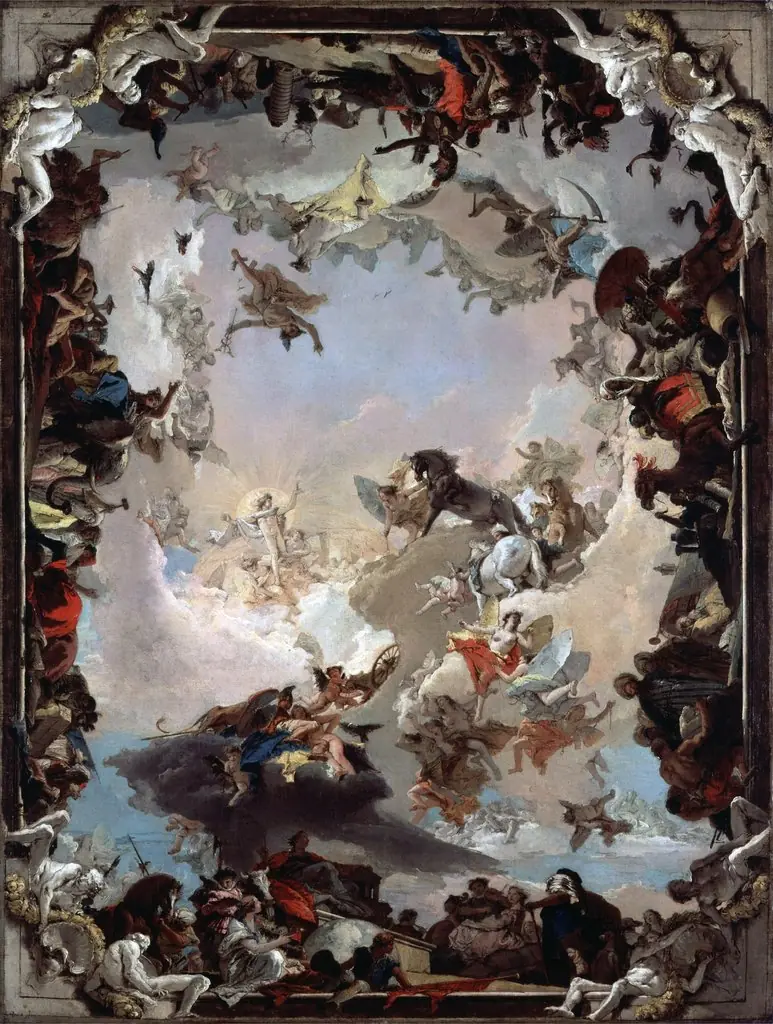
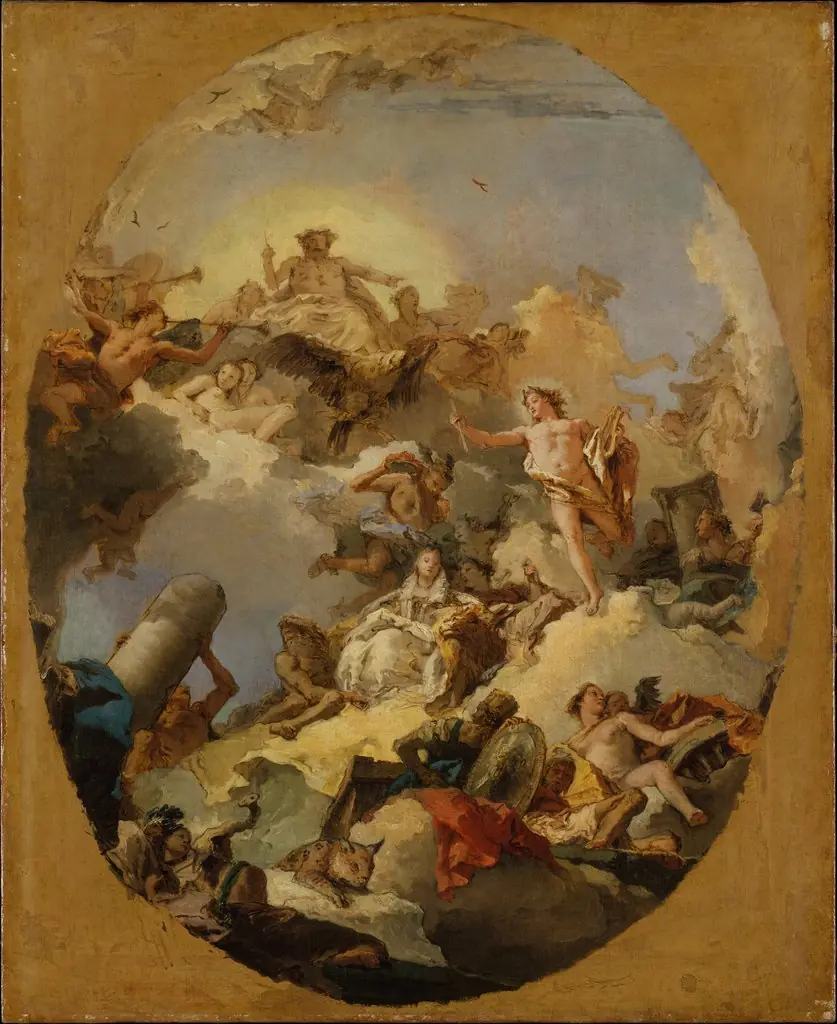 The Apotheosis of the Spanish Monarchy
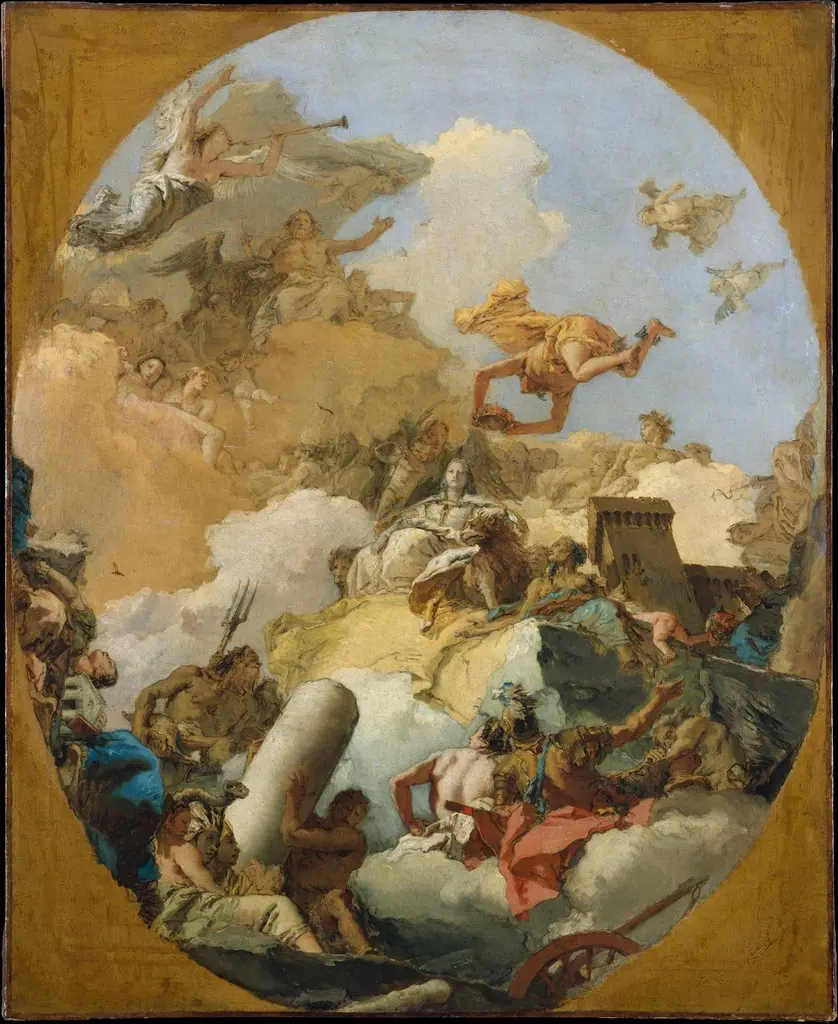 The Apotheosis of the Spanish Monarchy
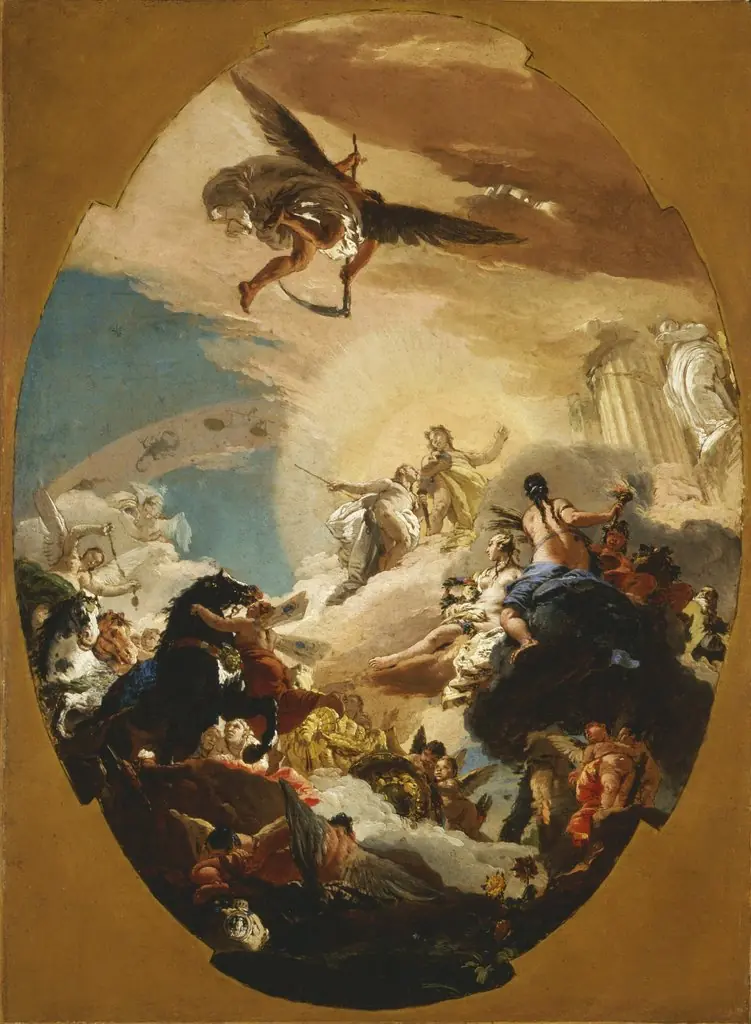 Apollo and Phaëthon
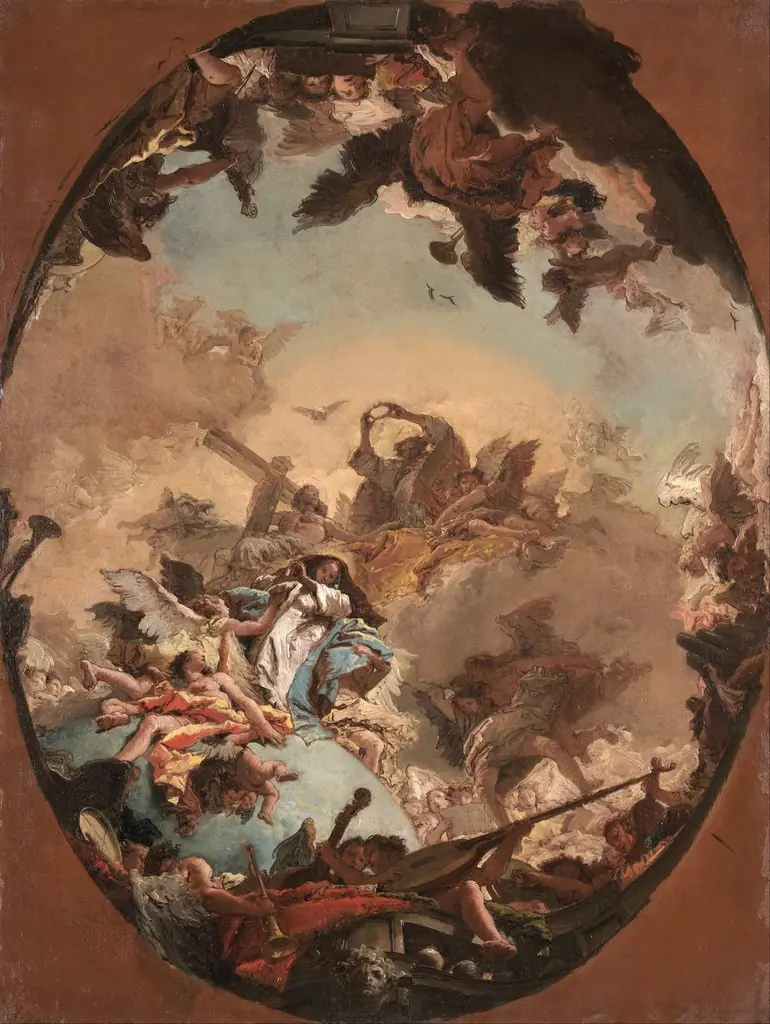 The Coronation of the Virgin
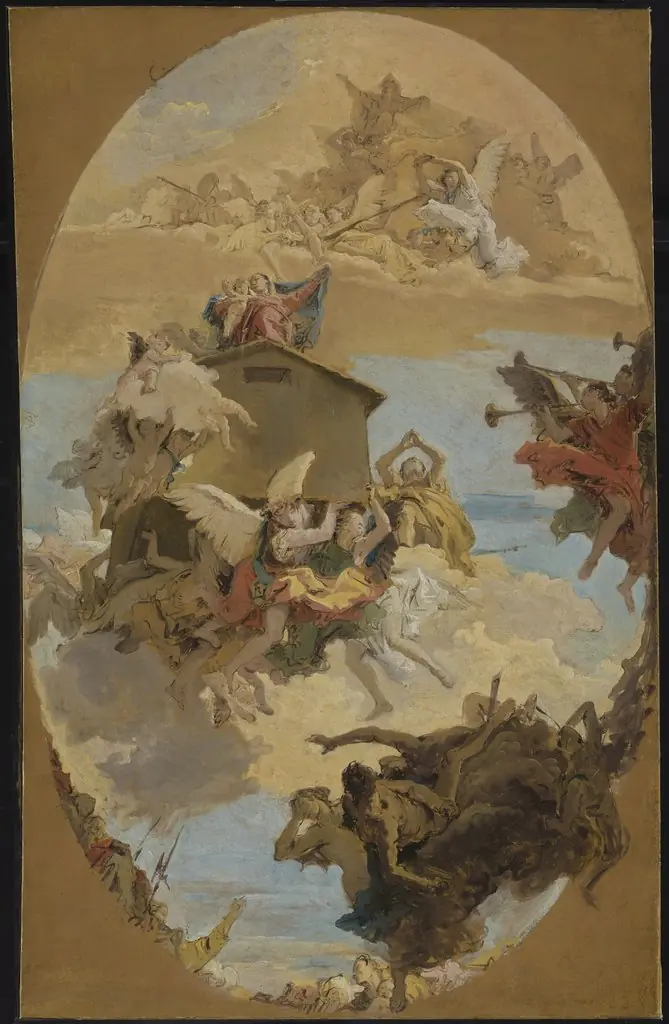 The Miracle of the Holy House of Loreto
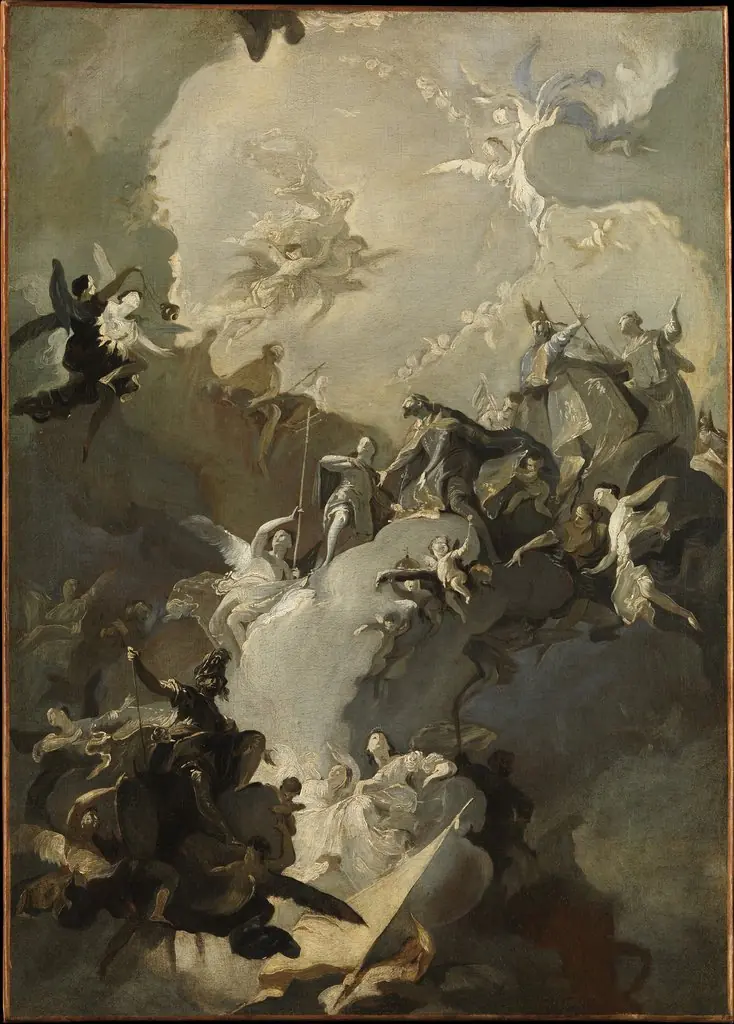 The Glorification of the Royal Hungarian Saints
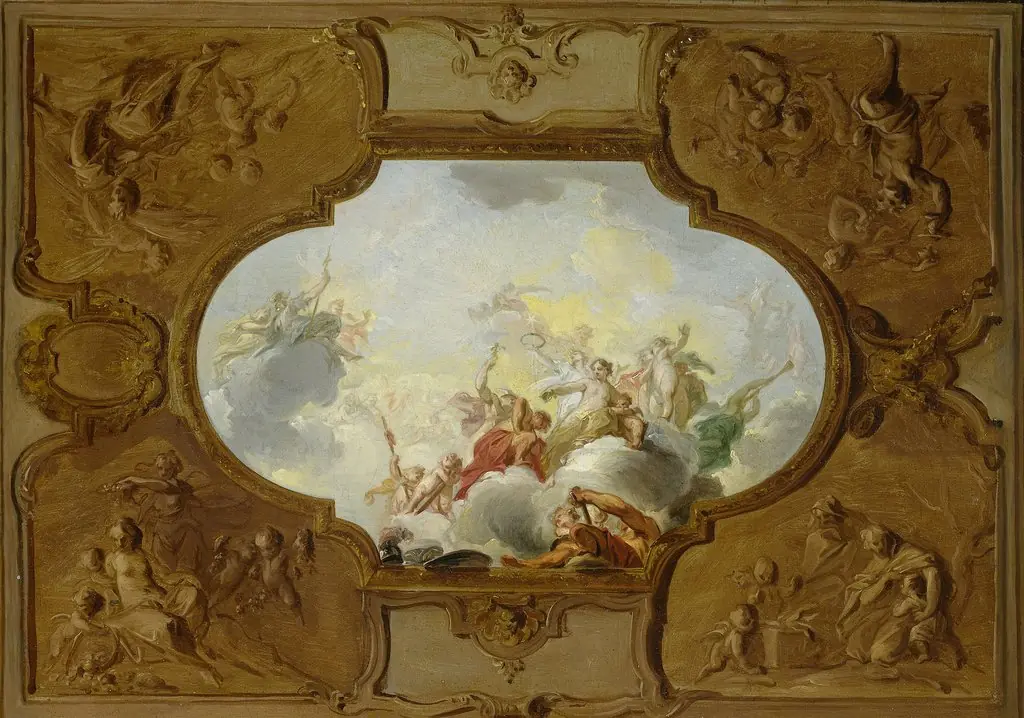 Design for a ceiling piece with Aeneas and the four seasons in the corners
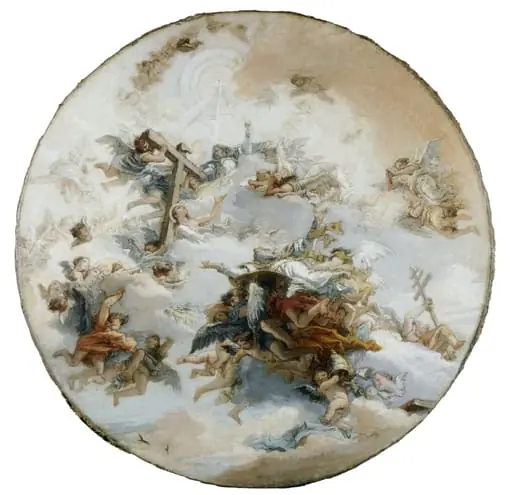 St Leo in Glory (sketch for the ceiling of the church of San Lio, Venice)
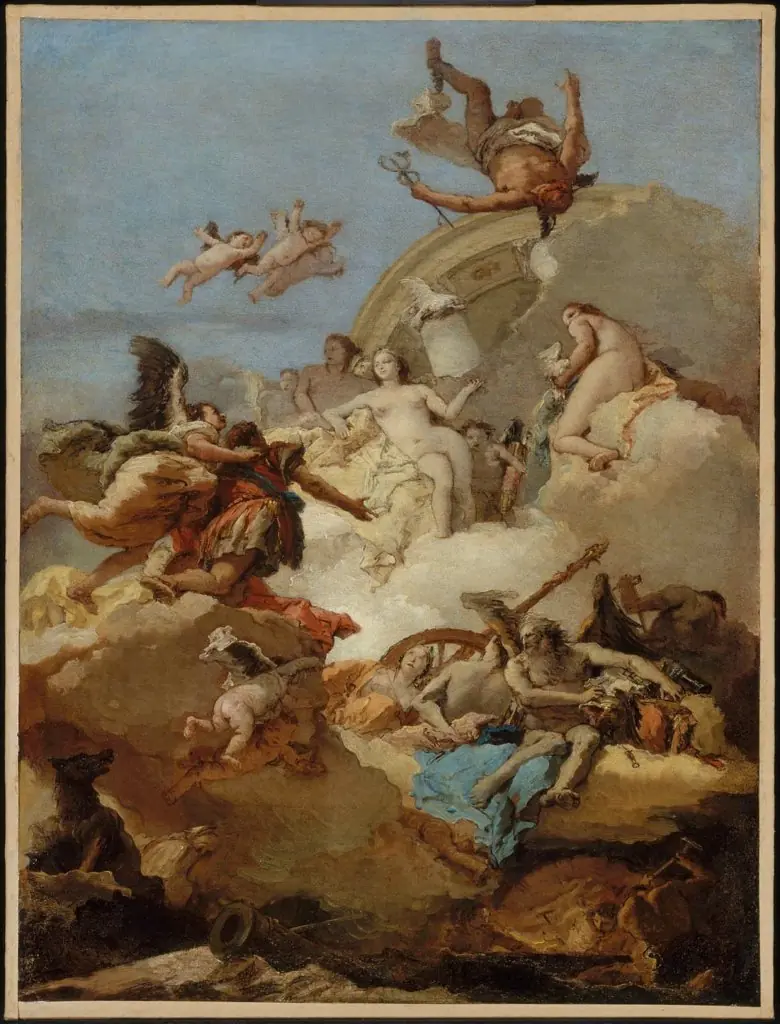 Apotheosis of Aeneas