Madonna and Child by Cranach the Elder, Lucas
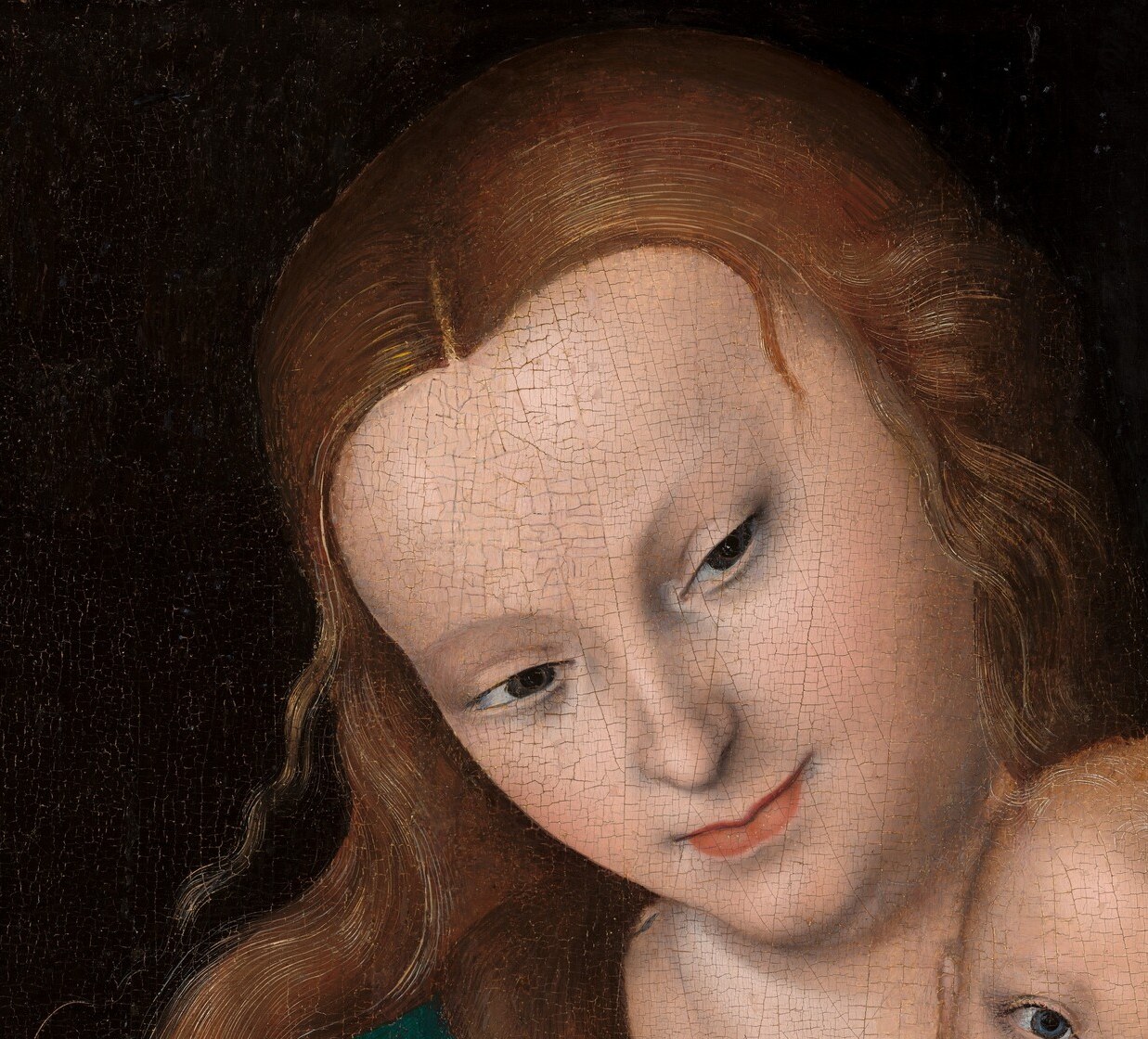
Lucas Cranach the Elder was court painter to the Electors of Saxony and a close friend of Martin Luther, but his c. 1535 Madonna and Child carries a much more recent scar.
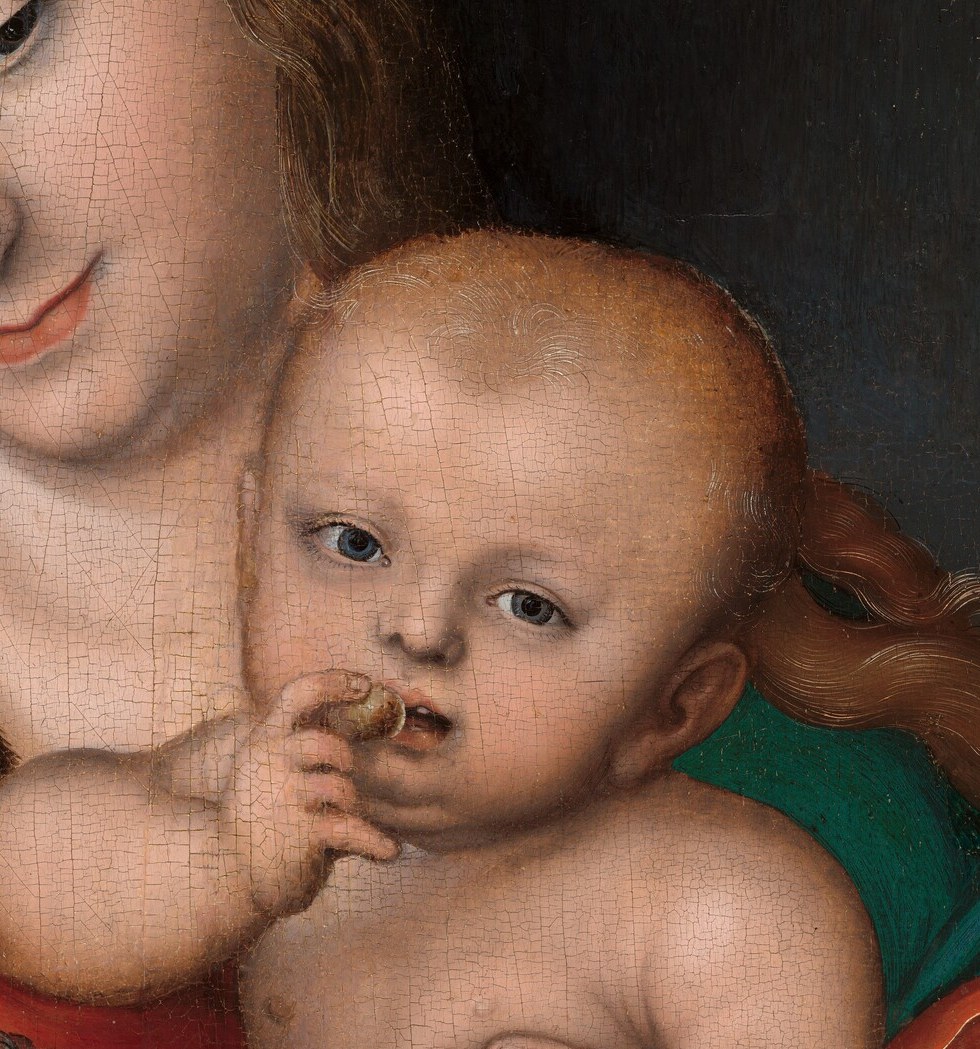
Look at the face of the Christ Child. A vertical crack passes beside his right eye and runs the height of the panel. It is not craquelure from age but a structural fracture, the result of a theft from a German palace museum in the 1980s. The thief tore the painting from its mount, and the thin wood panel snapped clean through.
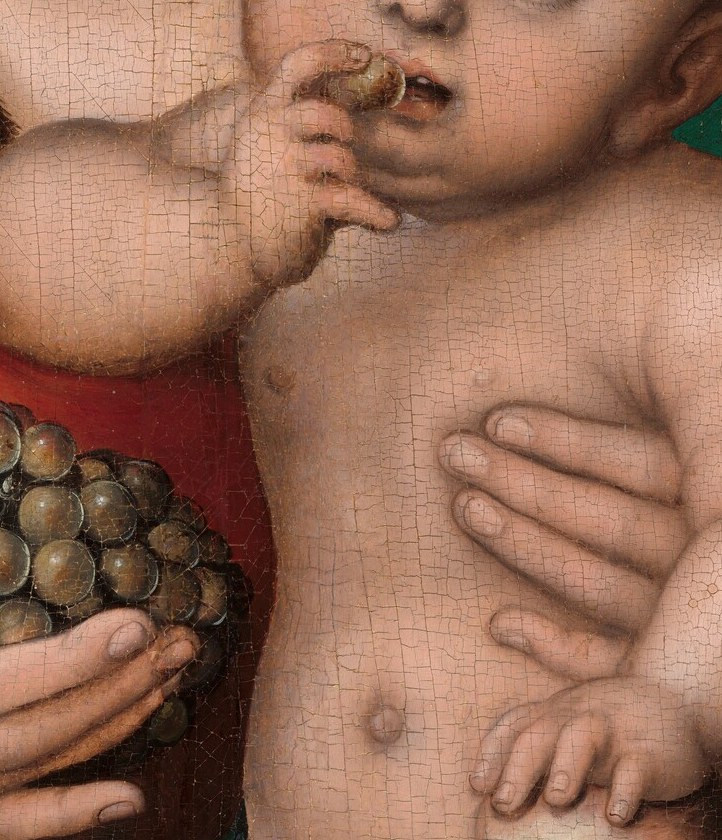
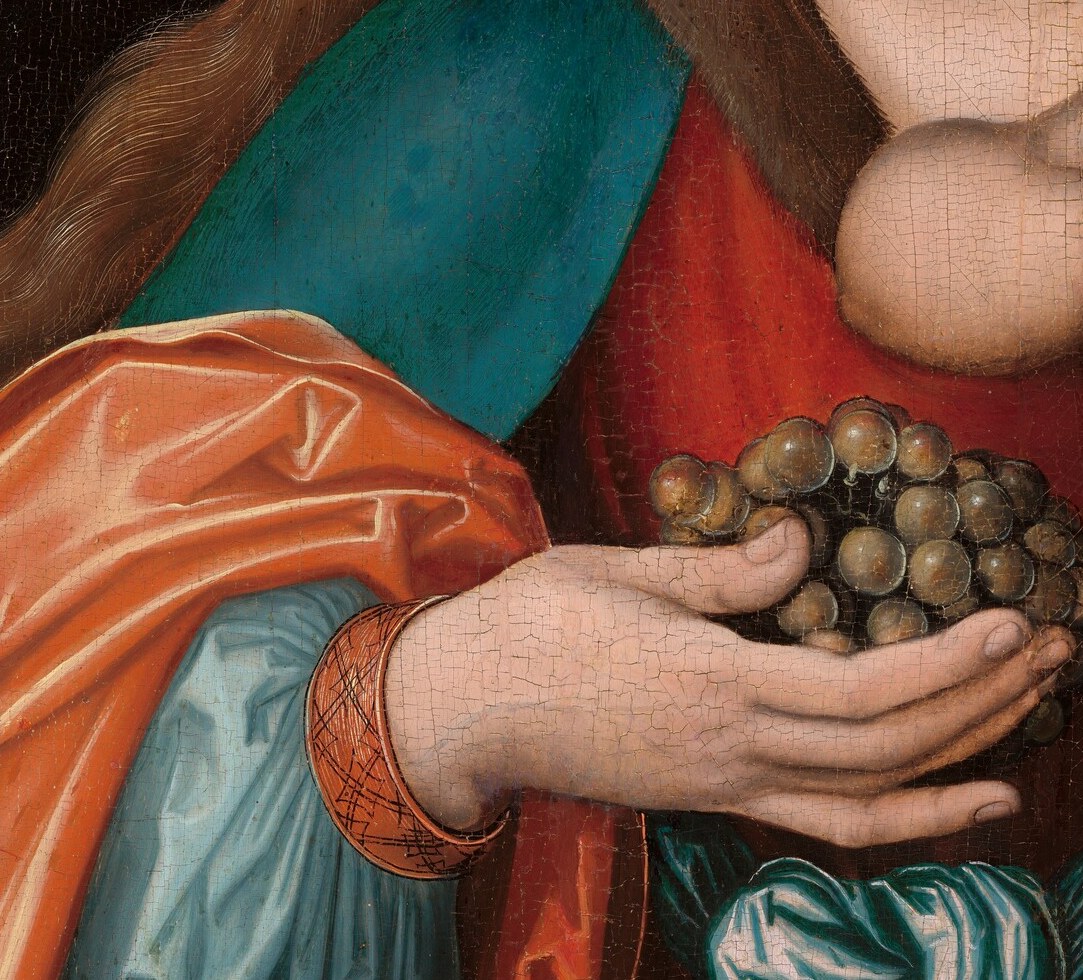
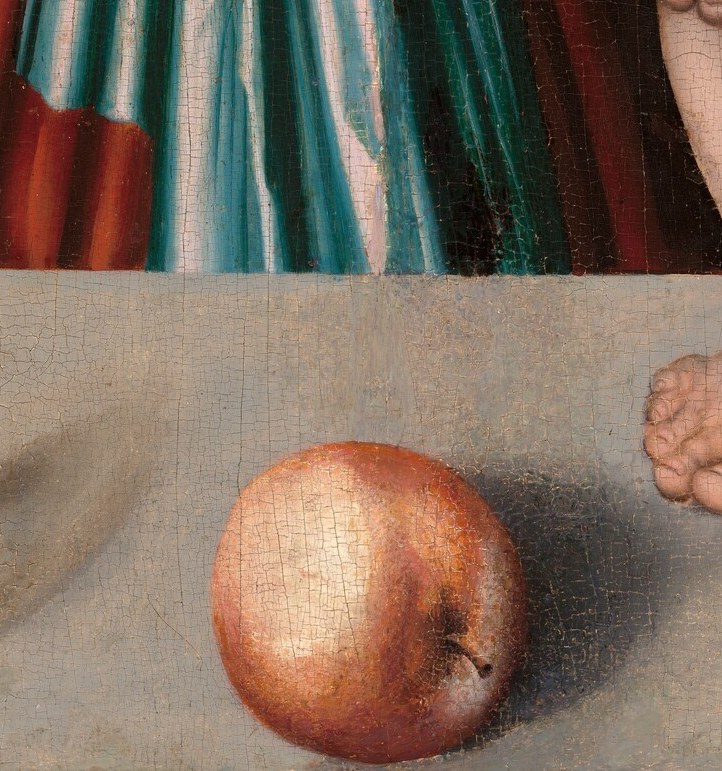
Cranach painted this intimate devotional panel during the Mannerist period, shifting away from grand Catholic iconography toward a new Lutheran aesthetic. The composition is stripped of landscape or heavenly glory, focusing instead on symbols: the grapes of the Eucharist in the child's hand, the apple of the Fall on the stone ledge, the glass vessel of purity.
Conservators rejoined the broken panel, but the scar remains visible as a permanent part of the painting's history. It is a reminder that an artwork can survive ideology, war, and centuries of devotion, then be wounded in a few seconds by a single desperate act.
Details
Transcript
A single wood panel, painted around 1535. On display in a German palace museum. Until a thief yanked it from the wall. The panel fractured clean through. See the vertical crack beside the child's eye. It runs the entire height of the painting. The grapes he holds meant his sacrifice. The damage now a permanent part of the story.