Portrait of a Carthusian by Petrus Christus
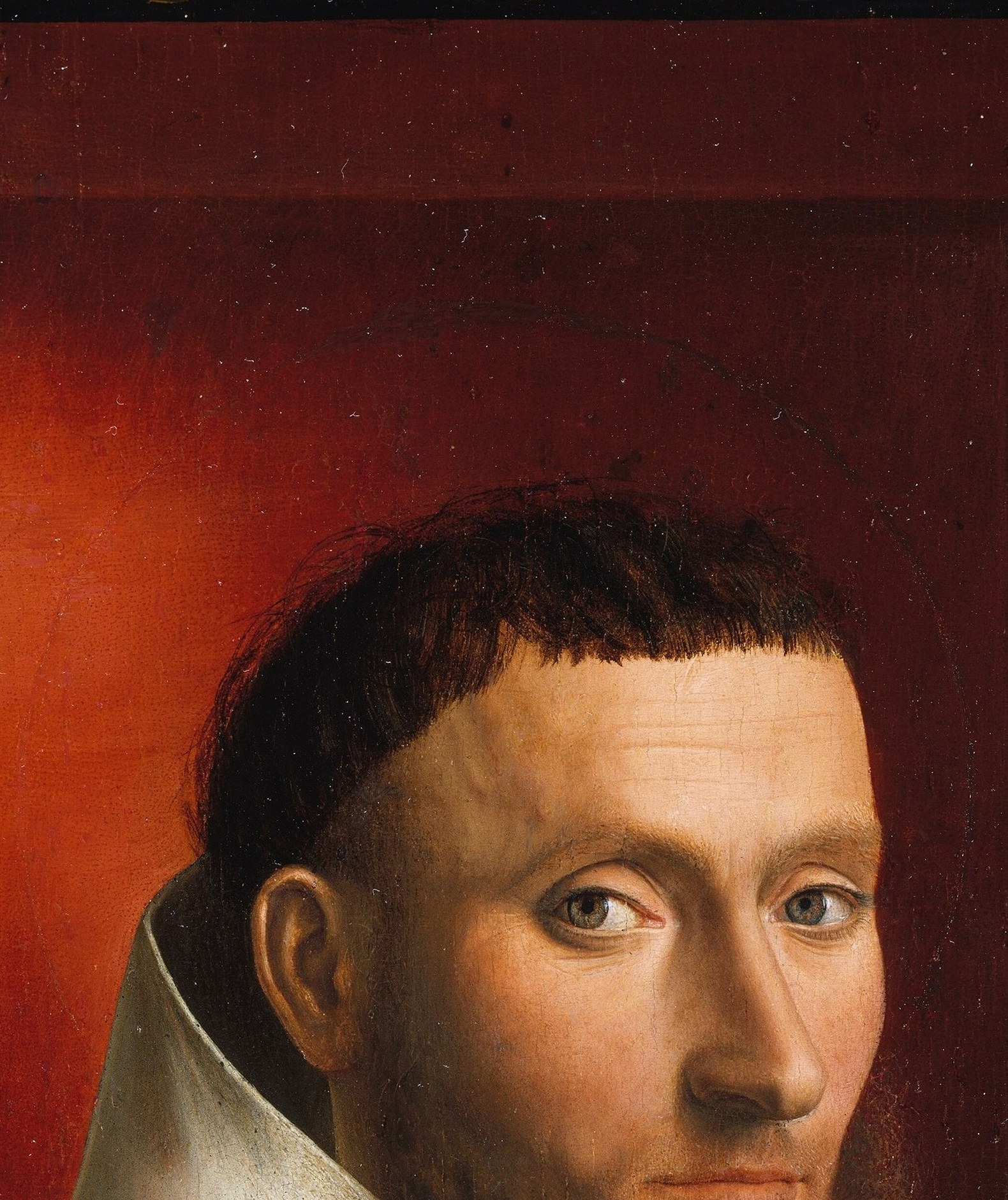
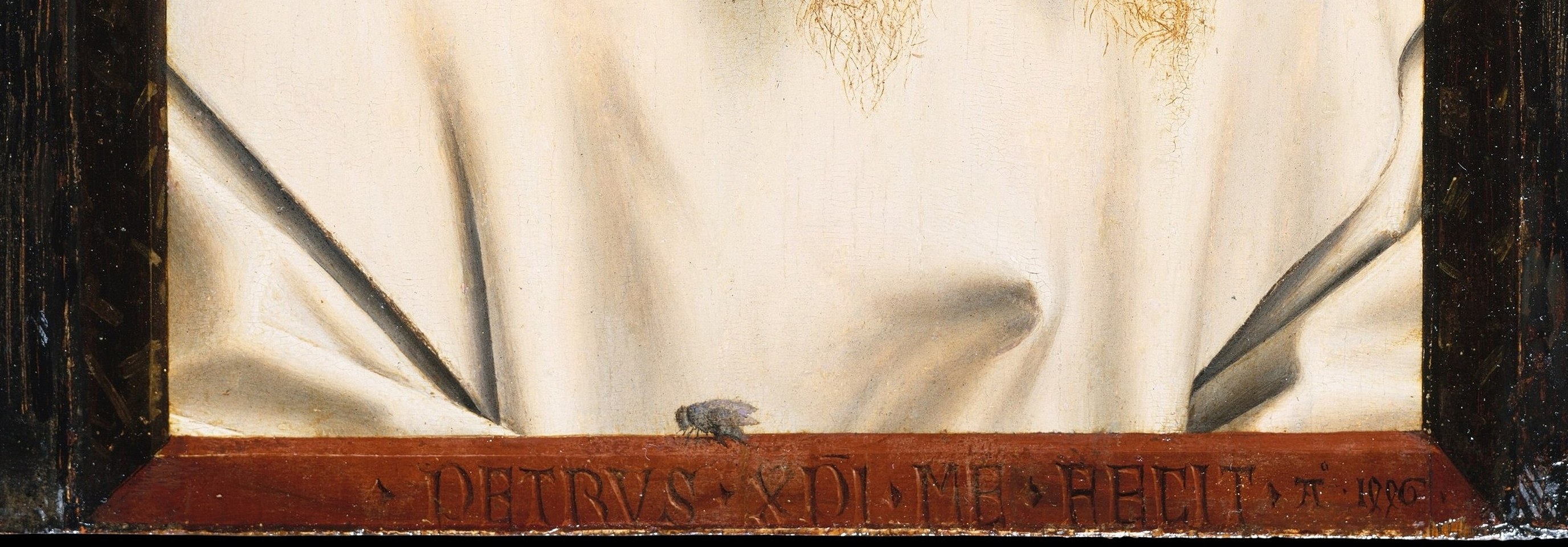
A fly painted to fool the eye. In 1446, Petrus Christus completed Portrait of a Carthusian, an oil on oak panel now housed at the Metropolitan Museum of Art. It is one of the earliest documented examples of trompe-l'oeil in Northern Renaissance painting.
Look at the bottom ledge. The fly sits not on the monk's habit or in the room behind him, but on the painted stone frame itself. Christus rendered it with enough precision to convince you it landed there moments ago. The illusion collapses the distance between painted space and real space. For a viewer in the 15th century, the impulse to swat it must have been irresistible.
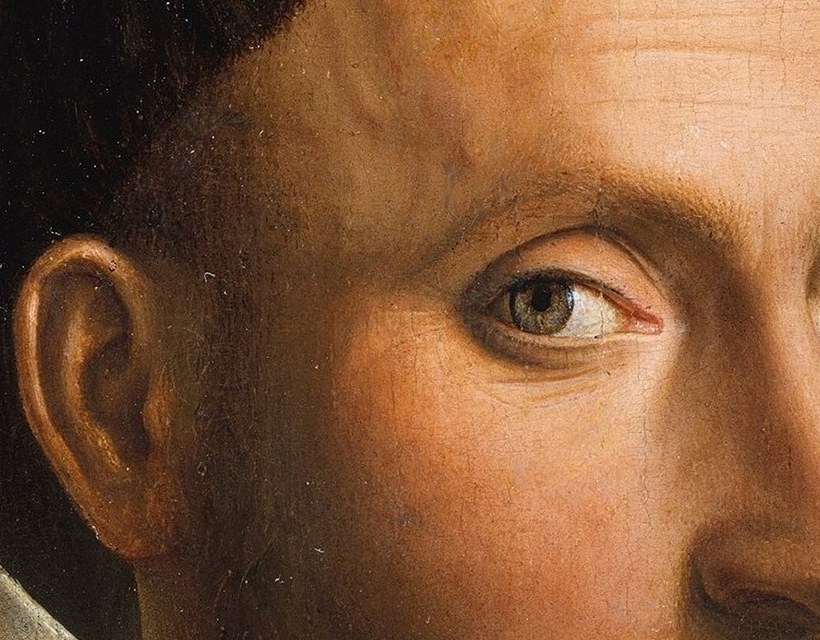
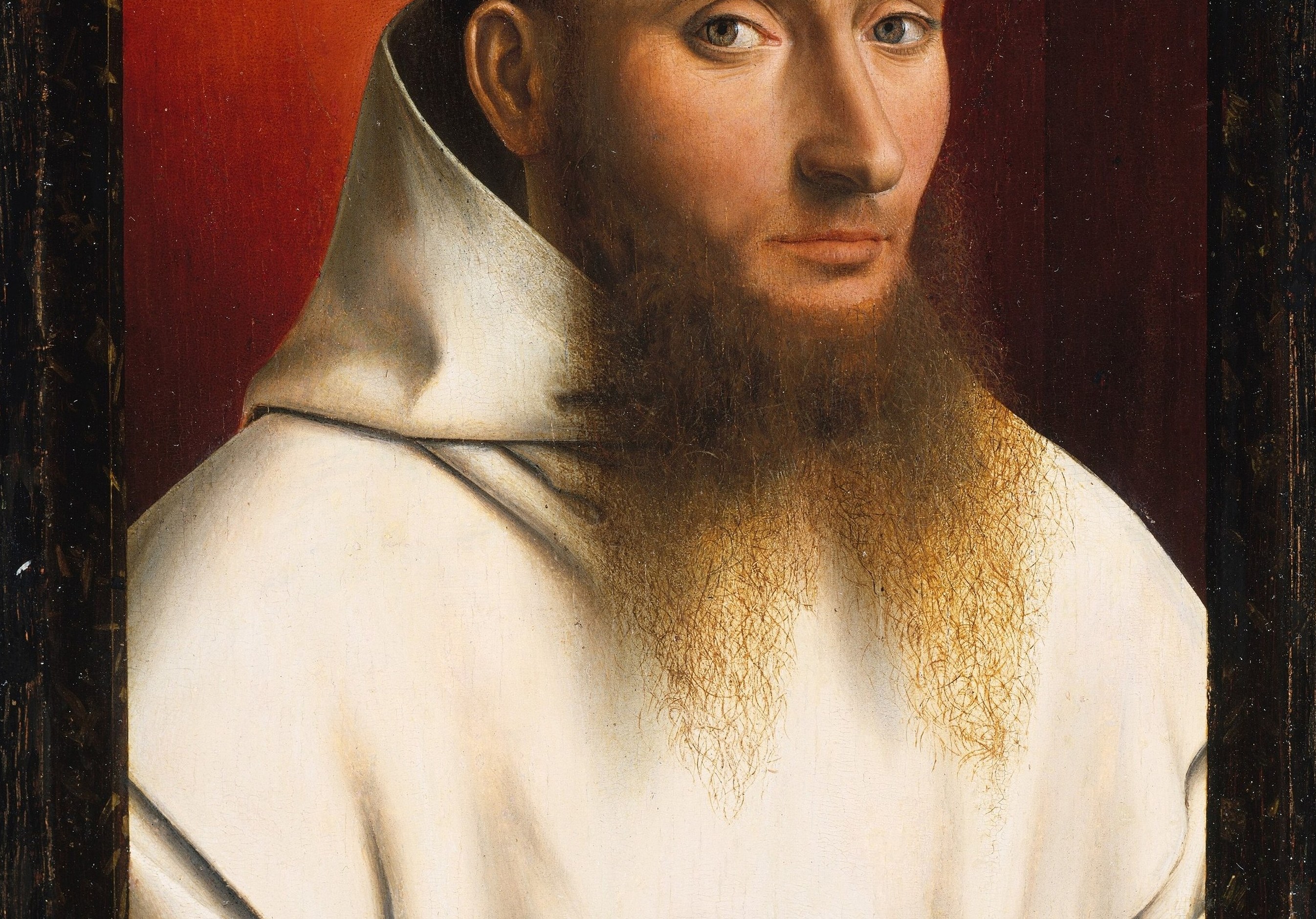
The sitter was a member of the Carthusian order, a community devoted to near-total silence and solitude. His sealed lips and averted gaze convey that discipline without a word. The white cowl, a symbol of the order, is a vehicle for Christus's astonishing handling of fabric: the folds carry real weight, and the deep shadow inside the hood frames the face like an arch.
The painting entered the Jules Bache Collection and now hangs in New York. If you stand before it, the fly still hovers exactly as Christus intended.
Details
Transcript
1446. Bruges. A monk sits for his portrait. The Carthusians took a vow of silence. Their lives were walls. Look at his mouth. Sealed. It gives nothing away. Now look down. At the painted ledge. Christus painted a fly. Right on the frame. He wanted you to reach out and try to brush it off. Five hundred years later, the trick still works.