Miss Beatrix Lister by Reynolds, Joshua, Sir
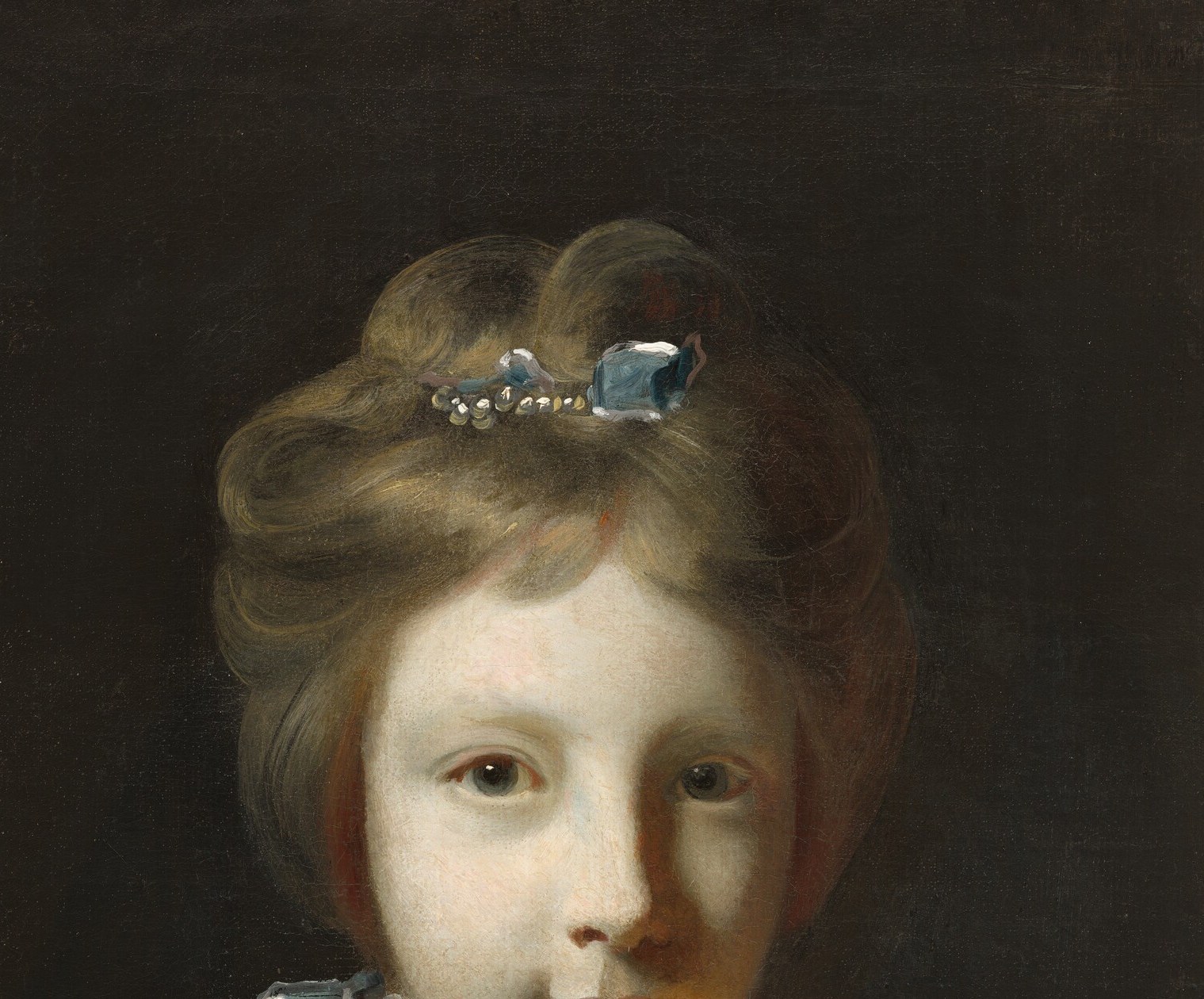
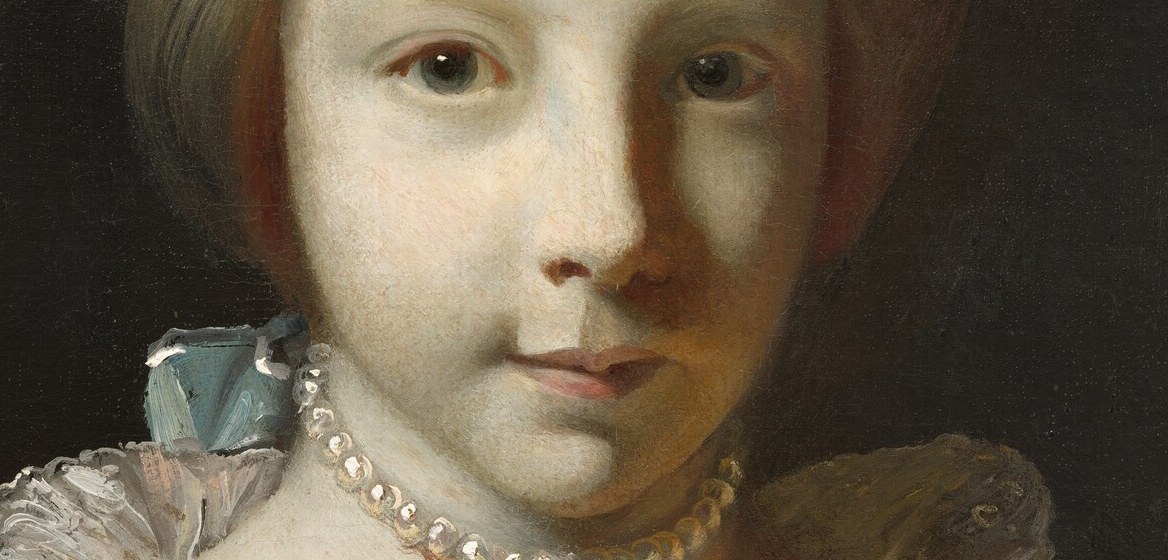
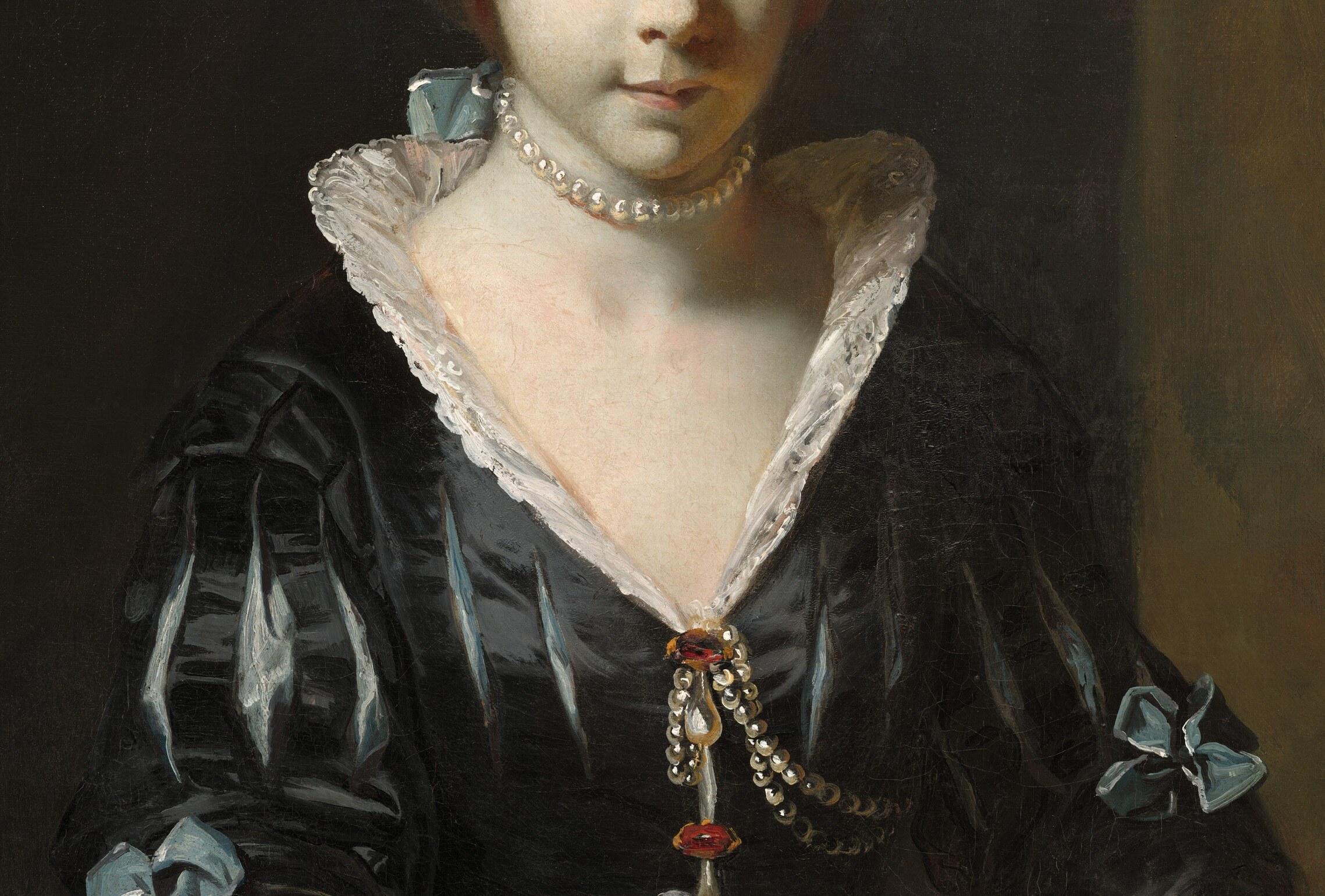
Sir Joshua Reynolds painted Miss Beatrix Lister in 1765, at the height of his fame as the leading portraitist of 18th-century England. The painting hangs today as a record of a young woman of status, but it is also a crime scene: the slow chemical crime of an artist's own materials turning against him.
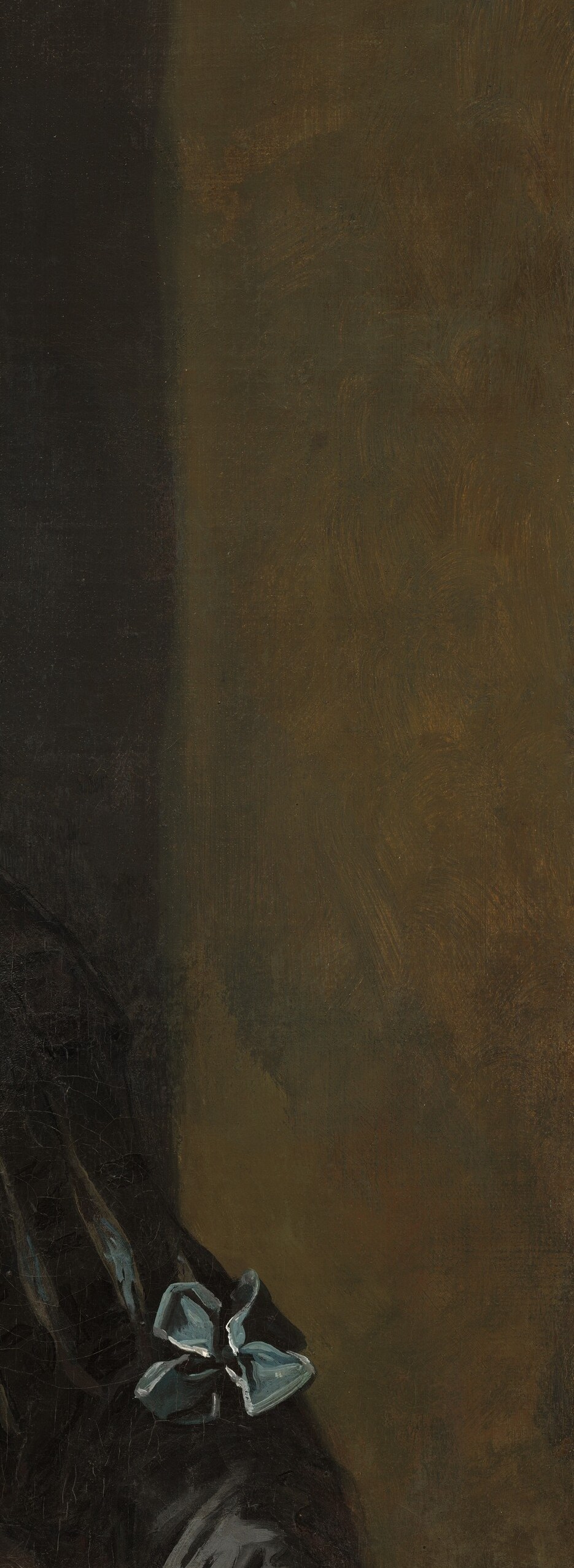
Look at the darkness swallowing the right side of the canvas and pooling in the folds of her gown. That near-formless shadow was not what Reynolds's first viewers saw. His experiments with bitumen and fugitive pigments produced a lush, warm depth that he prized, but those same materials darkened catastrophically over time. What we see now is a ghost of the original painting.
Reynolds was the first president of the Royal Academy, knighted by George III in 1769, and a tireless technical tinkerer. He chased the Venetian masters' secrets, mixing wax, varnish, and bitumen into his oils. Critics in his own century noted that his paintings were already deteriorating. The problem was so famous that by the 19th century, 'Reynolds's fading' was a known phrase among collectors and conservators.
The portrait of Miss Lister has not been stolen or slashed. But it has been taken from us all the same, one darkened square inch at a time, by the hand of the man who made it.
Details
Transcript
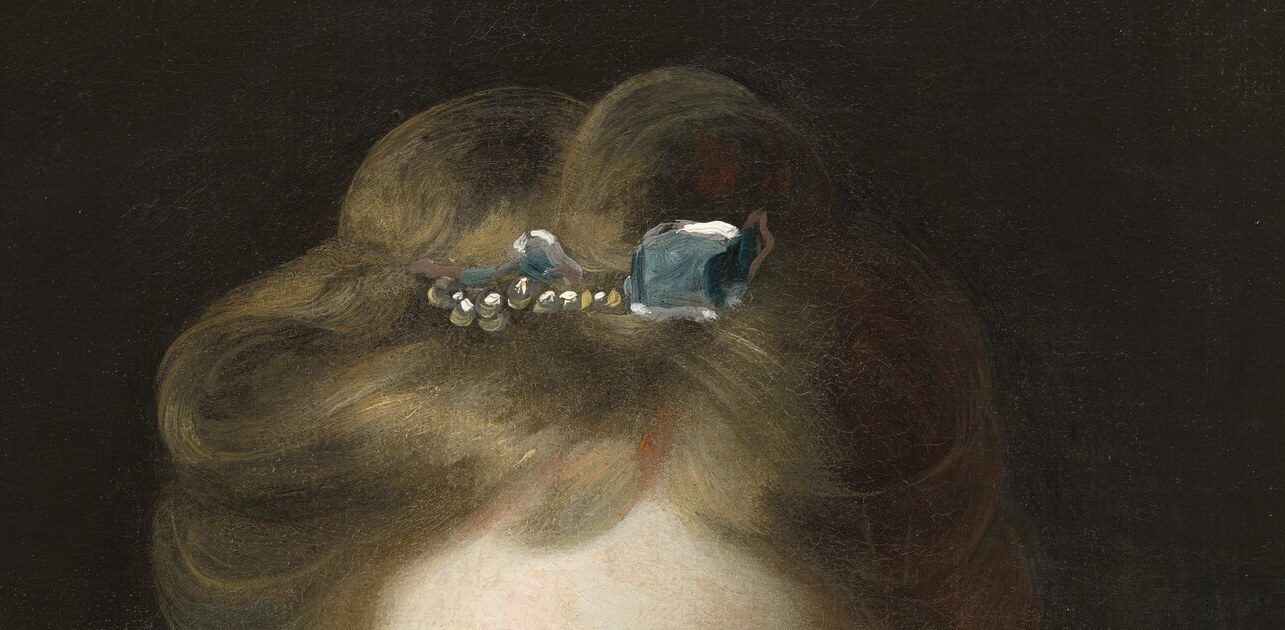
In 1765, Sir Joshua Reynolds was England's most sought-after portraitist. His sitters paid handsomely for the glow he gave them. Beatrix Lister faces us directly, her expression calm and composed. Her pearl necklace and jewelled hair ornament signal gentility and innocence. But much of what Reynolds painted is now invisible. Critics of his day already complained his colours were fading before the paint was dry. His experiments with bitumen and unstable pigments caused the shadows to deepen over centuries. The background we see now was once a fully articulated room.