Madonna and Child with Donors by Giovanni da Milano
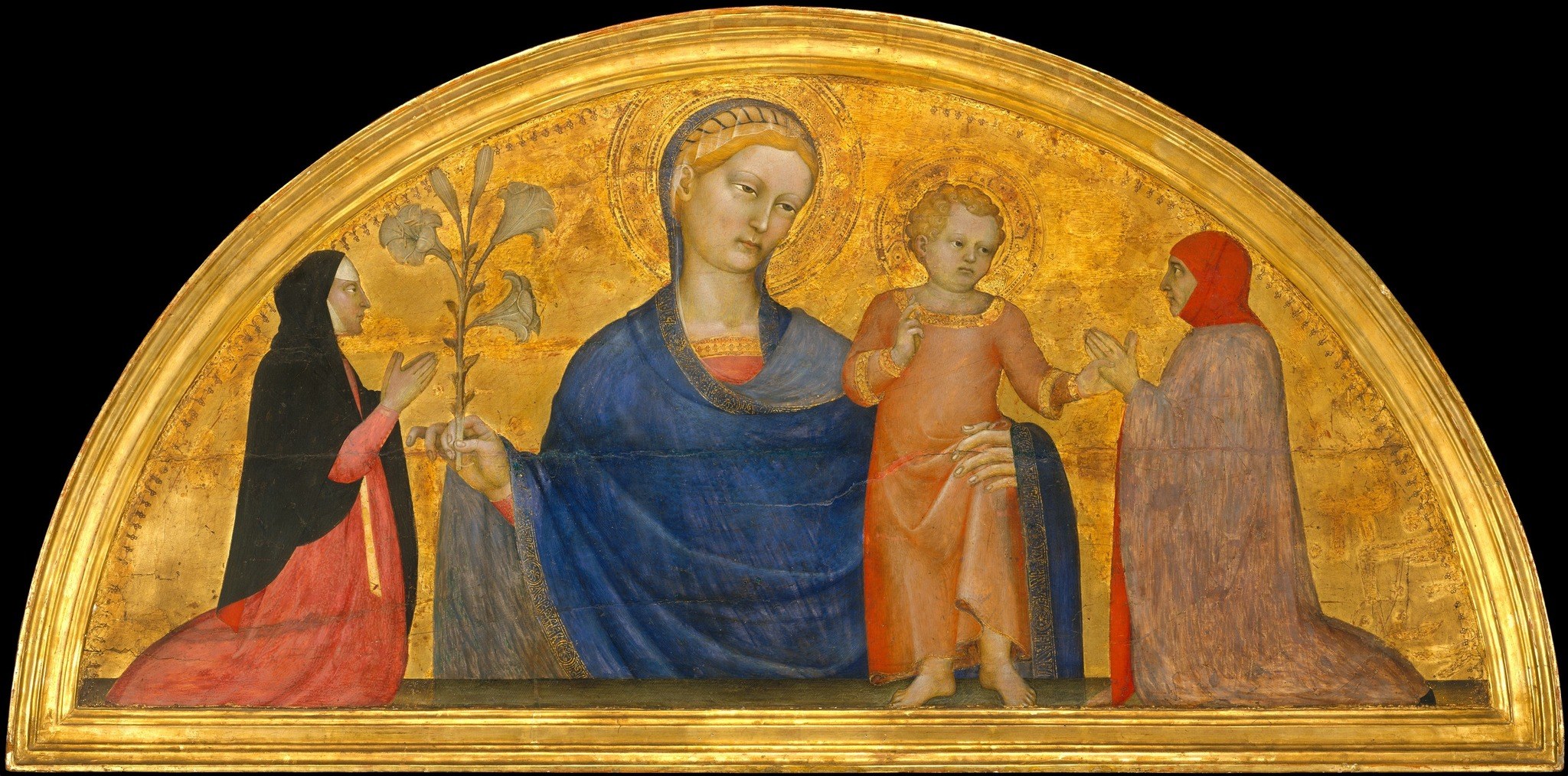
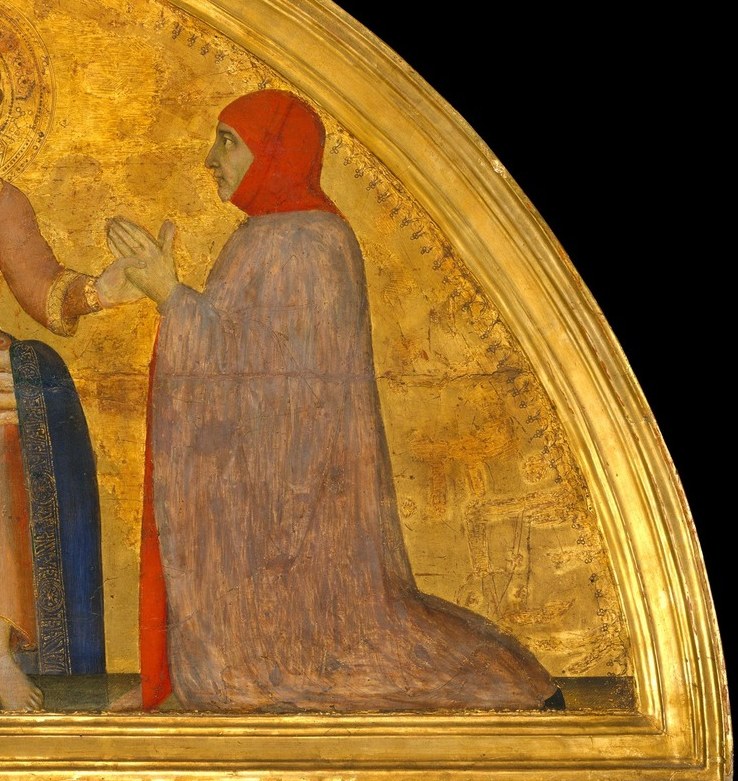
In 1365, Giovanni da Milano painted a contract in tempera and gold. The panel, now at the Metropolitan Museum of Art, shows the Virgin and Christ Child flanked by two kneeling donors. It looks like a scene of quiet devotion, but it is really a transactional document: the donors paid for a sacred image and in return received permanent, prayerful proximity to the divine.
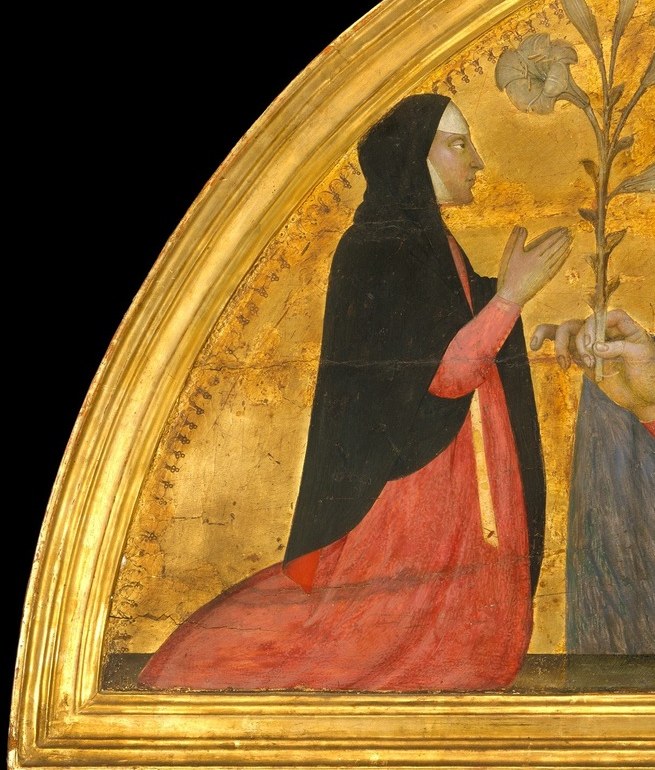
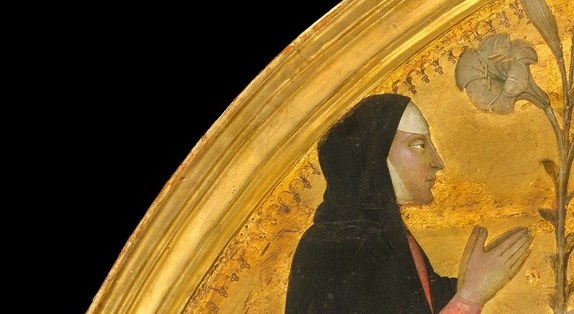
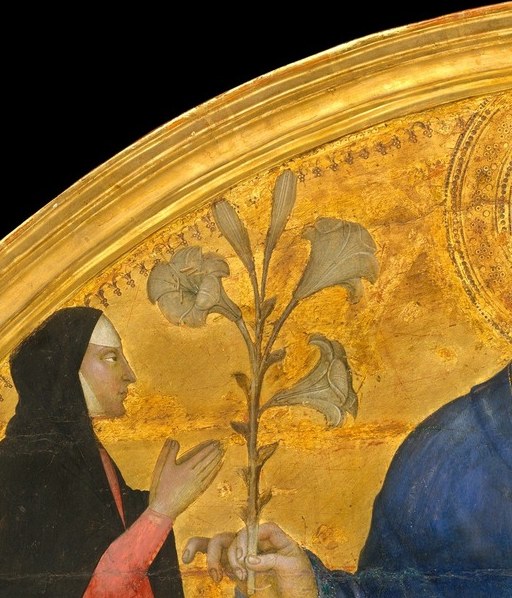
Look first at the background. That is not sky or landscape; it is a field of gold leaf, the standard Byzantine signal for sacred, eternal light. The figures do not occupy a real place. They exist in a timeless realm where the donors will kneel for as long as the panel survives. The white wimple on the left female figure may identify her as a lay penitent or a religious sister, and the lily placed directly between her and Mary is the classic Marian emblem of purity, serving as a visual bridge of intercession.
Giovanni was a Lombard working in Florence and Rome, active from 1346 to 1369. His style descends from Giotto but retains a strong Byzantine allegiance, visible in the elongated features of Mary’s face and the flattened gold space. The half-moon silhouette of the panel indicates it was designed for a specific architectural setting, likely above a doorway or embedded in a larger altarpiece. The donors would have been the family or religious community that commissioned it, and their small scale relative to the sacred figures was a deliberate expression of humility.
The purest visual argument in the painting is the Christ Child’s hand. He stands rather than sits, asserting sovereignty over maternal tenderness, and his right hand forms the benedictio latina gesture, two fingers raised and two curled. The infant is already administering a blessing. Every person who kneels before this panel, past or present, stands under that same tiny hand.
Details
Transcript
We begin where the painting ends: a wall of solid gold. This is not sky. It is light with no place and no time. Fourteenth-century Florence. A prosperous couple makes a deal. They fund a sacred panel. In return, they kneel here forever. She wears the white wimple of a lay penitent or a nun. Between donor and Virgin, a lily negotiates the distance. The Child does not sit. He stands, and his right hand is already blessing. Giovanni da Milano painted the transaction plainly: pay, pray, remain.