Bagpipe Player by Brugghen, Hendrick ter
Hendrick ter Brugghen's 'Bagpipe Player' (1624) is more than just a portrait of a musician; it's a genre scene from the Dutch Golden Age that subtly explores themes of earthly pleasures and the fleeting nature of life.
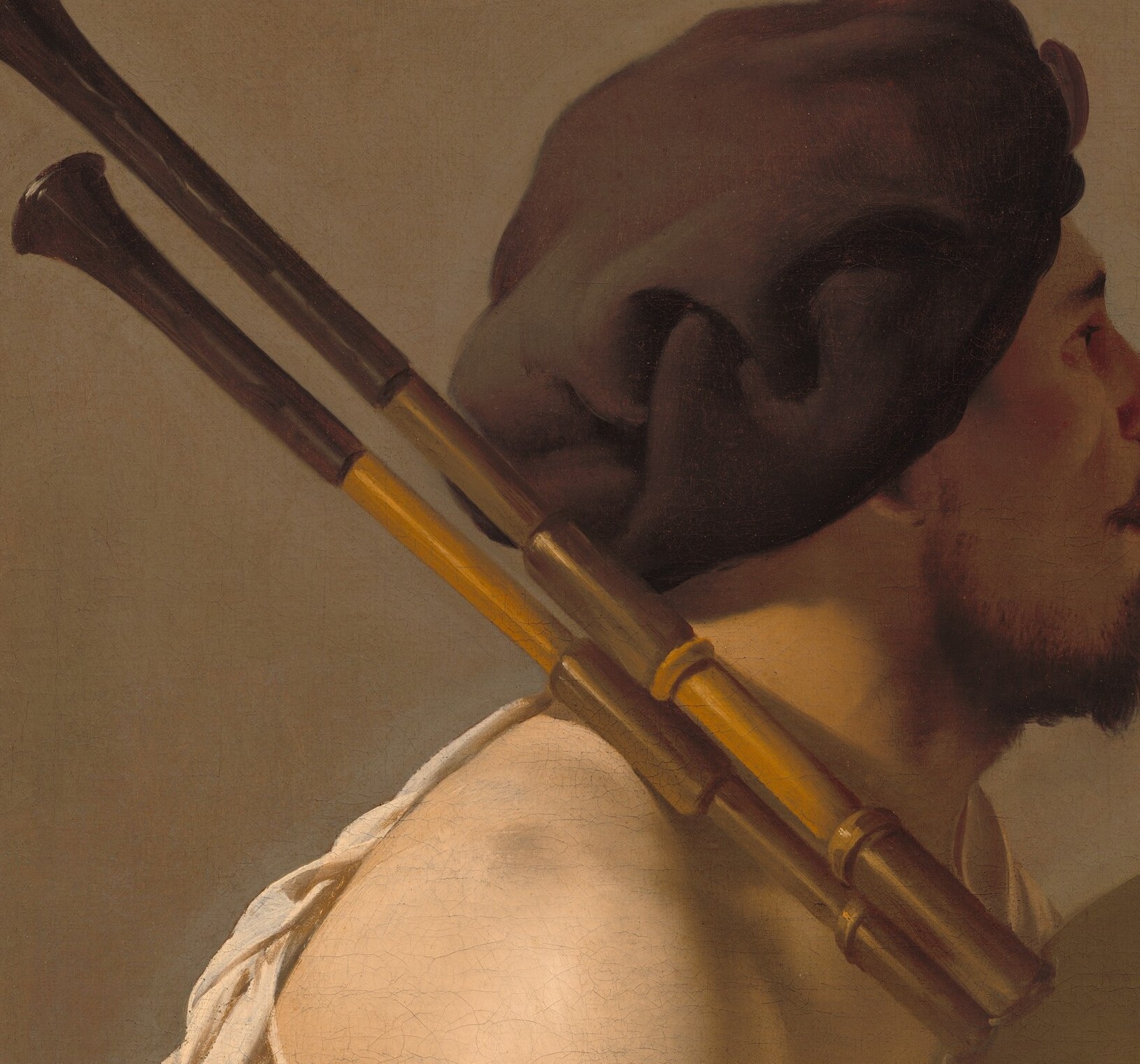
Notice the player's closed eyes and focused expression, suggesting deep immersion in his music. The bagpipes themselves, prominently displayed, were often seen in 17th-century Dutch art as symbols of rustic, simple, and sometimes ephemeral joys.
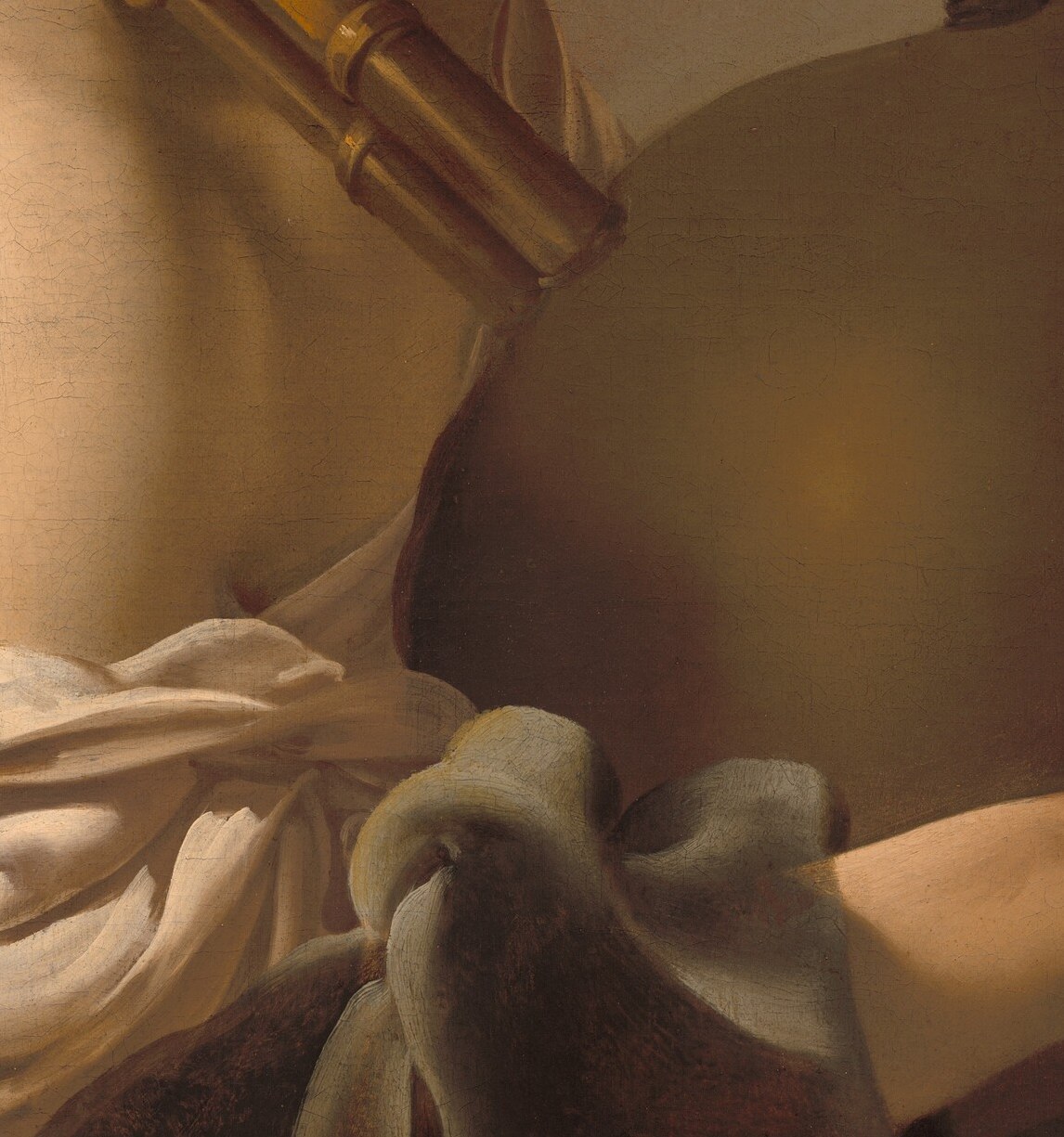
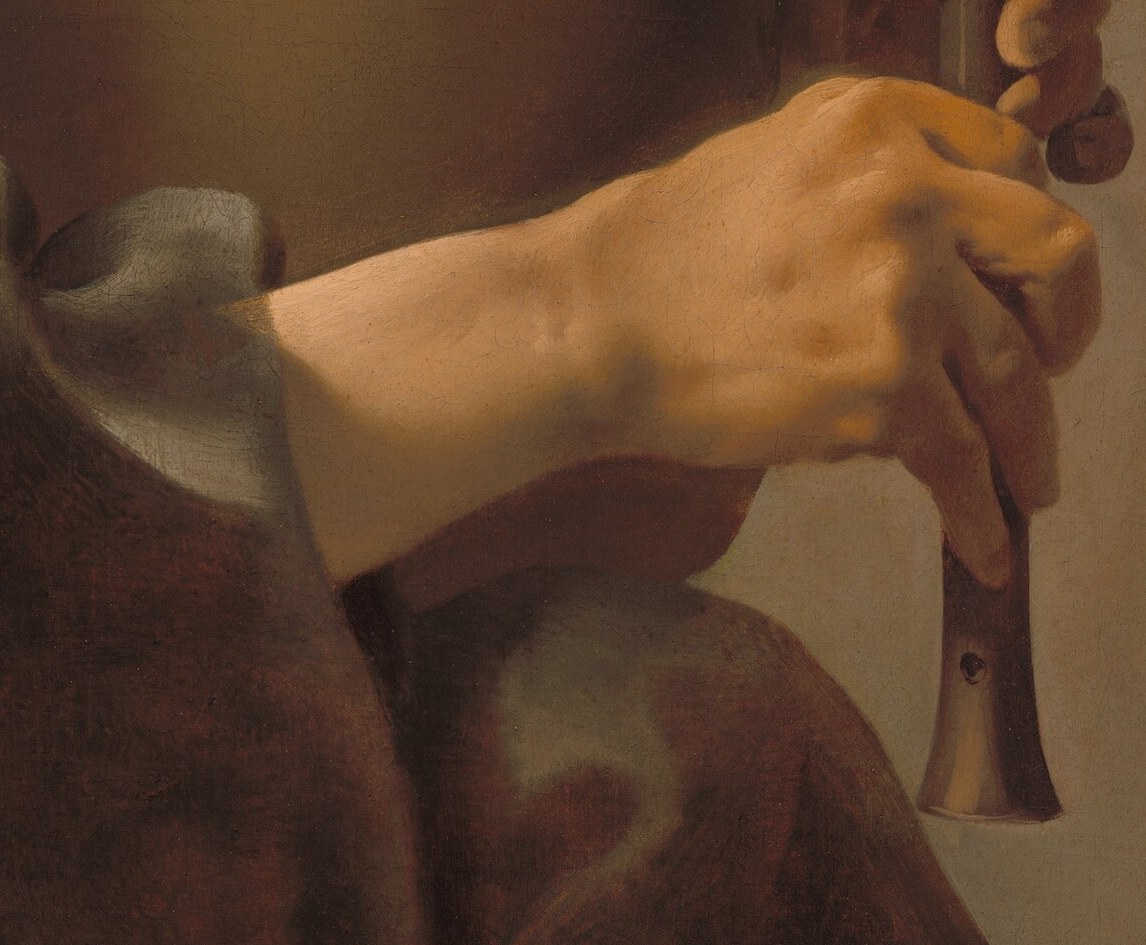
Ter Brugghen, a leading figure of the Utrecht Caravaggisti, masterfully uses dramatic lighting (chiaroscuro) to draw attention to the figure and his instrument, a technique adapted from Caravaggio. This style emphasizes the psychological presence of the common man and the immediacy of the moment.
This painting, now in a private collection, encapsulates the Baroque movement's interest in depicting everyday life with realism and directness, inviting viewers to reflect on the transient beauty of human experience.
Details
Transcript
This painter shows us a bagpipe player, deep in music. Look at the instrument's drone pipes, resting on his shoulder. In 17th-century Holland, bagpipes symbolized rustic, earthly pleasures. His closed eyes suggest deep immersion, a fleeting moment of joy. Such transient moments were a favorite theme for this artist. He was a Utrecht Caravaggisti, using light to highlight human experience.