Virgin and Child playing with a Goldfinch and holding a Sheaf of Millet by Cecco di Pietro
A small goldfinch perched on the infant Christ's hand carries profound meaning in Cecco di Pietro's "Virgin and Child playing with a Goldfinch and holding a Sheaf of Millet" (circa 1390). This tempera panel from the Statens Museum for Kunst is a beautiful example of late medieval devotional art.
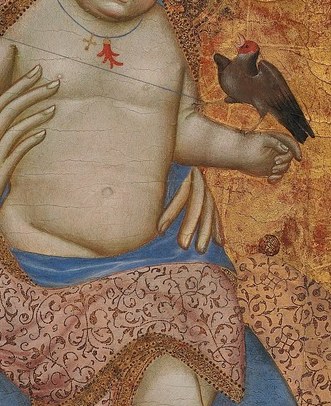
Look closely at the infant Christ's hand, where he gently holds a goldfinch. The bird's bright markings and its interaction with the divine child are key to understanding the painting's deeper message.
In medieval symbolism, the goldfinch often alluded to Christ's future Passion. Its diet of thistles connected it to the crown of thorns, and its presence here hints at themes of sacrifice and redemption. Mary's sheaf of millet further symbolizes sustenance and the agrarian cycle, weaving earthly bounty into the divine narrative.
This intimate scene, intended for private contemplation, masterfully blends earthly and spiritual elements.
Details
Transcript
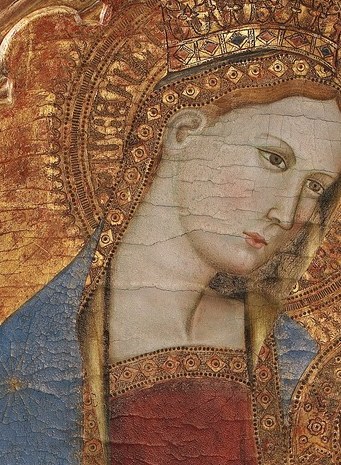
This is the infant Christ. He holds a goldfinch in his hand. Goldfinches symbolize Christ's future Passion. His grip shows gentle power. Mary holds a sheaf of millet. Millet evokes nourishment and the cycle of life. This goldfinch hints at redemption.