Virgin and Child by Fiorenzo di Lorenzo (Italian)
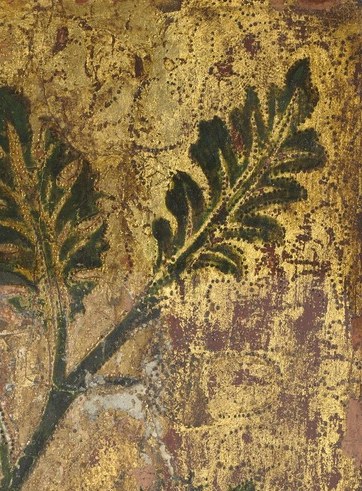
This is Fiorenzo di Lorenzo's 'Virgin and Child,' painted around 1500 and now held at the Cleveland Museum of Art. What looks at first like a standard late-medieval devotional image holds a small secret: a tiny winged figure, likely an adoring angel, tucked almost invisibly into the upper-right corner amid the gilded leaves.
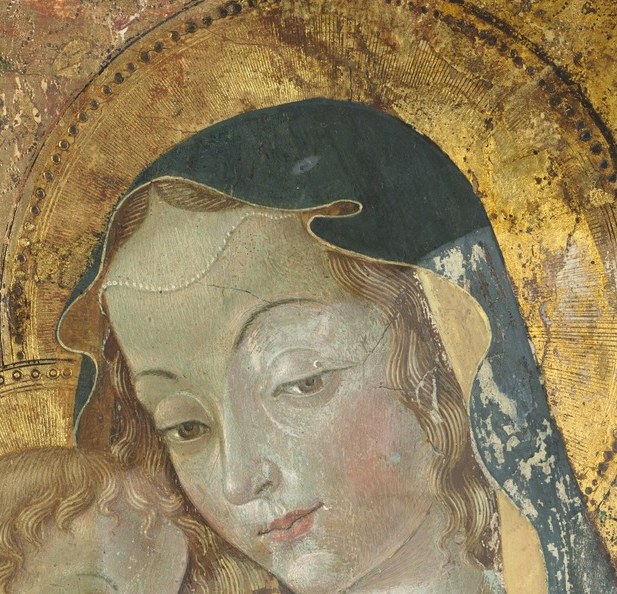
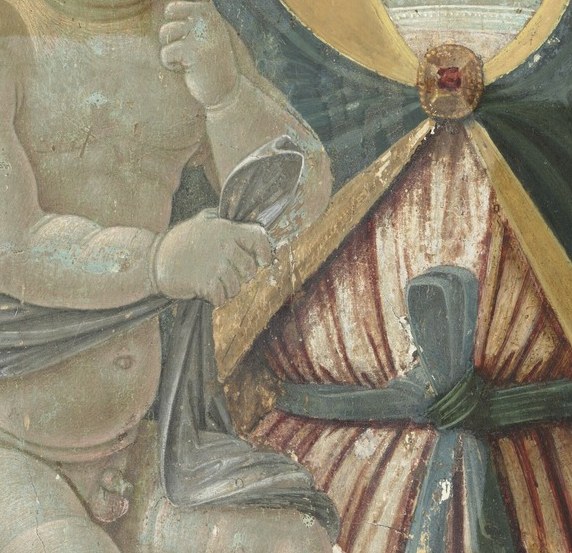
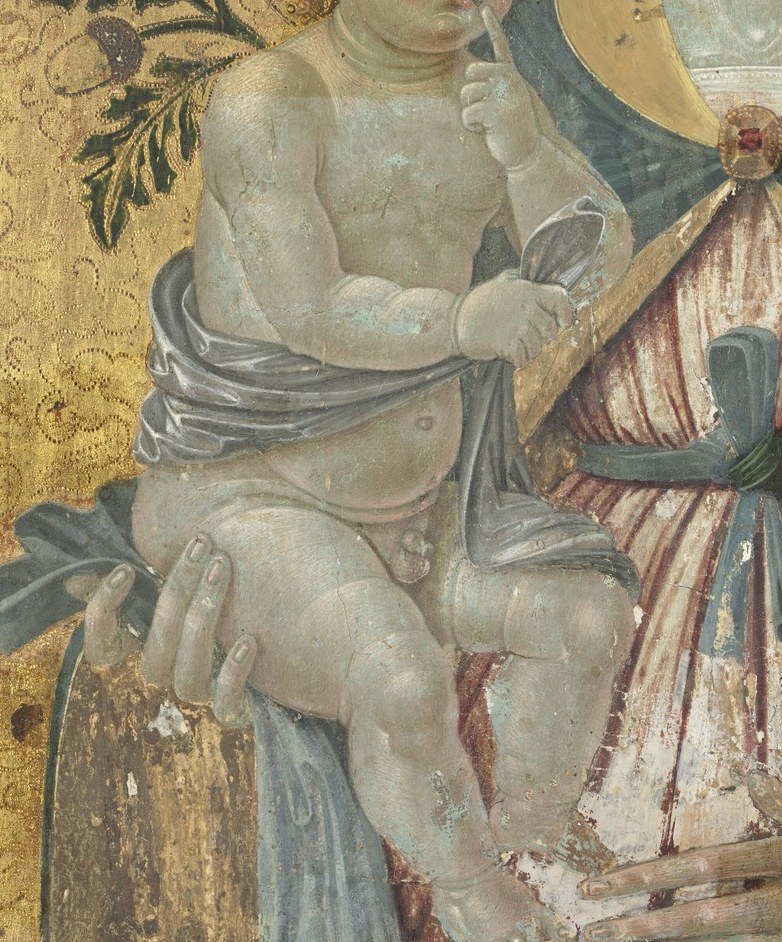
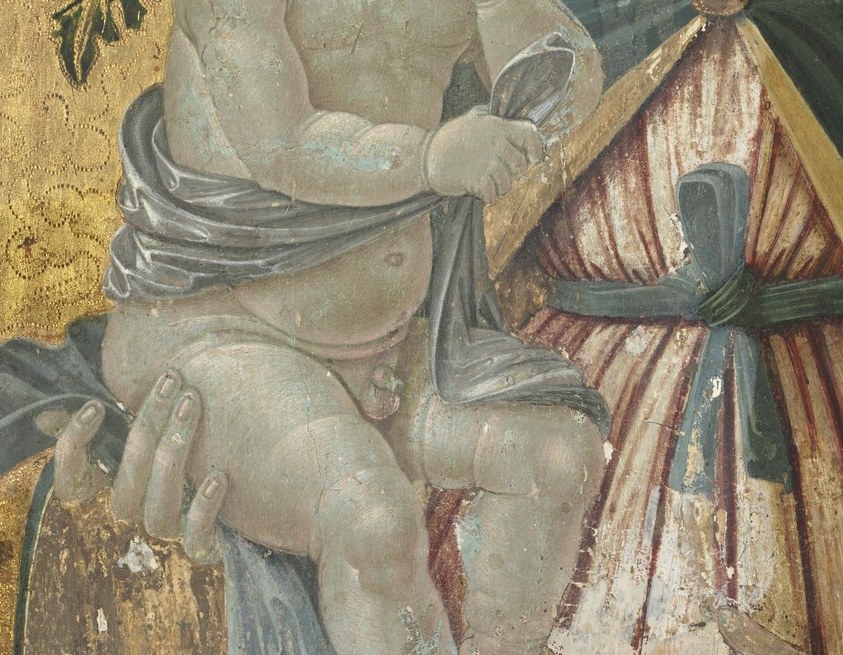
Mary's face carries the central weight of the painting. Her gaze is lowered toward the Christ Child, not toward us, creating a closed circle of maternal attention. The child's gaze, however, meets the viewer directly, implicating whoever stands before the panel in the sacred exchange. One of Mary's hands steadies the child's weight; the other gestures toward the open book he reaches for, the scriptures he will one day teach.
The gold-leaf background is typical of Umbrian tempera panels around 1500, collapsing ordinary space into a realm of pure divine light. The oak-like leaves pressing in from the margins signal the early Renaissance interest in observed nature, but the flat gold behind them insists on timelessness. The cracking visible across the center-left is a record of five centuries of survival.
Fiorenzo di Lorenzo lived and worked almost entirely in Perugia, where most of his surviving works still remain. He died in 1522, and his reputation faded quietly until scholars recovered him in the nineteenth century. This panel, worn and beautiful, outlasted the obscurity.
What do you think that small winged figure meant to the person who first prayed before this painting?
Details
Transcript
She looks down at her child with a quiet, steady gaze. He reaches toward the open book, toward a future he already knows. But look past the gold. Up in the corner. A tiny winged figure hovers there, almost invisible. The painter spent his whole life in one small city, Perugia. He made this panel around 1500, and then he was forgotten for centuries. Time cracked the paint, but the hands are still gentle.