Allegory of the Arts and Sciences by Ignacio Raeth
Ignacio Raeth's "Allegory of the Arts and Sciences," painted in 1649, is more than just a collection of objects; it's a profound reflection on life's brevity, housed at the Museo del Prado.
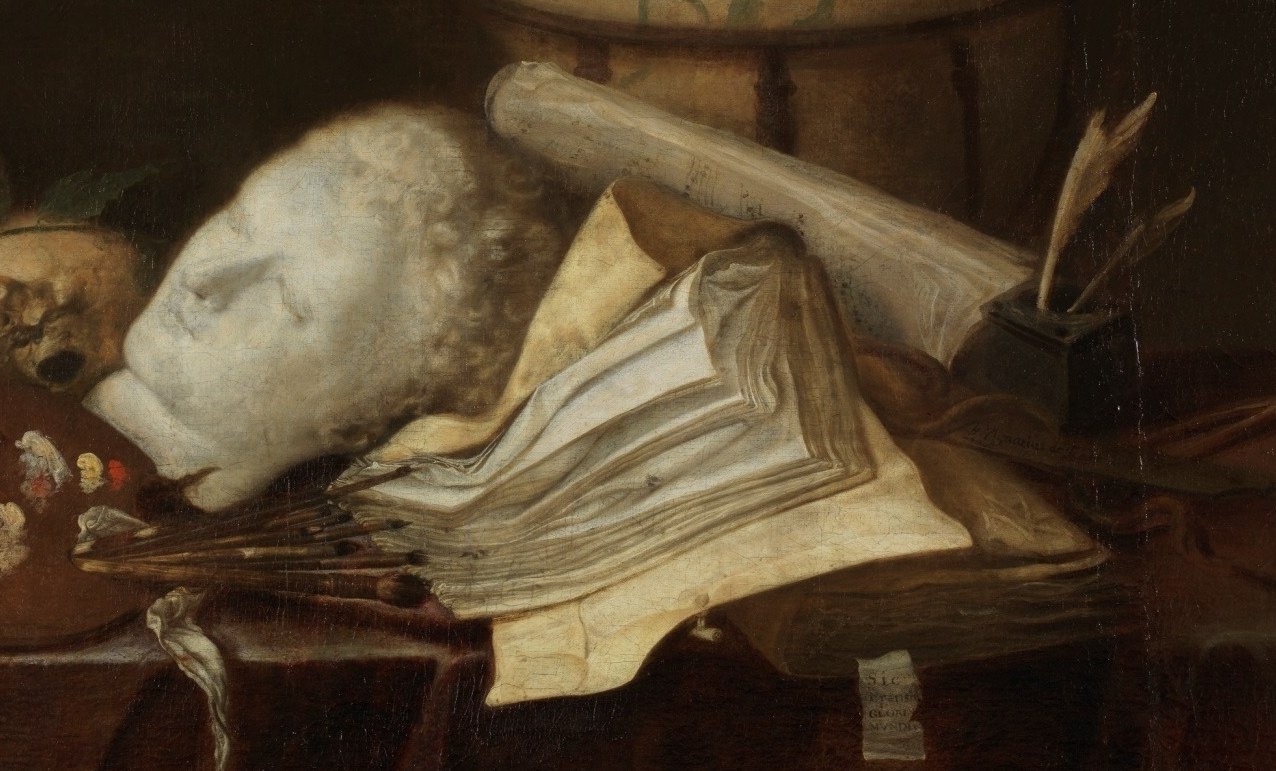
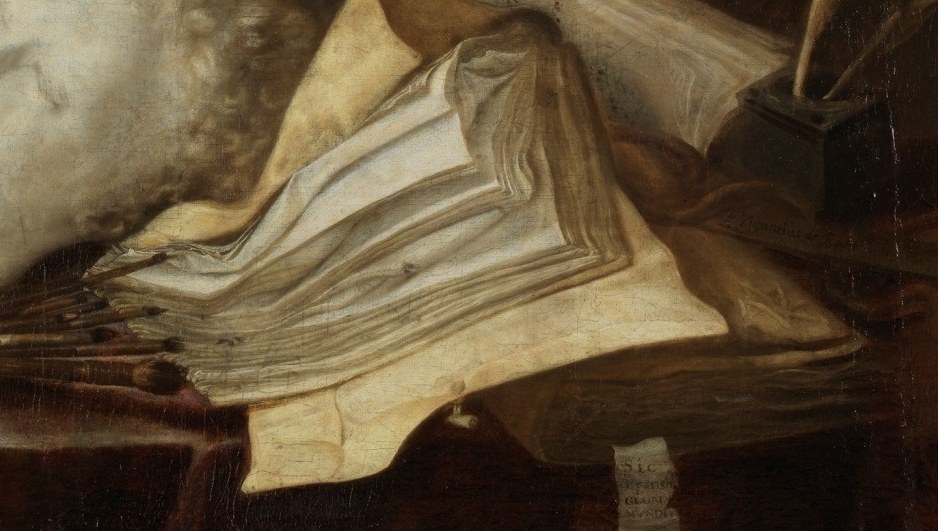
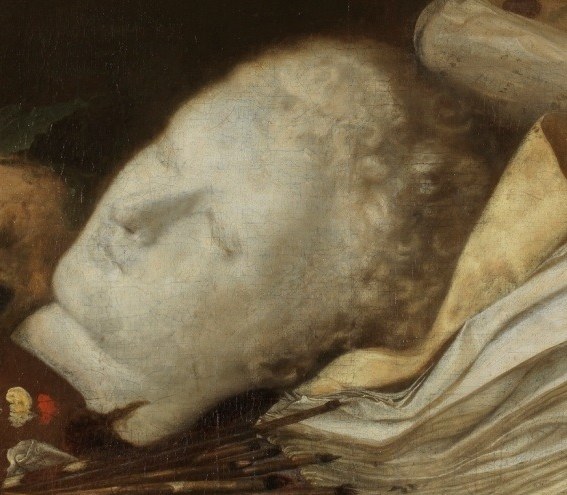
The painting's dramatic chiaroscuro lighting highlights various symbolic items: an open book, a terrestrial globe, and a painter's palette, representing human endeavors in art and knowledge. Yet, amidst these, a human skull and a small animal skeleton serve as stark memento mori, reminding viewers of mortality.
Raeth was only 23 years old when he created this work. His own life was cut short, as he died at the age of 40, adding a poignant, almost prophetic layer to the painting's theme of transience.
What emotions do these stark contrasts evoke for you?
Details
Transcript
This painting seems like a quiet still life. But the dramatic light draws you into a deeper story. Knowledge, art, and science are all present. But look closely, there is a clear warning. A human skull and a small animal skeleton. These are memento mori, reminders of death. The artist, Ignacio Raeth, was only 23 when he painted this. He died at just 40, his life cut tragically short.