New York by Bellows, George
George Bellows's 1911 painting, "New York," captures a pivotal moment in the city's history, showcasing its dynamic and often gritty urban landscape. This oil on canvas, housed in a private collection, brings to life the bustling streets of early 20th-century New York.
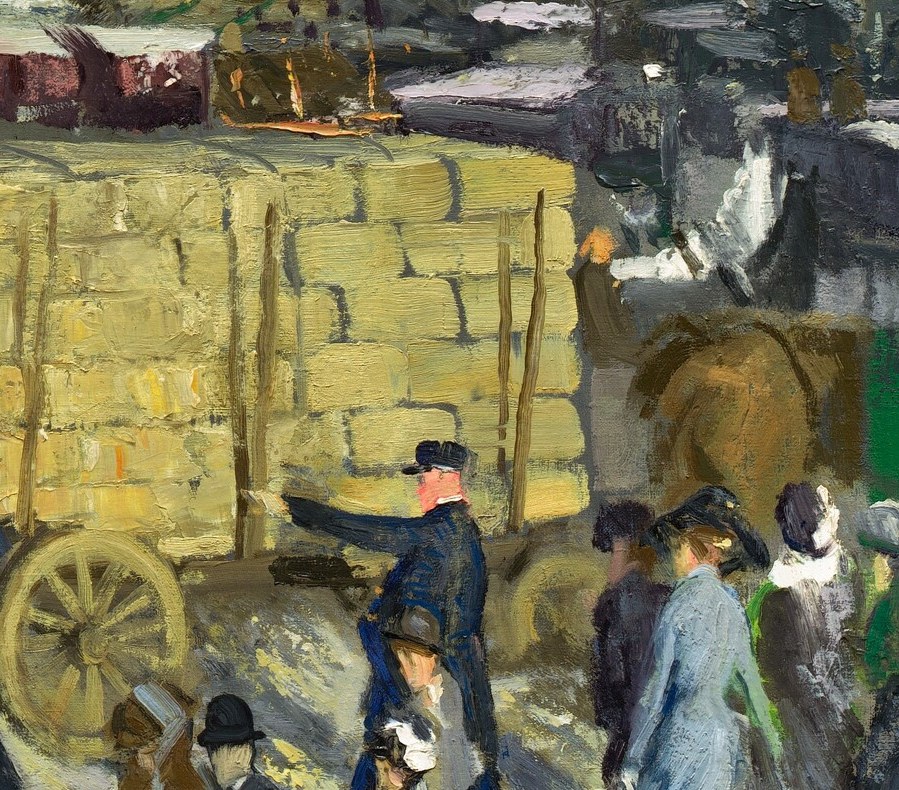
Look closely at the scene: horse-drawn wagons share the snow-covered streets with electric trolley cars, illustrating a city in the midst of rapid change. Bellows, a master of American Realism, used vigorous impasto brushwork to convey the raw energy and atmospheric chill of a winter day.
Bellows was known for his unflinching depictions of urban life, from fight rings to crowded streets. "New York" reflects his fascination with the city's chaotic yet compelling rhythm. The visible signage, like "Comis Star Mark" and the almost hidden "Blood Wine," grounds the scene in its commercial reality.
What other details can you spot that tell the story of this vibrant era?
Details


Transcript
New York, 1911: a city in transition. Horse-drawn wagons shared the street with modern trolley cars. This painter was drawn to the grit of everyday city life. He used thick brushstrokes to capture the raw energy and cold. Even small signs told the story of a bustling commercial street. Look closely, and a name appears in the background.