Madonna and Child Enthroned with Angels by Master of Varlungo
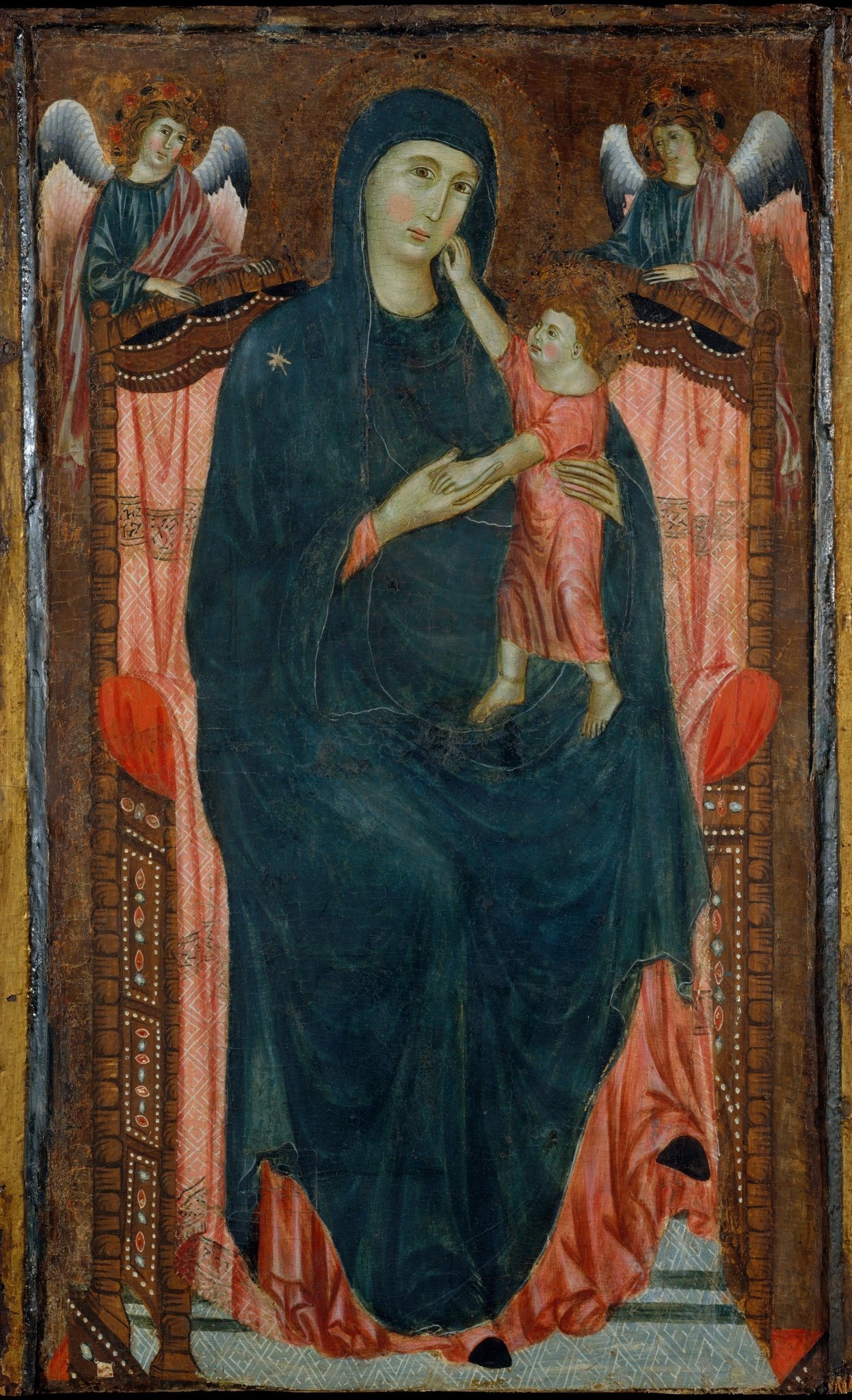
Master of Varlungo painted Madonna and Child Enthroned with Angels around 1293 in Florence. The panel is a compact lecture in medieval theology, and every object on it is a sentence in a visual language the original audience knew how to read.
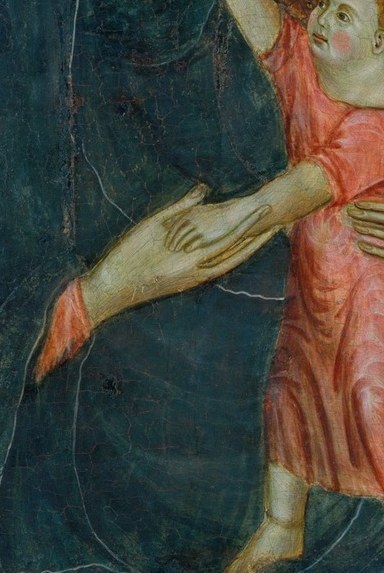
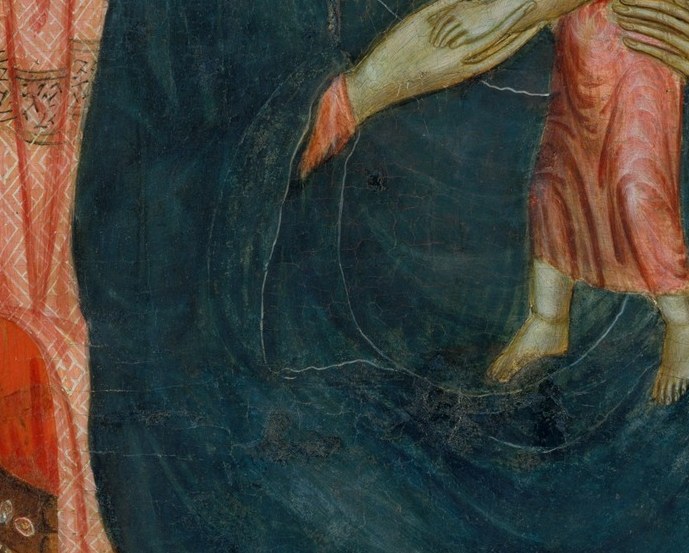
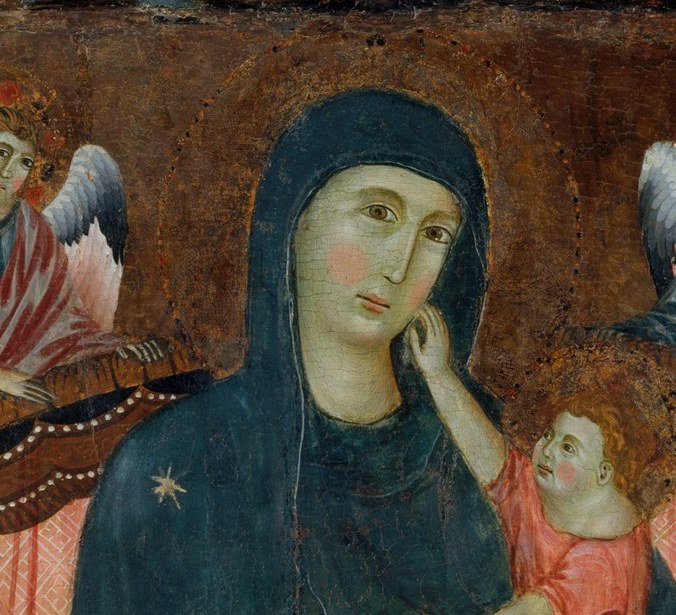
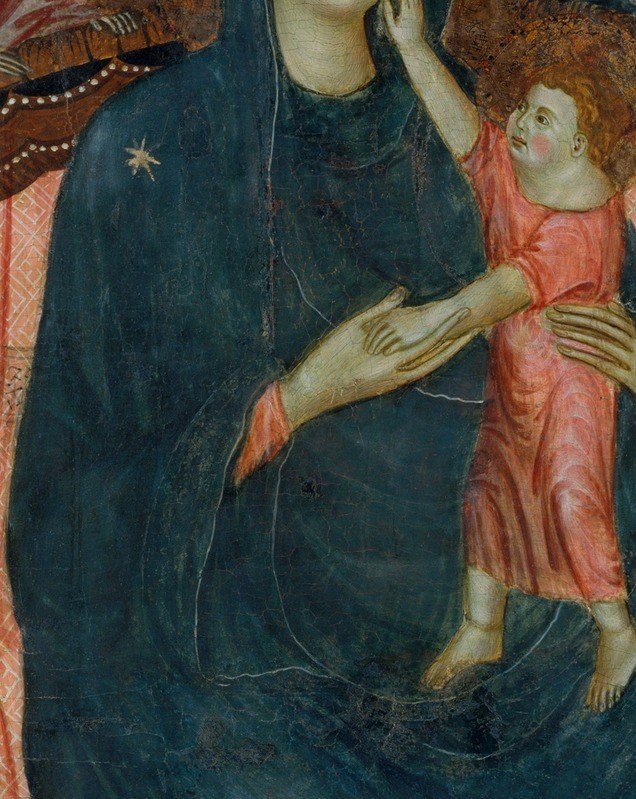
Start with the child's right hand. Two fingers are raised in what looks like a small benediction. The position is not random: it forms the Greek letters iota and chi, the first characters of Christ's name. A cipher hidden in plain sight inside a baby's gesture. Now look at Mary's hands. One supports him, the other points. This is the Hodegetria pose, she who shows the way, and it turns the Madonna into a signpost: do not look at me, look at him. The throne behind her is built like a church apse, encoding her as the Seat of Wisdom. And the gold leaf that fills the background is not sky or decoration. In Byzantine tradition, gold represents uncreated divine light, the timeless space where sacred persons exist. Depth and shadow would make no sense here because this is not a room.
The Master of Varlungo is a ghost. No documents record his life; his name comes from a fragmentary Madonna in a Florentine church. Roberto Longhi identified him in 1948 as a principal pupil of Cimabue, also influenced by the younger Giotto. His work stands at the pivot between flat Byzantine icon and the emerging naturalism of the fourteenth century. The panel is now in the collection of The Metropolitan Museum of Art.
Thirteenth-century viewers did not look at a painting like this. They read it.
Details
Transcript
The child gives a blessing. The fingers are a code. The gesture forms the Greek letters iota and chi, an abbreviation for Jesus Christ. Her hands do more than hold him. She points to the child, not to herself. This is the Hodegetria pose: she who shows the way. This throne is not furniture. It is a church. The structure mirrors a cathedral apse, naming Mary as the Seat of Wisdom. The background is not decoration. It is theology. The gold is uncreated divine light. The figures exist in heaven, not on earth.