The Annunciation by Sandro Botticelli
This small panel is Sandro Botticelli's The Annunciation, painted around 1485, now in the collection of the Metropolitan Museum of Art. It was made for private devotion: an image meant to be held close, contemplated quietly, and decoded slowly.
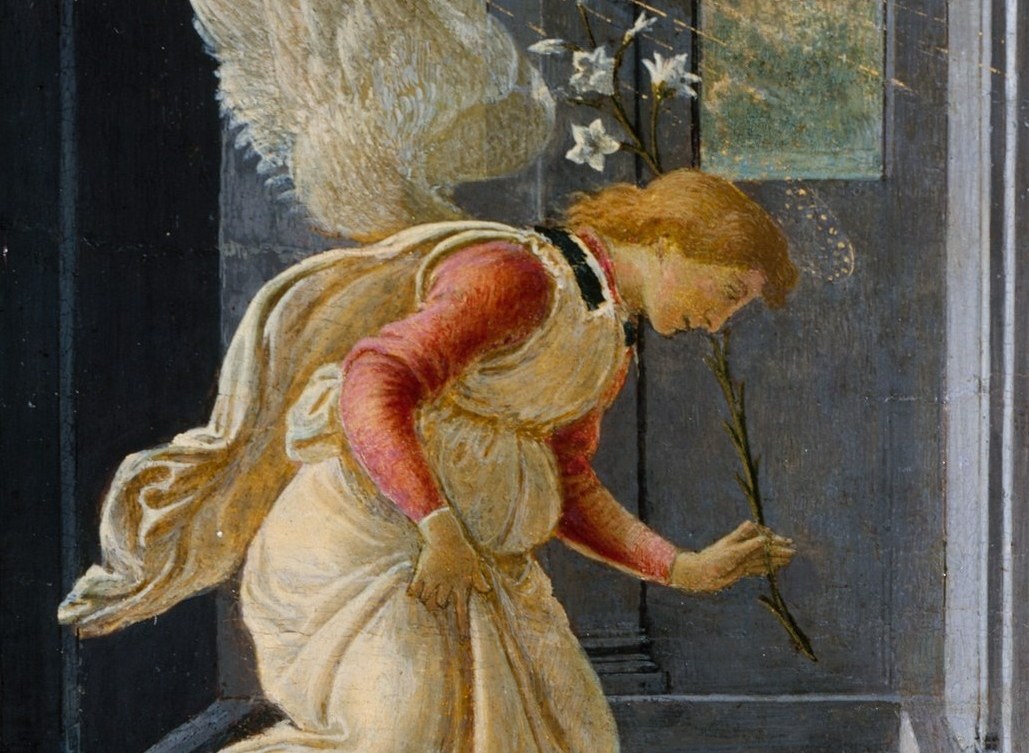
Look first at the lily. The archangel Gabriel holds it at the exact midpoint of the composition, reaching across the central column that divides the panel in two. That column is not just architecture. It separates the celestial realm on the left from the human realm on the right, and the lily crossing it is the moment the divine enters the world.
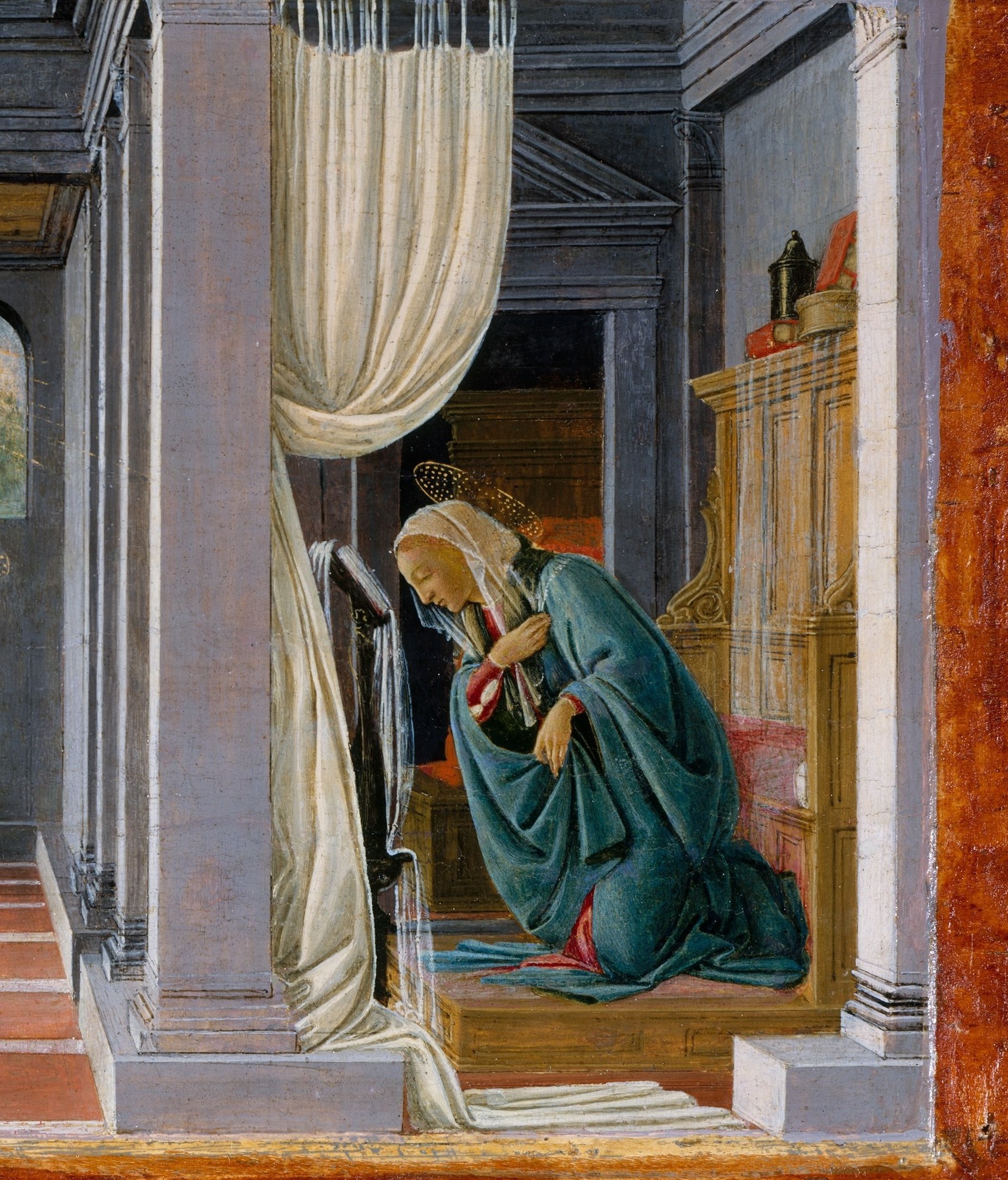
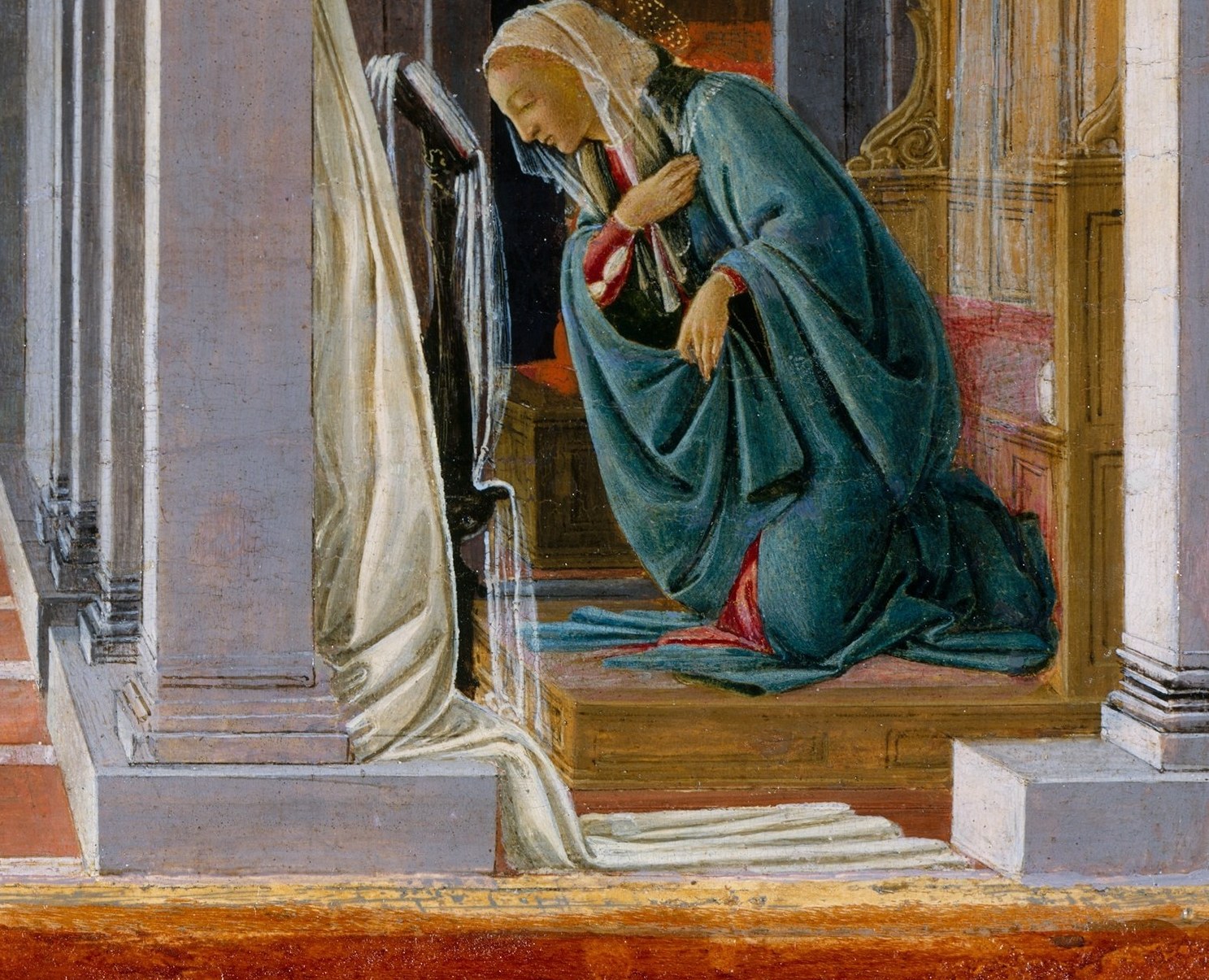
Botticelli built the painting like a devotional diagram. Mary wears a mantle of deep blue, painted with lapis lazuli, one of the most expensive pigments of the Renaissance. Beneath it, a sliver of red dress shows at the hem and bodice. In the iconographic language of the period, that flash of red signals the Passion: the suffering Christ, already present at the moment of Annunciation.
The panel measures less than two feet wide and was likely commissioned for a domestic interior, not an altarpiece. Botticelli's reputation faded after his death and was only revived in the 19th century by the Pre-Raphaelites, who admired the linear grace his contemporaries had left behind. Now the painting hangs in New York, still doing the work it was made for: holding a full theology in a few square inches of wood.
Details

Transcript
A single white lily crosses the gap between them. This lily is not decoration. It is Mary's purity, held by the messenger. The column divides the divine side from the human. The lily crosses that divide. The Incarnation, painted as geometry. Mary's robe is the costliest blue: lapis lazuli, ground from stone. Beneath it, a flash of red. In Marian code, that is the Passion foreseen. The whole story is already here: announcement, sacrifice, and the threshold between.