Portrait of a Woman by Frédéric Dubois
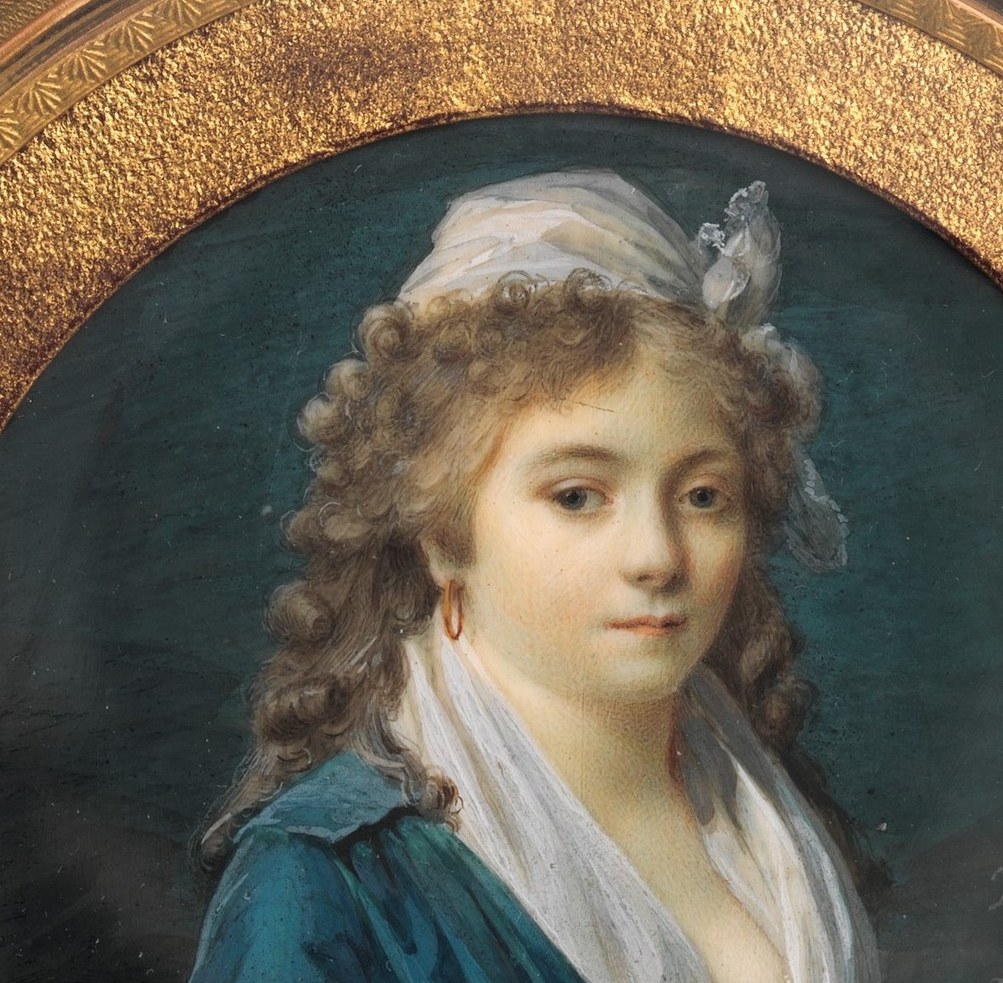
This is Portrait of a Woman, painted by Frédéric Dubois in 1793, and it is a portrait built on calculation. It lives at The Metropolitan Museum of Art. The date inscribed is September 22, 1793, when the French Revolution had become the Terror. The guillotine was public policy. In a single half-inch of painted ivory, this unknown sitter broadcasts her politics and her nerve through her clothes alone.
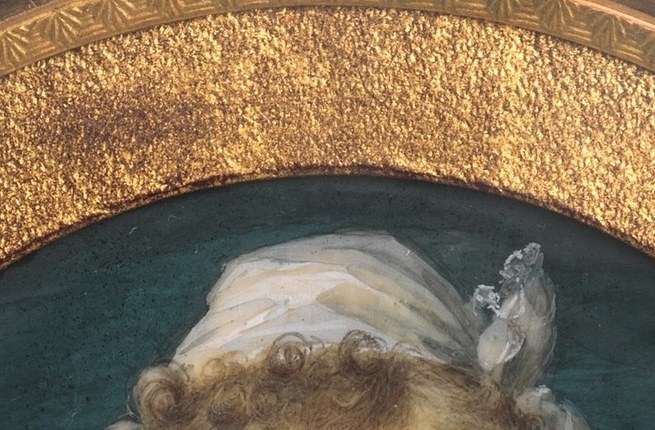
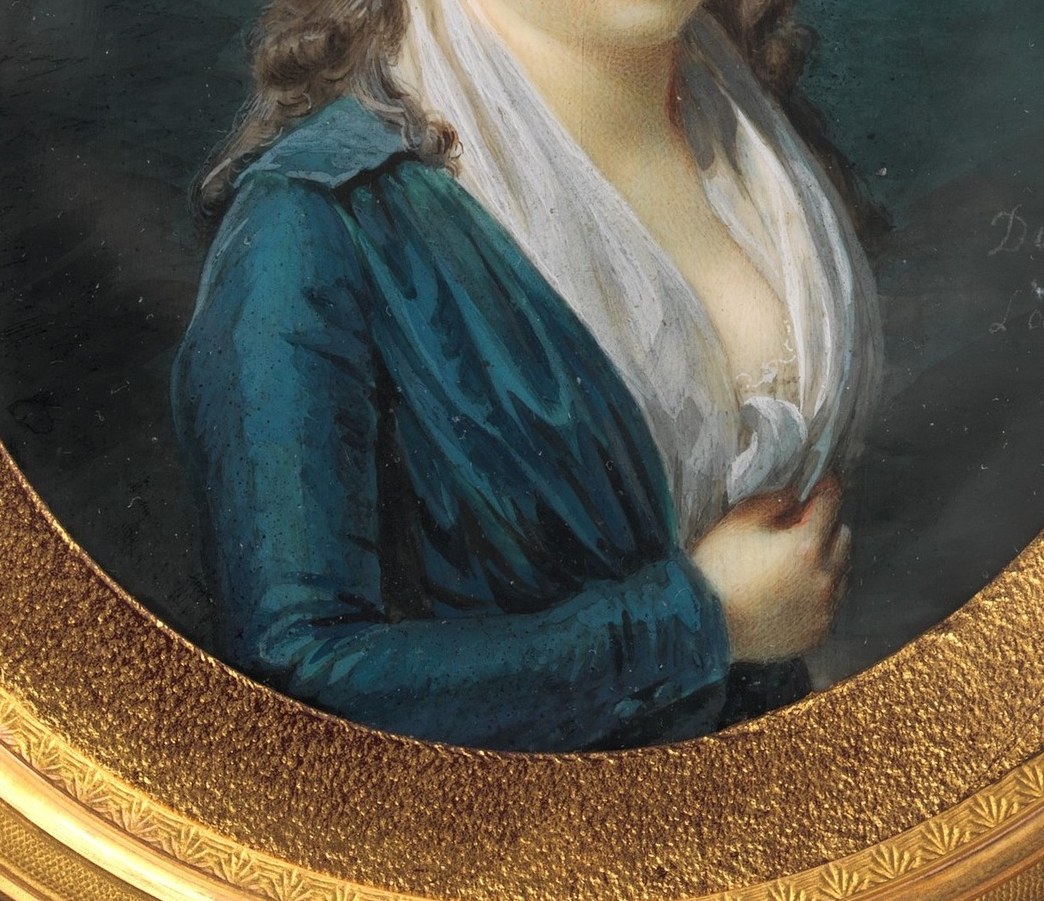
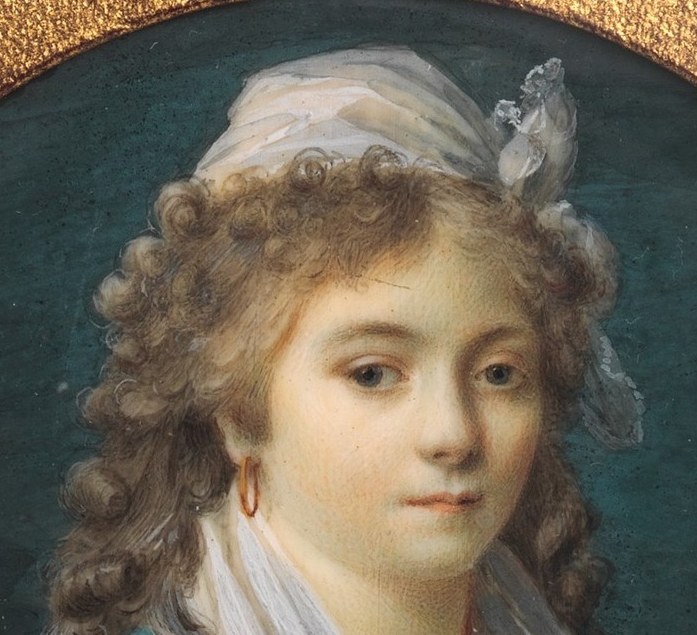
Look at her hair first. Just months after sumptuary laws turned conspicuous wealth into evidence, she wears her own unpowdered brown curls and a simple white muslin headscarf. That was a republican posture and everyone knew it. Then look at the teal-blue jacket. The color required costly imported dye. The cut is restrained. And look at that gold drop earring. Wearing flashy jewelry in Paris in September 1793 was a small act of defiance, or a bet that she was well-connected enough to get away with it.
The painter, Frédéric Dubois, used an ivory support. Oil paint on ivory gives skin an inner luminosity no canvas can replicate. Her face glows because the material itself glows. The miniature was meant to be held, carried, or worn. Its ornate gilt frame survives intact, which means someone kept it close, through the Terror and long after.
We don't know her name. But we know she chose to face a painter in the autumn of 1793 and insisted on wearing the earring.
Details
Transcript
September 22, 1793. France is five months into the Terror. Powdered hair is treason. This woman wears her own. A plain muslin headscarf, not a powdered tower. A quiet allegiance. That teal-blue jacket is not cheap. Dye like that cost money. And yet she kept her gold earring. A small, loaded risk. Dubois painted her on a slice of ivory small enough to hide in a palm. Her eyes refuse to flinch. They still do.