Portrait of a Man in a Tall Hat by Rembrandt van Rijn
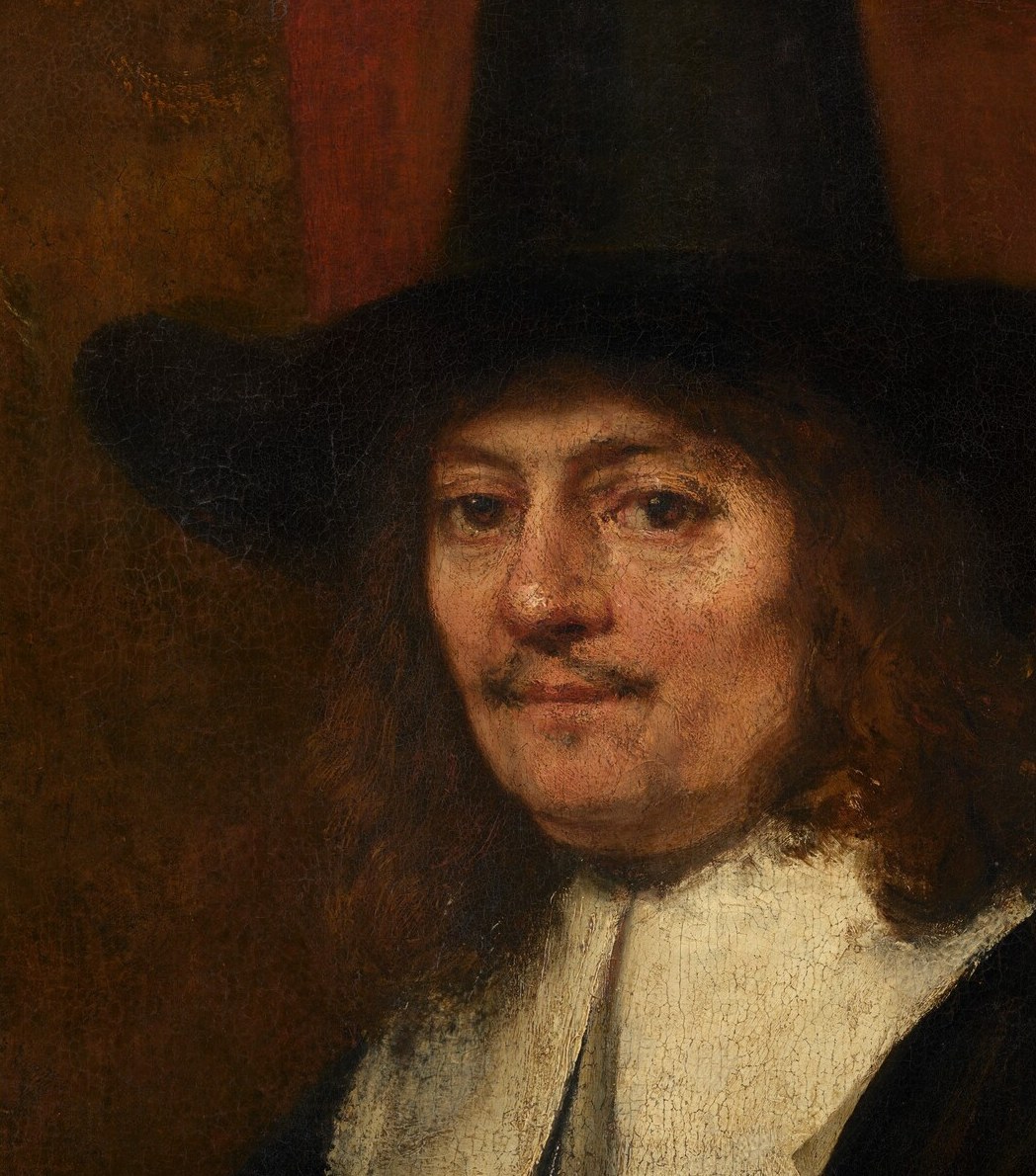
This is Rembrandt’s Portrait of a Man in a Tall Hat, painted around 1663. A figure in deep shadow, anchored by a massive felt hat and the palest white collar. You are looking at a coded message in cloth and posture, the kind of visual language every Dutch merchant understood in the 17th century.
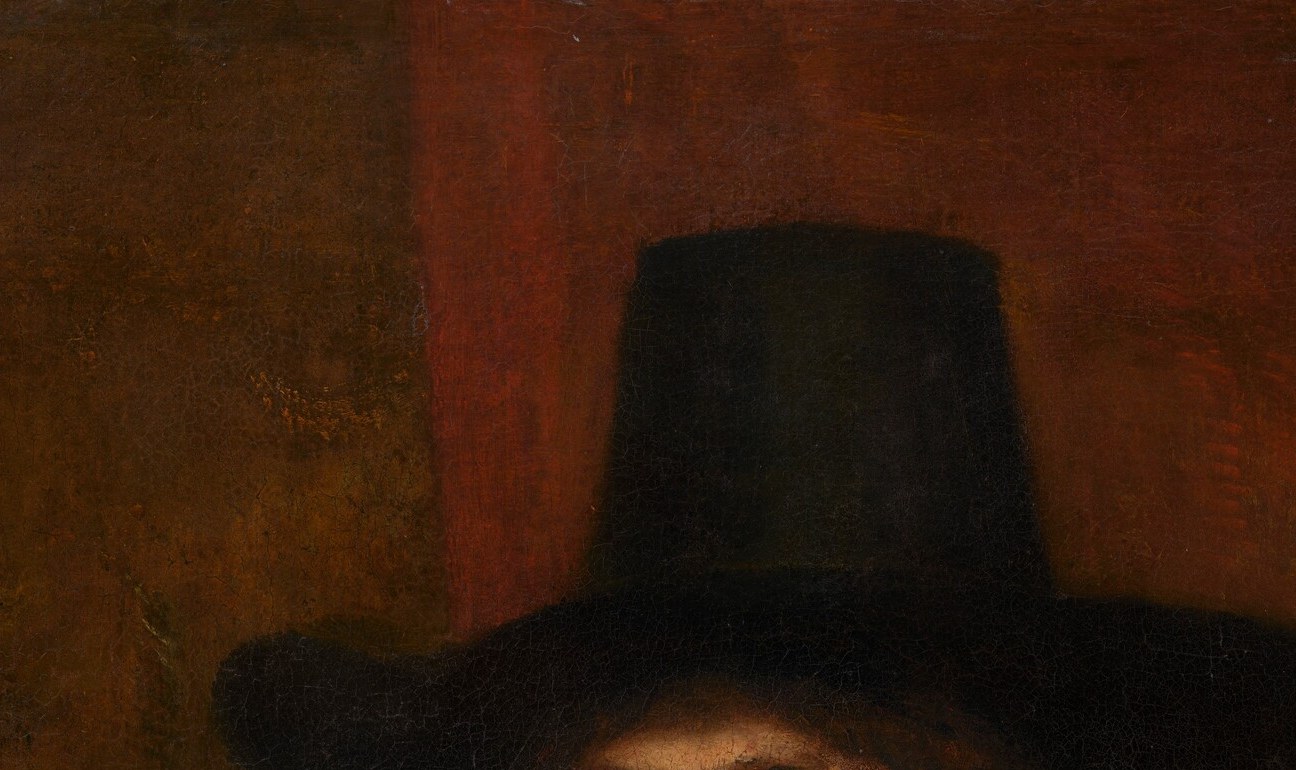
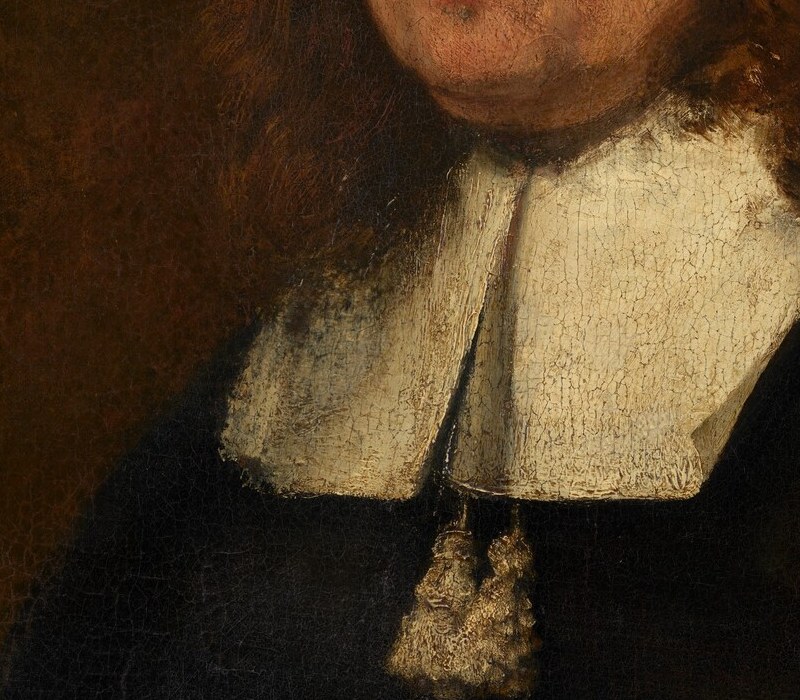
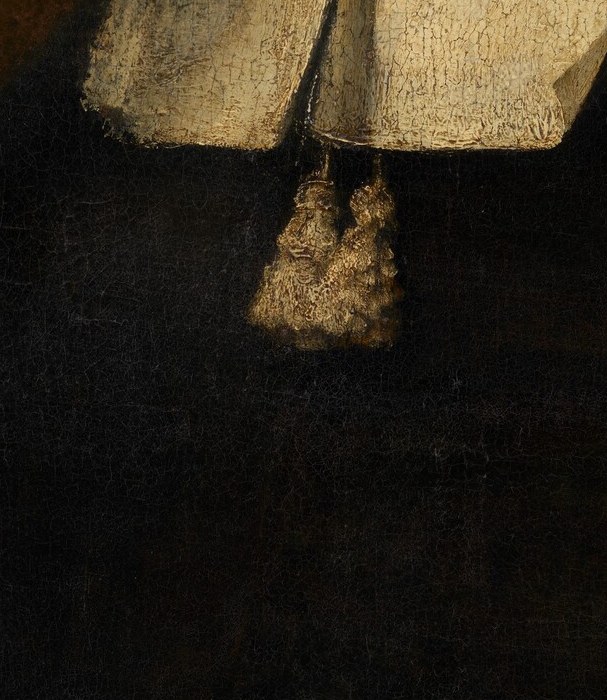
Start with the hat: its extraordinary height and flat crown broadcast serious expenditure. Dutch sumptuary taxes made tall hats a luxury item, and the taller the hat, the deeper the pockets. Below it, a broad white linen collar, bleached, starched, and ironed by household staff, signals domestic order. Then the faint clutch of gold beneath the collar, possibly a chain of office or a guild token, confirms his place in a formal hierarchy of power and responsibility.
Rembrandt painted this between 1662 and 1664, a moment of personal disaster. He had declared bankruptcy in 1656 and his house and art collection were sold off. Yet here he is, producing a portrait of such gravitas and psychological weight that the sitter’s financial and social standing feels unshakeable. The thick black folds of the cloak are typical of the artist’s late impasto work, paint laid on almost like sculpture, and the light that settles on the forehead and cheek is classic Rembrandt chiaroscuro, used not for drama but to show a mind at work behind the eyes.
The man’s expression is what stays with you. He does not smile, does not perform. His gaze is watchful and entirely level, the look of someone who has no need to impress you because his position is already secure. Next time you see a portrait with a big hat and a tiny chain, ask yourself: what code are they speaking?
Details
Transcript
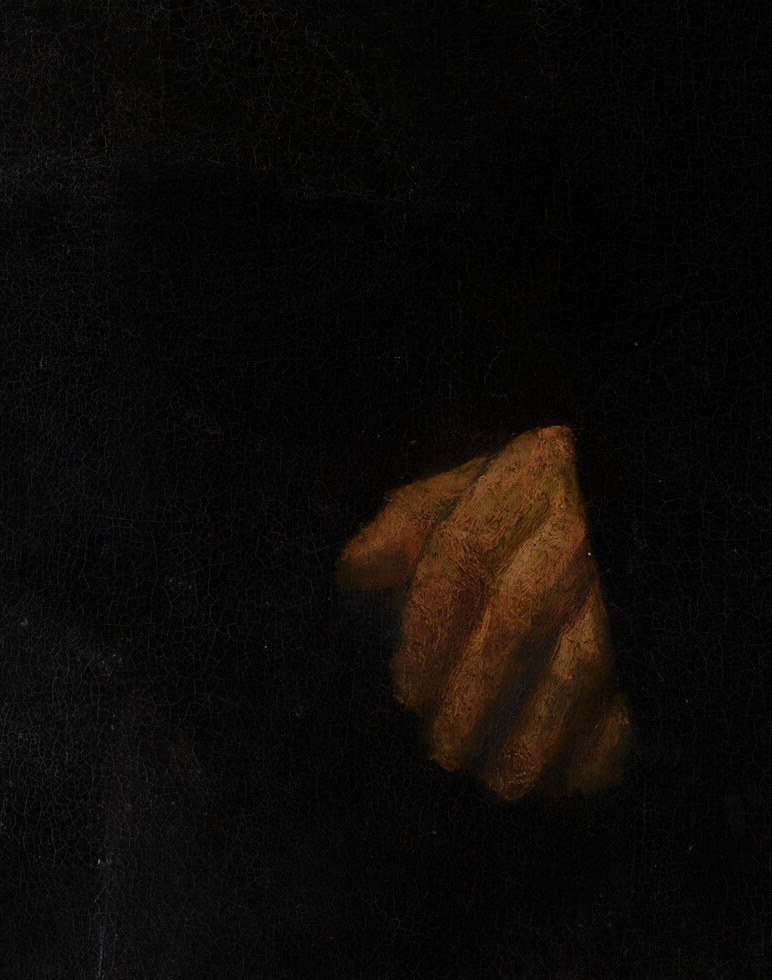
Everything in this portrait is a signal. The towering hat. A tax on hats was a status flex. This white linen collar required hours of starching by servants. A glint of gold beneath the collar. A chain of office, perhaps. Hands at ease, but the firm mouth never smiles. The code adds up. Authority, wealth, and absolute self-possession.