Benjamin Tappan by Stuart, Gilbert
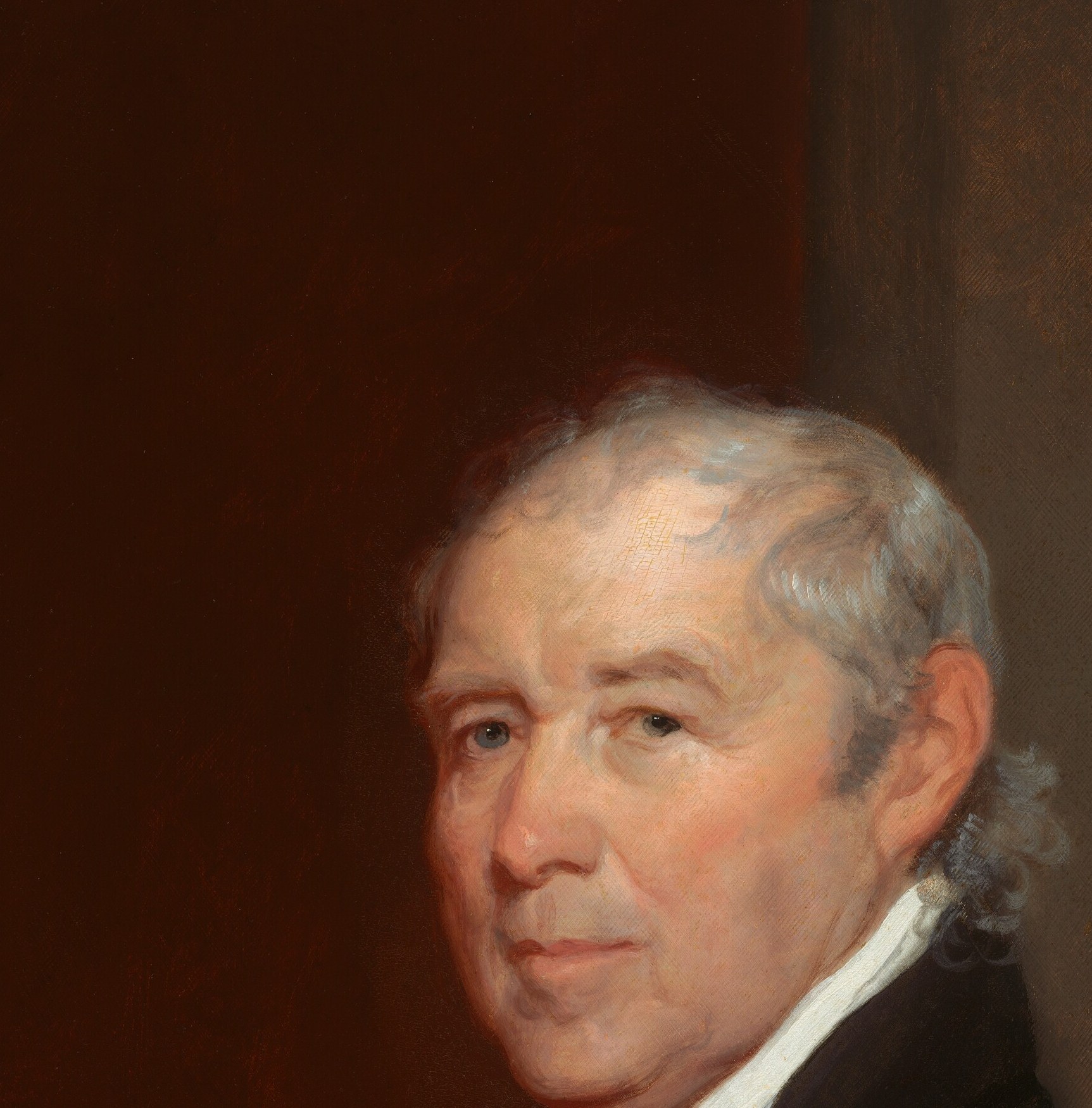
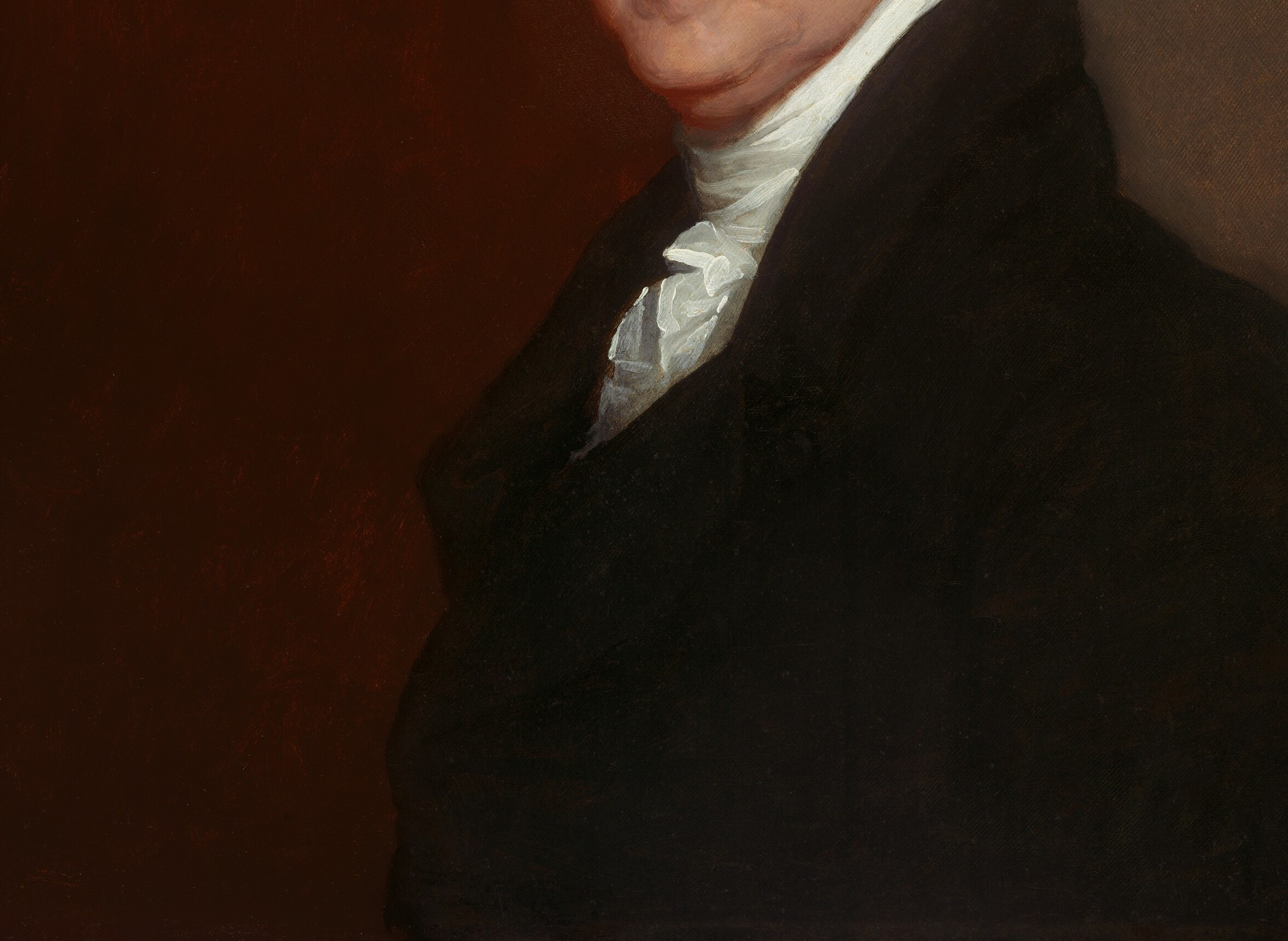
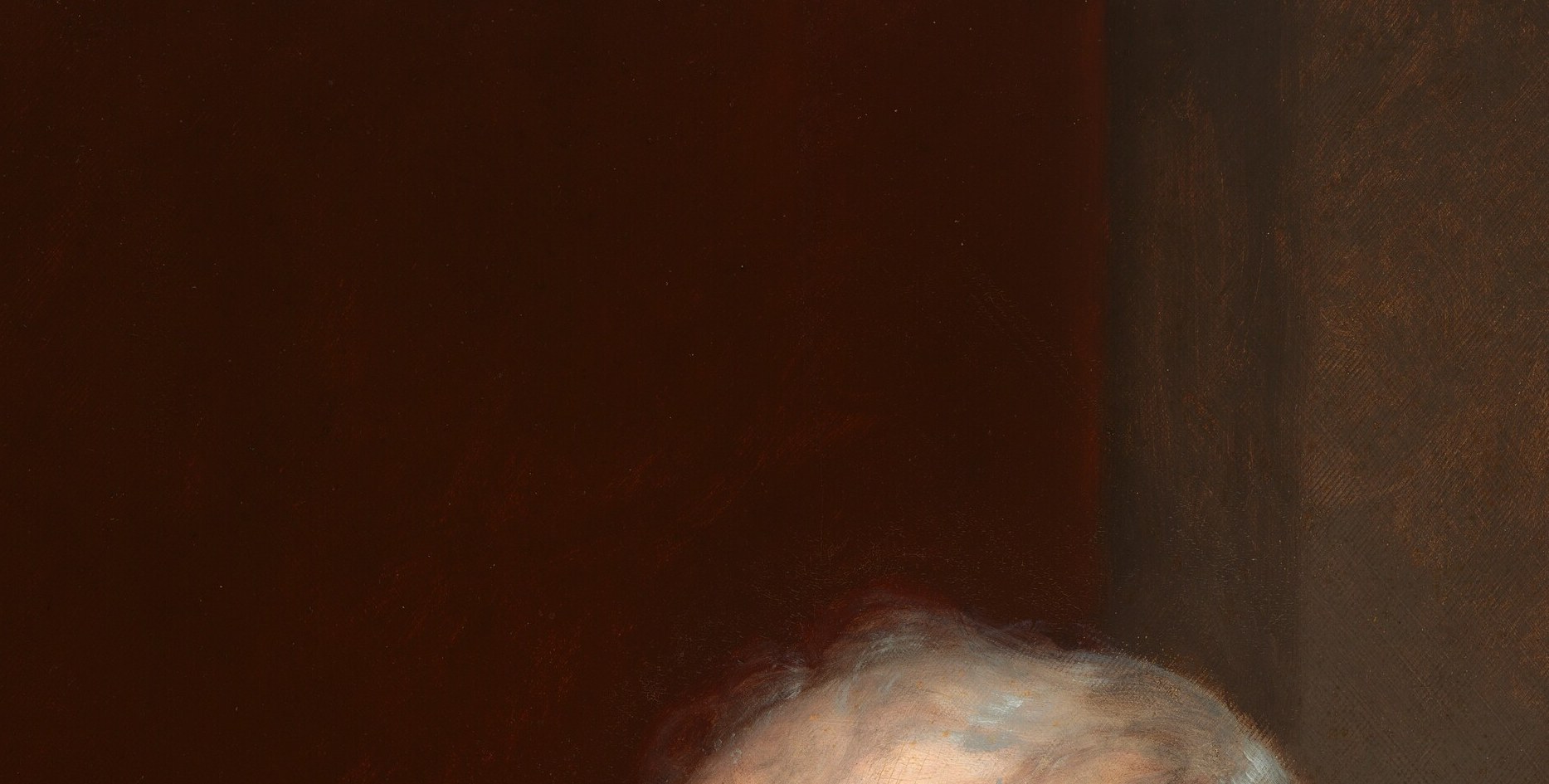
Gilbert Stuart painted this portrait of Benjamin Tappan in 1814, and it holds one of the clearest lessons in his entire career. The face is tight, warm, and psychologically present - Stuart's eyes meet yours with an intelligence that feels immediate, two centuries later. But as soon as your gaze drops below the collar, the painting dissolves. The coat is a shorthand of broad, dry strokes, and the background vanishes into a warm, smoky blur.
Stuart had a phrase for this. He called it 'keeping the eye in the head.' His argument was simple: a portrait is about a face, and specifically the eyes. If the coat, the chair, and the wallpaper are rendered with the same razor precision as the pupils, the viewer's attention scatters. By deliberately loosening his handling on the periphery, Stuart trapped your gaze exactly where he wanted it - locked on the mind of the sitter.
The technical contrast here is extreme. The forehead highlight and the small muscles around the mouth are modelled with almost wet, blended care, while the dark lapel is identifiable only by its silhouette and a single confident brushmark. The shadow side of the face uses a sfumato-like recession, letting the edge of the cheek merge with the olive-brown background. It is a controlled, knowing performance of economy.
Stuart painted George Washington over a hundred times, and he brought the same psychology to a New England merchant or a politician. The trick isn't realism - it's knowing exactly where to stop. The next time you see one of his portraits, ask yourself where the focus lives, and where the paint just lets go.
Details


Transcript
Look at the face. Sharp, warm, completely solid. You could almost speak to him. Now look at the shoulder. Just three broad strokes of a dry brush. The paint barely describes cloth. Stuart called this 'keeping the eye in the head.' If the coat was as finished as the face, you would never look at the man. He painted a thinking mind and let the body fall away into smoke.