Rocks in New England by Martin Johnson Heade
In 1855, American artist Martin Johnson Heade created *Rocks in New England*, an oil painting that stands apart from the grandiose landscapes of his contemporaries. While other artists of the era sought dramatic vistas, Heade chose to capture the quiet, enduring presence of nature.
Look closely at the painting and you'll find a tranquil scene with a winding river, a cluster of large boulders, and a solitary leafless tree. Heade's delicate brushwork and restrained palette of earth tones and pale sky hues emphasize serenity over spectacle, inviting a contemplative mood. A solitary red cow adds a subtle focal point and a hint of life to the rugged environment.
Heade, born in Pennsylvania in 1819, diverged from the mainstream despite drawing from Romantic influences. This painting reflects his mid-career focus on landscape, exploring varied regional settings. It is now part of the collection at the Museum of Fine Arts, Boston.
What details in this quiet scene draw your eye the most?
Details
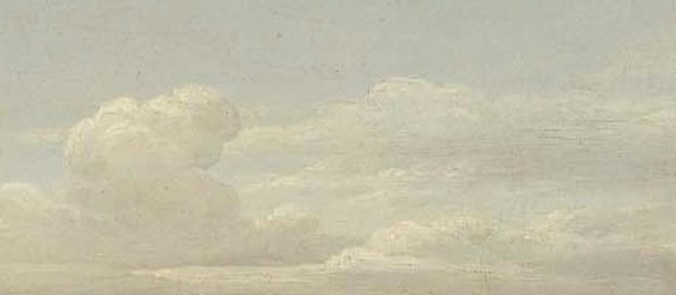
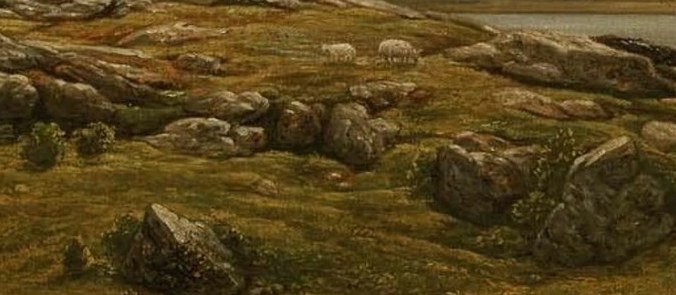
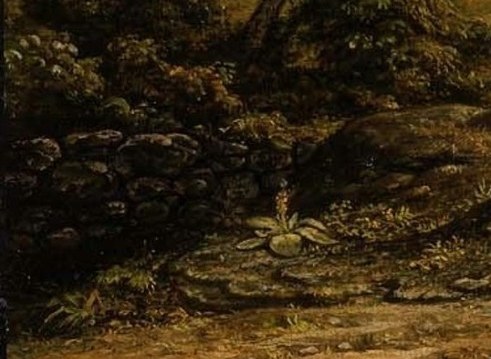
Transcript
This New England landscape was painted in 1855. The artist, Martin Johnson Heade, preferred quiet scenes. While his peers painted dramatic vistas, Heade focused on mood. His brushwork renders the texture of these rocks with subtle care. A solitary red cow adds a splash of color. Heade's delicate painting style captures the scene's serenity.