The Great Ant-Eater by Catlin, George
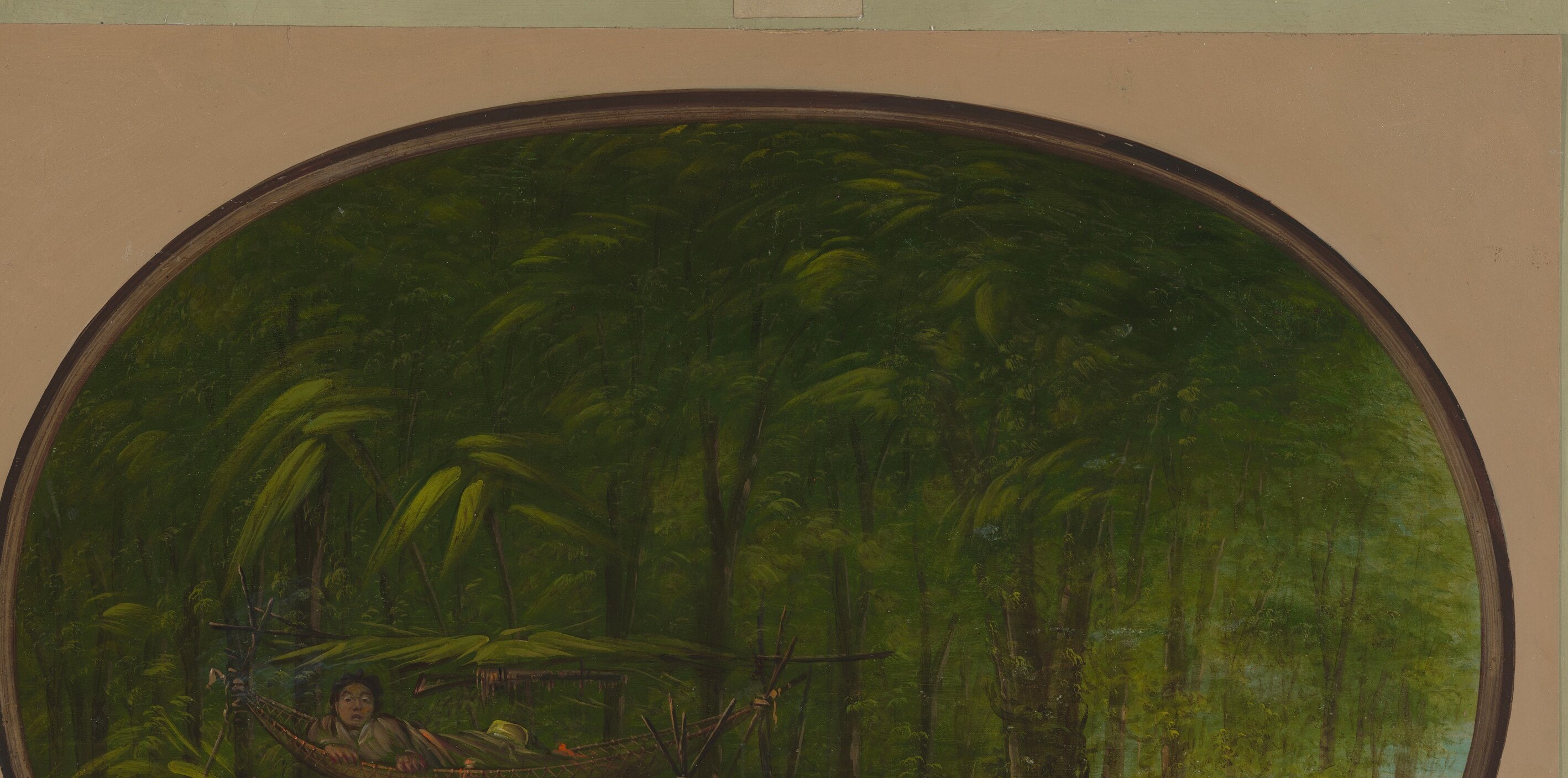
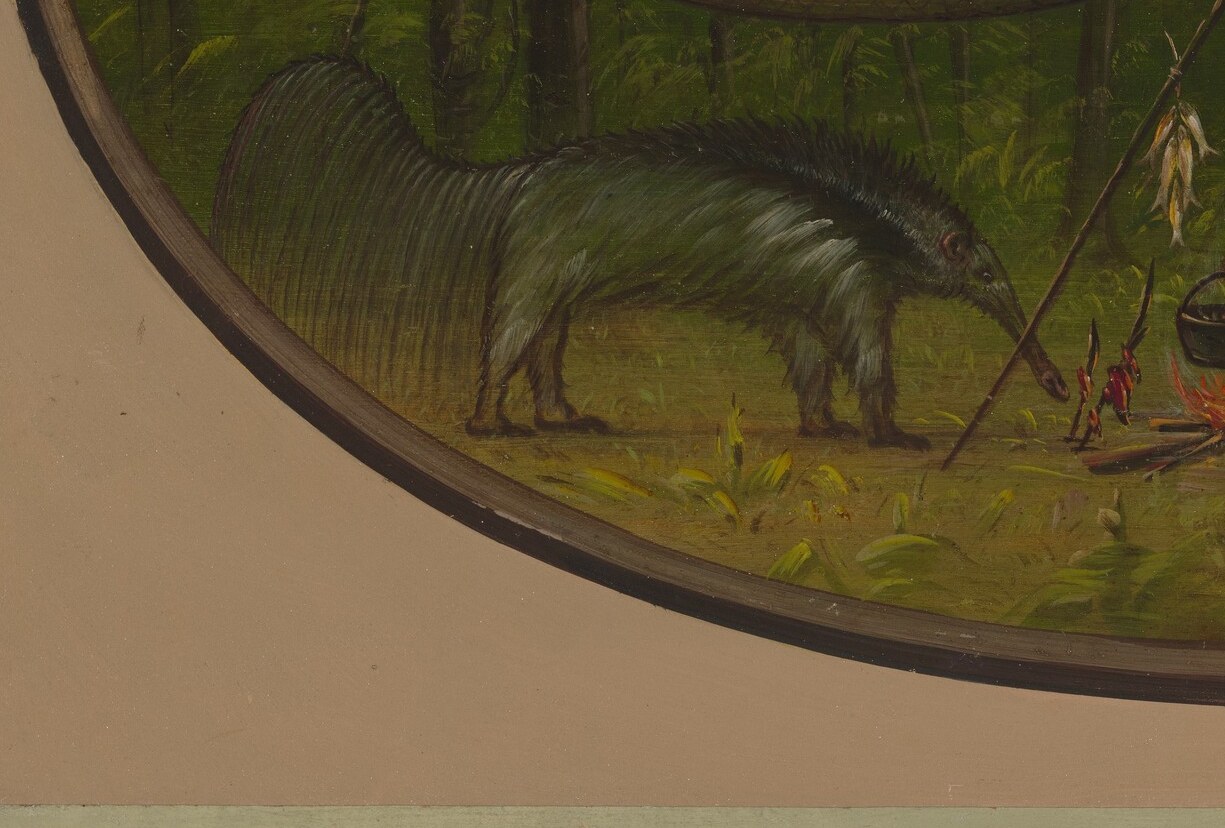
George Catlin, famed for his portraits of Native Americans, also created *The Great Ant-Eater* between 1854 and 1869, an oil painting now housed in a prominent collection. This piece, a departure from his usual subjects, captures a quiet moment of nature in the jungle.
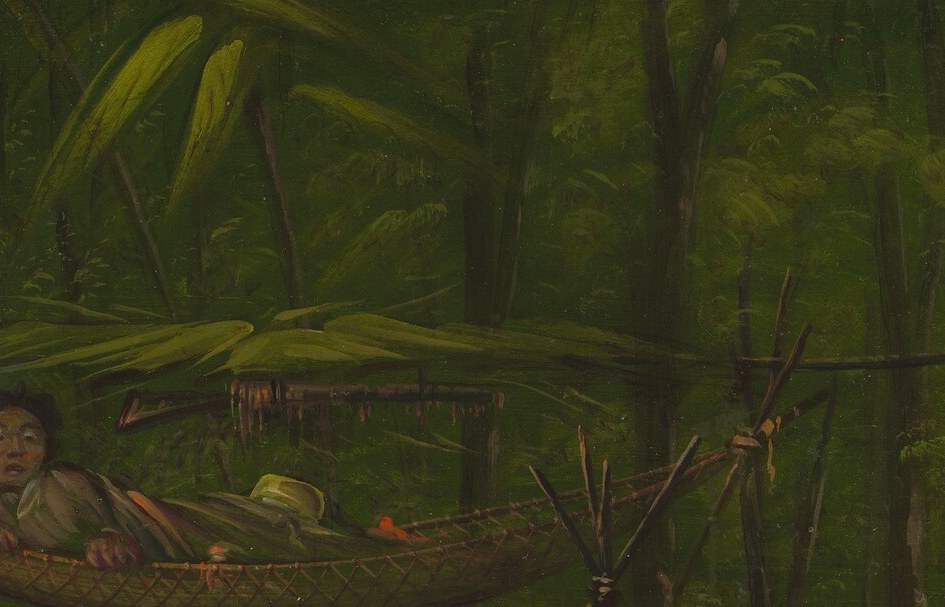
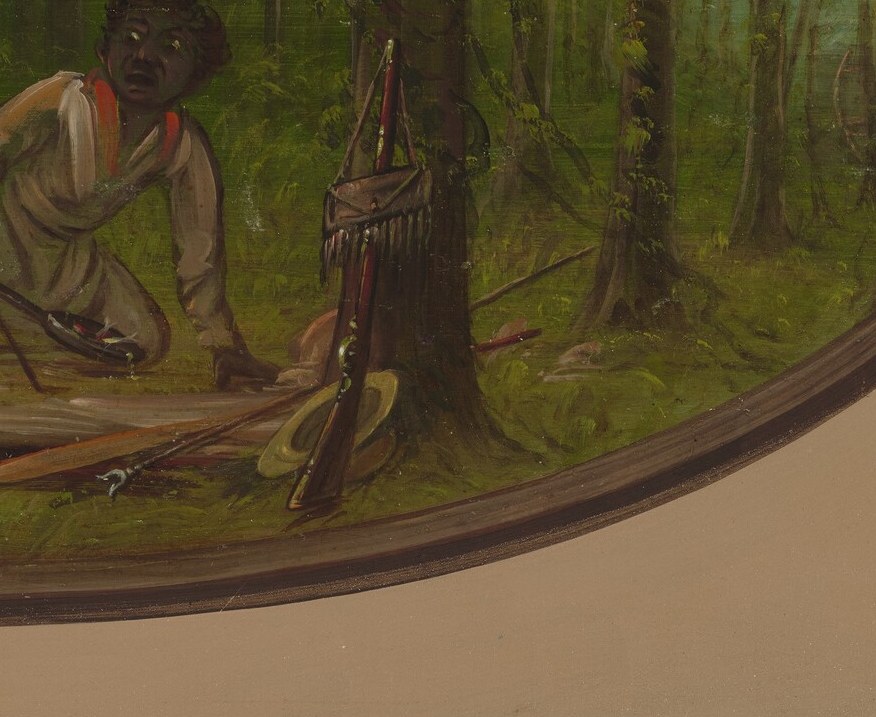
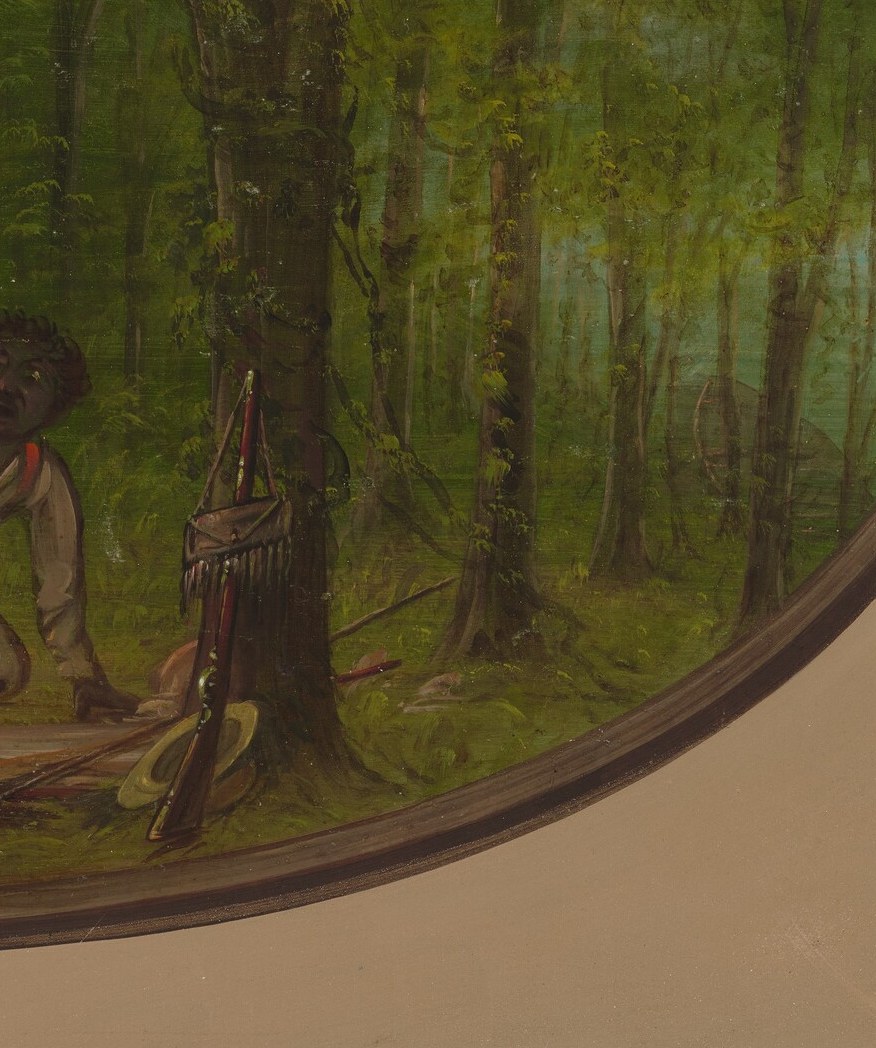
At first glance, the painting seems to focus on the titular ant-eater, but closer inspection reveals human presence. A man rests peacefully in a hammock, while another crouches by a small fire, tending to a cooking pot. These tiny figures underscore the delicate balance of human existence within the vast wilderness.
Catlin, an American lawyer and traveler, produced this work on card, a portable medium, suggesting it may have been created during his travels. His choice to depict the ant-eater, a creature unfamiliar to many at the time, reflects his dedication to documenting the diverse natural world he encountered. The subtle inscription 'A 587' in the lower margin is a unique mark the artist used, likely for cataloging his extensive body of work.
What other hidden stories might a closer look at this painting reveal?
Details
Transcript
This painting, made by George Catlin, looks like a simple jungle scene. He was known for painting Native Americans, not animals. But look closer, there are other inhabitants in the jungle. A lone man rests in a hammock, lost in the dense foliage. Another figure tends to a small fire, a tiny detail of human life. But even more hidden, look in the lower right corner. The painter left his unique initials: 'A 587'.