Rebecca at the Well by Veronese
Veronese's "Rebecca at the Well," painted around 1585, is an oil on canvas at an unknown location, depicting a pivotal biblical moment. The artist, known for his masterful use of color, brings the Old Testament narrative to life with vibrant hues and dramatic composition.
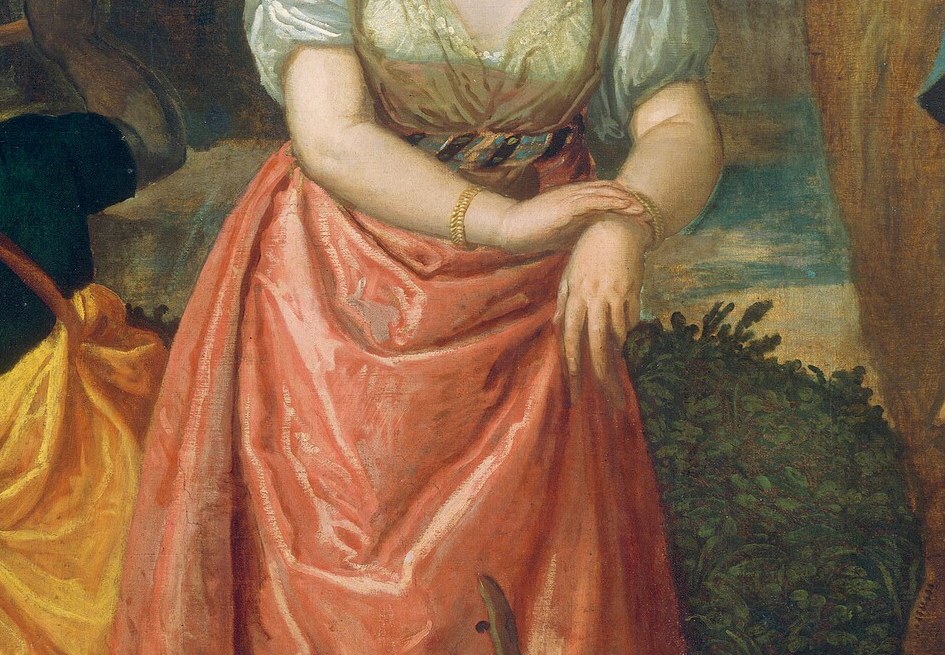
Observe Rebecca in her striking pink dress, her downcast gaze emphasizing her modesty at the well. The older man, resplendent in his orange robe, gestures with authority, while the kneeling man holds a scroll, suggesting a crucial message.
Veronese, an Italian Renaissance artist, was celebrated for his ability to infuse religious narratives with rich visual storytelling. This painting exemplifies his signature style, using color and contrast to guide the viewer's eye and convey the emotional weight of the scene.
What details in Veronese's work draw your eye most powerfully into the story?
Details

Transcript
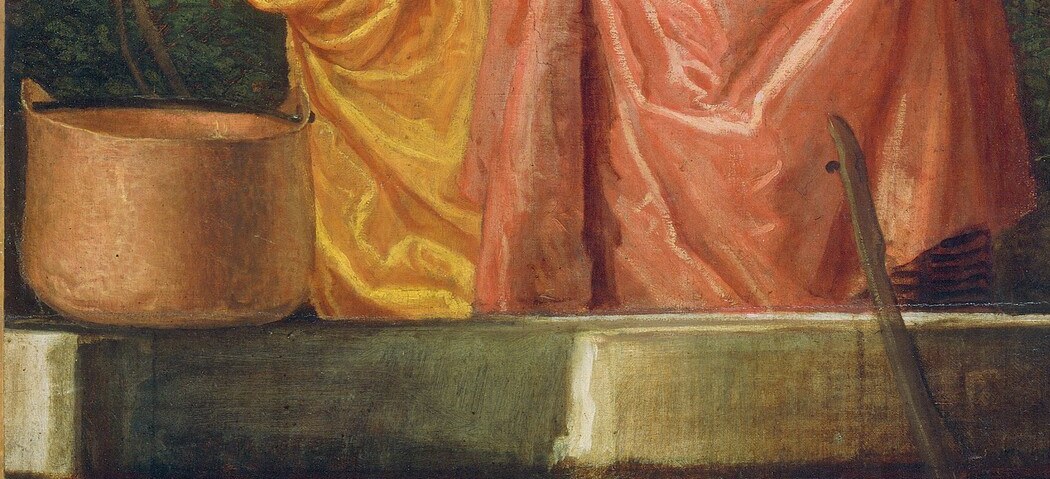
This painting tells a familiar biblical story, but with Veronese's signature colors. Rebecca's pink dress stands out, drawing the eye to her modest pose. She stands at the well, a central location for this biblical encounter. An older man in a vibrant orange robe leans on his staff, conveying authority. He gestures towards a scroll held by the kneeling man. This object implies a significant message, key to Rebecca's story. Veronese used striking color contrasts to define the entire scene.